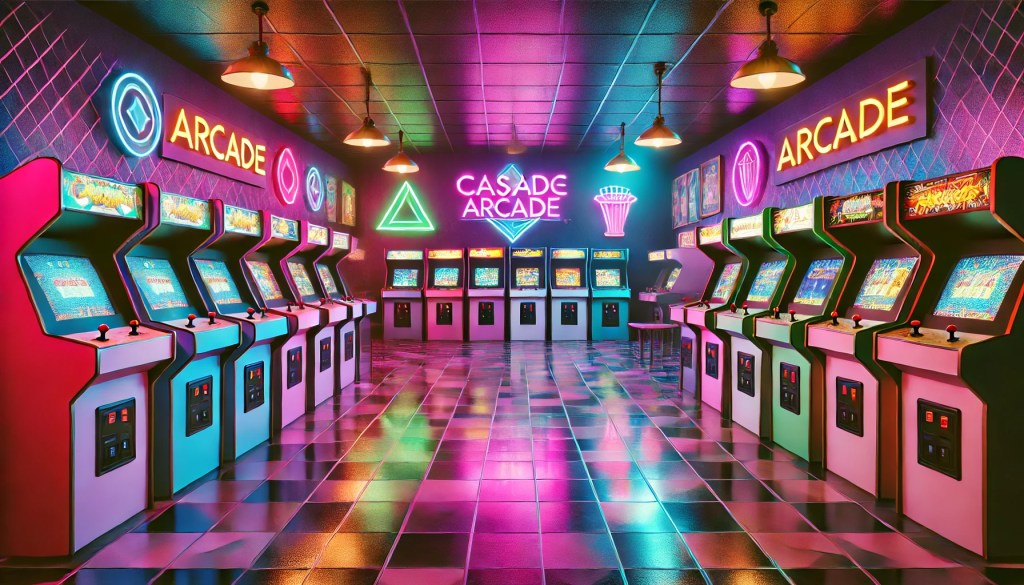
The 1980s were a transformative decade for entertainment, and no place encapsulated the spirit of that era quite like the arcade rooms. These vibrant, noisy, and electrifying spaces were where young people of all walks of life gathered, united by a shared love for video games, camaraderie, and the thrill of competition. The arcade was more than just a place to play—it was a sanctuary, a social hub, and a cultural phenomenon that left an indelible mark on an entire generation.
Walking into an arcade room in the 1980s was like stepping into a neon-lit wonderland. The air buzzed with the sounds of bleeps, boops, and the unmistakable hum of machines working overtime. Everywhere you looked, there were bright, colorful screens flashing with fast-paced action, whether it was the dizzying labyrinths of Pac-Man, the high-flying spaceship battles of Galaga, or the martial arts chaos of Street Fighter. The walls of the arcade were lined with machines that offered a myriad of adventures, challenges, and experiences, each with its own unique world to explore. These machines were the gateway to a universe that had never been seen before—a universe where you could become anything from a hero to a villain, from a spaceship pilot to a treasure hunter.
For many, the arcade was their first taste of digital entertainment. Before home consoles became commonplace, these machines were the pinnacle of gaming technology, offering experiences that could not be replicated anywhere else. The arcades of the 1980s were the birthplaces of iconic characters—characters like Donkey Kong’s Mario, Pac-Man, Frogger, and Space Invaders—who would go on to become legends in the gaming world. These games were more than just pastimes; they were cultural touchstones, symbols of the era’s burgeoning digital revolution. To step into an arcade in the 1980s was to step into a world where the boundaries between reality and the digital realm blurred, where your score could be the talk of the town and your name could be immortalized on the high-score table.
But the magic of the arcade wasn’t just in the games themselves; it was in the atmosphere. The arcade was a meeting place, a gathering ground for kids, teens, and even adults who shared a love for the electric buzz of competition. It was the one place where you could find yourself in a sea of like-minded individuals, all engaged in the same quest: to conquer the game, to rack up the highest score, to become a legend in their own right. And in that quest, there was an unspoken camaraderie. You might not know the person standing next to you, but you both shared the same goal: to master the game in front of you.
The competitive spirit of the arcade was palpable. It wasn’t just about playing the games; it was about winning, about being the best. The high-score table was the ultimate prize, a place where the names of the greatest players were etched in digital stone. A high score was a badge of honor, and every player knew that if they wanted their name to be up there, they had to put in the time, the effort, and the skill. It was common to see players huddled around the machines, watching intently as someone tried to best the high score, offering encouragement or silent support. The energy was infectious, and the sense of community was undeniable.
The arcade rooms of the 1980s were also places where friendships were forged. For many, they were the backdrop to countless memories, both big and small. It wasn’t uncommon to find groups of friends spending entire afternoons or evenings in these neon-lit temples of gaming. The laughter, the cheers, the groans of frustration when someone’s game ended too soon—these were the sounds of an era, the soundtrack to a generation’s love affair with the arcade. There was a sense of belonging that came with the arcade, a sense that you were part of something bigger than yourself, something that transcended the games and became a social experience.
But the magic of the arcade wasn’t limited to the social aspect or the thrill of competition. The 1980s was also a time of rapid technological innovation, and arcades were at the forefront of this digital revolution. The machines of the 1980s were marvels of technology, packed with cutting-edge graphics, sound effects, and gameplay mechanics that pushed the boundaries of what was possible at the time. The rise of 3D graphics, digitized sound, and immersive environments was nothing short of groundbreaking. It was an era where gaming was becoming more sophisticated, more complex, and more engaging. The evolution of the arcade machine was a testament to the rapid advancement of technology and the growing cultural importance of video games.
And then there were the arcade classics—the games that became synonymous with the golden age of gaming. Pac-Man, released in 1980, was a sensation that took the world by storm. Its simple yet addictive gameplay, combined with its colorful characters and catchy sound effects, made it a cultural icon. It wasn’t just a game; it was a global phenomenon, and its success helped solidify the arcade as a major force in entertainment. Similarly, Donkey Kong, Asteroids, Defender, Centipede, and Missile Command became household names, defining the era and becoming the cornerstones of the arcade world. These games weren’t just played; they were experienced, and they became a rite of passage for anyone who considered themselves a true gamer.
Of course, arcades weren’t just about the games—they were also about the experience. The design of the arcades themselves was a big part of what made them so appealing. The flashing lights, the buzzing machines, the smell of popcorn and soda, and the thrum of the bass-heavy music—it all created an atmosphere that was electric, exhilarating, and sometimes even overwhelming. The arcade was a sensory overload, a place where every corner offered something new, something exciting, something that made you want to come back for more.
In the 1980s, arcades were also a key part of the social fabric of many neighborhoods. They were the places where kids and teens went after school or on weekends, the spots where you could hang out with friends, challenge each other to games, and just enjoy being young. For many, the arcade was a refuge from the pressures of school, home life, and the outside world. It was a place where time seemed to slow down, where the real world faded away, and all that mattered was your next move in the game.
But as the decade wore on, the landscape began to change. The rise of home gaming consoles, like the Nintendo Entertainment System (NES) and the Sega Genesis, brought the arcade experience into people’s homes. These consoles offered players the ability to play their favorite games in the comfort of their own living rooms, and soon, arcades began to face competition from the burgeoning home gaming market. By the early 1990s, the golden age of the arcade was coming to an end. The machines that once ruled the gaming world were slowly replaced by new, more advanced systems, and the arcade rooms of the 1980s began to fade into memory.
But even today, the legacy of the 1980s arcade lives on. The memories of those long afternoons spent playing Pac-Man, Galaga, and Donkey Kong remain etched in the minds of those who experienced it. The arcade was a place where dreams were made, where friendships were forged, and where a generation of gamers learned the true meaning of competition and fun. For those who were there, the 1980s arcade will always hold a special place in their hearts, a place where the magic of gaming first came to life. It was a golden age, one that will never be forgotten.
 Totally Retro: 80s Edition
Leave a comment