The 1980s wasn’t just a decade of big hair, neon clothes, and iconic music—it was also the era of some of the most memorable and colorful slang in history. The language of the ‘80s captured the spirit of a generation defined by its carefree attitude, love for pop culture, and bold individuality. From the malls of suburban America to the beaches of California, 1980s slang was as diverse and dynamic as the people who used it. This article takes you on a radical journey through the slang of the decade, exploring its origins, meanings, and enduring impact.

The Cultural Roots of 1980s Slang
The slang of the 1980s didn’t emerge in a vacuum; it was shaped by the vibrant cultural landscape of the time. From the rise of MTV to the popularity of skateboarding and surfing, from teen movies to suburban mall culture, every facet of life contributed to the language that defined a generation.
Music and MTV:
When MTV debuted in 1981, it transformed the music industry and the cultural zeitgeist. Music videos became a major form of entertainment, and the slang associated with rock, pop, and hip-hop infiltrated mainstream vocabulary. Terms like “awesome”, “rock on”, and “killer” became part of everyday conversation. The rebellious energy of punk and the laid-back vibes of new wave both left their marks on the language.
Valley Girl Culture:
“Valspeak,” the distinctive dialect of affluent teens from the San Fernando Valley, was popularized by the 1982 song Valley Girl by Frank Zappa. Phrases like “gag me with a spoon”, “totally”, and “like, oh my God” became emblematic of a certain kind of exaggerated, bubbly teen vernacular. This playful language spread far beyond California, influencing national slang.
Surf and Skateboarding Scenes:
The beach and the half-pipe were linguistic laboratories in the 1980s. California surfers coined terms like “gnarly”, “tubular”, and “radical”, inspired by the waves they rode. Skaters borrowed and adapted this vocabulary, creating a shared lexicon that celebrated their countercultural ethos.
Movies and TV Shows:
Films like Fast Times at Ridgemont High, The Breakfast Club, and Back to the Future were rich with slang that became cultural touchstones. Characters like Spicoli introduced phrases such as “bogus” and “dude” to a wider audience. Television, too, played a role, with shows like Miami Vice and The Fresh Prince of Bel-Air contributing to the evolution of the decade’s vernacular.

The Most Popular Slang Terms of the 1980s
The language of the 1980s was rich, varied, and endlessly creative. Here’s a deeper look at the era’s most iconic slang, organized by themes:
Terms for Approval and Admiration
- Rad/Radical: Something amazing or excellent. Its roots in counterculture made it feel both cool and rebellious. “That skateboard trick was totally rad!”
- Gnarly: Initially a surfer’s term for a dangerous wave, it became a catch-all for anything extreme, good or bad. “That party was gnarly!”
- Tubular: Derived from the cylindrical shape of perfect waves, it became synonymous with “awesome.” “That new mixtape is tubular!”
- Bodacious: A blend of “bold” and “audacious,” it described something remarkable, often beauty. “She’s a bodacious babe!”
- Choice: High-quality or excellent, often used to describe cars or clothes. “Your new leather jacket is choice.”
- Killer: Beyond its literal meaning, it described something outstanding. “That concert was killer!”
- Awesome: The ultimate expression of approval. Its simplicity ensured its longevity. “Your new boombox is awesome!”
- Totally Tubular: A combination of “totally” and “tubular,” it intensified the compliment. “That pizza is totally tubular!”
Terms for Disapproval and Disdain
- Bogus: Something fake, unfair, or disappointing. “Getting grounded is so bogus!”
- Grody: Disgusting or gross, often intensified as “Grody to the max.” “That cafeteria food is grody to the max!”
- Gag me with a spoon: An exaggerated expression of disgust. “His outfit? Gag me with a spoon!”
- Lame: Uncool or unimpressive. “That new song is lame.”
- Poser: Someone pretending to be something they’re not. Often used in subcultures like punk and skateboarding. “He’s such a poser with that mohawk.”
- Barf Out: Another way to express disgust. “Barf out, that’s so gross!”
- Cheezy: Cheap or tacky. “That movie was so cheezy, but I loved it.”
Social and Relationship Terms
- Homeboy/Homegirl: Terms of endearment for close friends. “That’s my homegirl from way back.”
- Wannabe: Someone aspiring to be like someone else, often used disparagingly. “She’s just a Cyndi Lauper wannabe.”
- Dude/Dudette: Casual terms for a guy or girl. “What’s up, dude?”
- Babe: Used to describe an attractive person, often gender-neutral. “Check out that babe by the pool!”
- Airhead: A scatterbrained or unintelligent person. “She forgot her shoes again; she’s such an airhead.”
- Major: Used to intensify emotions or reactions. “That test was major hard.”
Expressions of Emotion
- Totally: An intensifier that could be applied to anything. “I’m totally stoked for the game!”
- Stoked: Thrilled or excited. “I’m so stoked about the new album!”
- Bummed: Disappointed or sad. “I’m bummed I missed the show.”
- No duh: A sarcastic way of saying “obviously.” “Water is wet? No duh!”
- Psych!: A playful way to say “just kidding.” “I’ll give you my last fry… psych!”
Phrases Reflecting the Times
- Take a chill pill: A directive to calm down. “You’re overreacting; take a chill pill.”
- Veg out: To relax and do nothing. “I’m going to veg out in front of the TV.”
- Eat my shorts: A rebellious retort popularized by The Simpsons. “You don’t like my style? Eat my shorts!”
- Like, totally: A Valley Girl staple, emphasizing agreement. “That jacket is, like, totally cute.”
- Maxed out: Exhausted or overwhelmed. “I’m so maxed out from studying.”
- Righteous: Excellent or morally justified. “That party was righteous!”

How Slang Captured the Spirit of the 1980s
The slang of the 1980s wasn’t just a collection of random words—it was a linguistic mirror reflecting the defining characteristics of a decade that embraced optimism, individuality, and cultural transformation. The language of the time captured the essence of an era where people sought to express themselves boldly, revel in fun, and carve out unique identities.
The 1980s were a time of exuberance and celebration. The economic boom, technological advancements, and a burgeoning entertainment industry gave people a sense of possibility and excitement. This optimism was encapsulated in the playful and exaggerated slang of the time. Phrases like “gag me with a spoon” or “grody to the max” didn’t just express disapproval; they did so with an over-the-top flair that made even negativity feel lighthearted. Words like “radical” and “awesome” exuded unrestrained enthusiasm, making everyday conversations feel like a celebration of the moment. The slang reflected a carefree attitude, where fun and humor were prioritized, even in how people communicated.

The 1980s were also a time of self-expression and bold personal statements. From fashion to music, individuality reigned supreme. This desire for uniqueness was echoed in slang terms like “choice” and “awesome,” which were often used to highlight something exceptional or personally significant. The era’s vocabulary celebrated the idea that everyone and everything could be distinctive and worthy of recognition. Slang became a way to affirm personal style and stand out in a crowd, whether it was through describing a killer outfit or a bodacious personality.
Pop culture was another significant driver of 1980s slang, as movies, music, and television created a shared language that united fans and communities. Films like The Breakfast Club and Back to the Future didn’t just entertain—they gave audiences catchphrases that quickly became part of the cultural lexicon. Words like “bogus” and “dude” were lifted from the screen and woven into everyday life, creating a sense of connection among fans. MTV’s rise in popularity also brought music videos into the mainstream, influencing slang through exposure to artists, lyrics, and styles. Pop culture didn’t just reflect slang; it actively shaped it, turning it into a dynamic force that captured the spirit of the times.
Rebellion was another defining characteristic of the decade, particularly among teenagers who used slang to push back against authority and express their independence. Phrases like “eat my shorts” or “lame” carried an air of defiance, allowing young people to carve out their own space in a world often dominated by rules and expectations. Slang became a tool for asserting autonomy and rejecting conformity, creating a sense of belonging within countercultural movements like punk rock, skateboarding, and the burgeoning hip-hop scene. The words they chose weren’t just descriptors—they were declarations of identity and resistance.
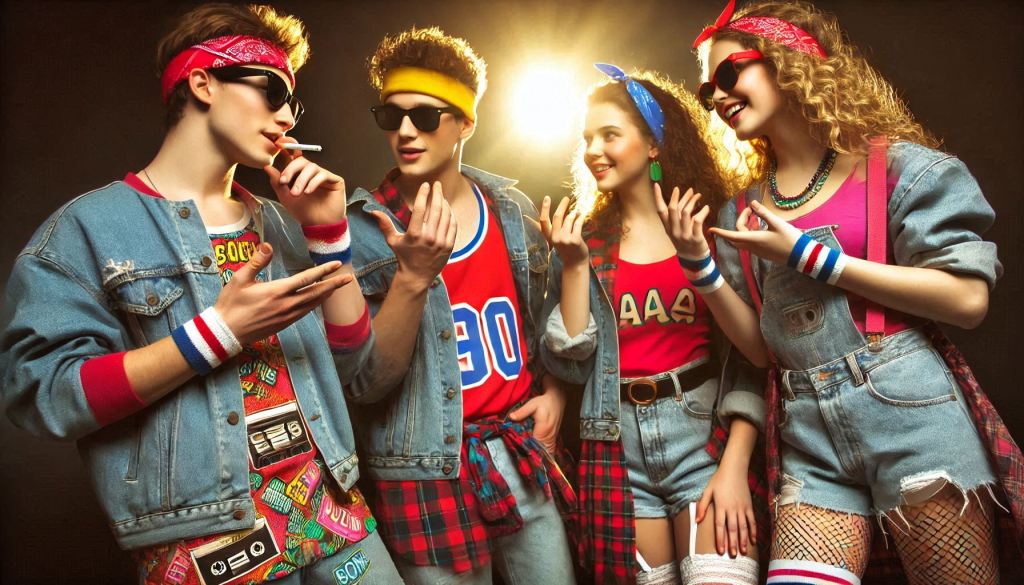
The slang of the 1980s captured a generation’s optimism, individuality, love for pop culture, and rebellious energy. It wasn’t merely a linguistic quirk of the decade; it was a vivid reflection of the attitudes, aspirations, and cultural shifts that defined the era. Today, these terms serve as a nostalgic reminder of a time when language was as bold and vibrant as the people who used it.
The Legacy of 1980s Slang
While some slang from the 1980s has faded, many terms have endured. Words like “awesome” and “dude” remain staples of everyday language, while others like “gnarly” and “radical” evoke nostalgia. The 1980s also set the stage for the slang revolutions of the 1990s and beyond, proving that language is as dynamic as the culture it reflects.
In conclusion, the slang of the 1980s is more than just a quirky relic of the past—it’s a vibrant reminder of a decade that was totally tubular. Whether you’re reminiscing or discovering it for the first time, 1980s slang is, without a doubt, choice.

 Totally Retro: 80s Edition
Leave a comment