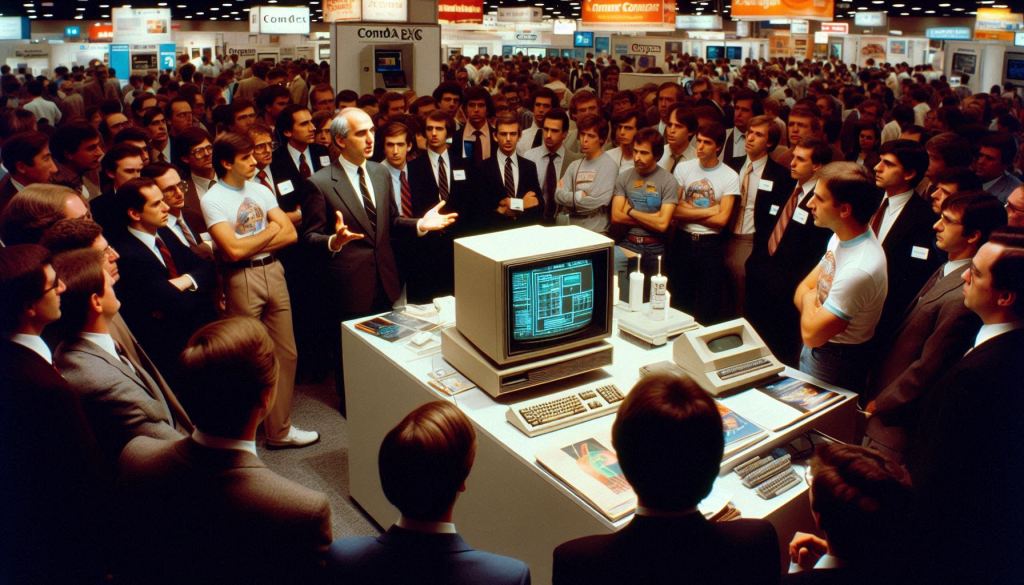
For those who came of age during the dawn of personal computing, the mention of COMDEX stirs a wave of nostalgia. Short for Computer Dealers’ Exhibition, COMDEX was more than just a trade show; it was the pulsating heart of the tech world from 1979 to 2003. It was where dreamers, tinkerers, and titans of the industry converged, unveiling cutting-edge innovations that would shape the future of technology. Held annually in Las Vegas, COMDEX was a spectacle, a proving ground, and a celebration of the boundless possibilities of computing.
The Rise of COMDEX
COMDEX debuted in 1979, spearheaded by Sheldon Adelson, a visionary entrepreneur who saw the growing potential of the personal computer industry. At a time when the concept of a trade show dedicated solely to computing was still novel, Adelson recognized that an industry poised for explosive growth needed a centralized platform for innovation, networking, and commerce. His vision was clear: create an event that would bring together hardware manufacturers, software developers, and eager retailers under one roof. Las Vegas, with its convention-friendly infrastructure and an atmosphere that encouraged deal-making, was the perfect setting.
In its inaugural year, COMDEX drew a modest crowd of around 4,000 attendees, primarily industry insiders, computer enthusiasts, and early tech entrepreneurs. The exhibition floor was filled with booths showcasing the latest in microprocessors, disk drives, and emerging software applications. While the scale was small, the enthusiasm was immense. Even in its first iteration, the trade show had an undeniable buzz, fueled by a growing awareness that computing was on the brink of becoming a mainstream phenomenon.
By the early 1980s, COMDEX had gained significant traction. It became a magnet for companies looking to introduce their latest products to a market hungry for innovation. The industry was rapidly evolving, and the trade show became the battleground where companies fought for dominance. It was at COMDEX that IBM solidified its position in the personal computing space, where Microsoft aggressively promoted MS-DOS and later Windows, and where emerging players like Dell and Compaq introduced cost-effective, high-performance machines that would reshape the landscape of computing.
The trade show’s growth mirrored that of the personal computing revolution. By 1985, COMDEX was drawing tens of thousands of attendees, expanding its floor space to accommodate the increasing number of exhibitors. The range of showcased products evolved beyond just computers; peripherals, networking solutions, and early consumer electronics became part of the event’s fabric. The energy at COMDEX was electric. Picture a sea of CRT monitors flickering with cutting-edge software, the hum of processors in the background, and throngs of attendees, many in sharp suits, others in geeky T-shirts, all sharing one thing: a deep fascination with technology.
As the decade progressed, COMDEX became more than just a showcase—it became a proving ground. Startups and established tech giants alike understood that a successful product launch at COMDEX could make or break their fortunes. The sheer density of industry leaders, venture capitalists, and press meant that an innovative idea could gain instant recognition or be buried beneath a flood of competing announcements. Product demonstrations became more elaborate, keynote speeches grew in importance, and the media presence expanded, ensuring that groundbreaking revelations reached a global audience.
By the end of the 1980s, COMDEX had firmly established itself as the most important technology trade show in the world. It was the place where deals were made, partnerships were forged, and the future of computing was mapped out in real-time. Its influence extended far beyond the exhibition halls; the trends and technologies highlighted at COMDEX often dictated the trajectory of the tech industry for years to come.
Through strategic timing, relentless expansion, and an ability to attract the best and brightest in the industry, COMDEX had become more than just a trade show—it was the heartbeat of an industry that was changing the world at an unprecedented pace.
The Innovations That Shaped the Future
COMDEX was more than just a trade show—it was a window into the future of technology. Over the years, it became the launchpad for some of the most significant innovations that would go on to shape the computing landscape for decades. Attendees at the event had the unique opportunity to witness these technological milestones firsthand, many of which would later define the 1980s, 1990s, and beyond.
In 1983, Microsoft introduced Windows at COMDEX, a graphical user interface that would eventually become the cornerstone of personal computing. At the time, Windows was a bold step into the world of GUI-based systems, offering a user-friendly alternative to the command-line interfaces that dominated computing. While the initial release of Windows wasn’t immediately groundbreaking, it set the stage for the dominance of Microsoft in the personal computer market. Over the years, successive versions of Windows would grow in sophistication, eventually becoming the most widely used operating system in the world.
The following year, in 1984, Apple made waves at COMDEX with the unveiling of the Macintosh. Steve Jobs, ever the showman, gave one of his now-legendary presentations, introducing a machine that was as much about design and user experience as it was about functionality. The Macintosh’s sleek, compact design, along with its graphical user interface, was a radical departure from the industry norm. For many, it was the first real example of how technology could be beautiful and accessible. It wasn’t just about raw computing power—it was about making technology more human. The launch of the Macintosh at COMDEX marked a turning point in the personal computing revolution, paving the way for Apple’s ascent as one of the most influential tech companies in the world.
But COMDEX wasn’t just a stage for polished, market-ready products—it was also a playground for experimentation, where wild ideas and prototypes were often shown before they were fully realized. For example, the 1980s and 1990s saw early glimpses of technology that would later become mainstream, such as handheld devices, the first iterations of personal digital assistants (PDAs), and the very early stages of virtual reality (VR). Some of these prototypes were clumsy, unrefined, and sometimes far too ahead of their time to succeed in their current form. But that didn’t stop them from capturing the imaginations of attendees.
One notable example was the demonstration of virtual reality systems, which were first shown in the late 1980s and early 1990s. While the technology was in its infancy and far from the immersive experiences we have today, the early attempts at VR at COMDEX were awe-inspiring for those who witnessed them. These devices, which included clunky headsets and cumbersome controllers, didn’t quite live up to the futuristic promises of creating fully immersive digital worlds. But the idea of VR, once only seen in science fiction, began to take shape in those early demonstrations.
Another quirky but memorable product showcased at COMDEX was the first wave of handheld computers and mobile devices, long before the smartphone revolution. These early PDAs were clunky and limited in their functionality, but they set the groundwork for what would eventually lead to the smartphones and tablets that dominate our lives today. The vision of computing on-the-go, accessible in the palm of your hand, was a dream that many attendees had as they watched these devices evolve at COMDEX.
The beauty of COMDEX lay in the mix of polished releases from major corporations and the experimental prototypes from startups and independent developers. This dynamic created an environment ripe for creativity, where attendees could marvel at what worked and wonder at what didn’t. Sometimes, the tech on display was ahead of its time, and many ideas didn’t take off as expected. But it was at COMDEX where they were first revealed, often sparking conversations that would later evolve into successful ventures or technologies.
The show was a testing ground where ideas could be freely explored, no matter how outlandish they seemed. For some, it was an opportunity to witness the seeds of groundbreaking technology. For others, it was a chance to get a glimpse of the quirky ideas that would never make it past the prototype stage but were nonetheless fascinating in their ambition.
In the years following, many of these early-stage innovations would come to fruition, while others would be left by the wayside. But at COMDEX, they all shared one thing in common: the potential to reshape the future of technology. Looking back, it’s clear that COMDEX was a critical moment in the development of the computing industry, where bold ideas were not only showcased but also tested and refined. It was a place where the dreams of the future were not only imagined but also brought to life—if only for a brief moment.
The Halt and Catch Fire Connection
The excitement and intensity of COMDEX were so culturally significant that it even made its way into the fictional world of Halt and Catch Fire, the critically acclaimed TV series that delves into the early days of personal computing and the rise of the internet. The series, set in the 1980s and 1990s, follows a group of visionary but often flawed characters as they navigate the cutthroat world of Silicon Valley and its rapidly evolving technological landscape. In the show’s first season, Halt and Catch Fire gives viewers a fictionalized yet deeply evocative look at the world of COMDEX, specifically in Season 1, Episode 9, where the trade show takes center stage.
In this episode, the characters attend COMDEX to launch their groundbreaking product—a personal computer that promises to revolutionize the industry. As the episode unfolds, the frantic pace of the event is captured with precision, reflecting the cutthroat nature of the tech world in its early days. The characters are caught up in the chaos of product launches, last-minute tweaks, and desperate attempts to stand out from a sea of competitors. The relentless pressure to succeed, the thrill of unveiling a new technology, and the bitter rivalries that unfold in the face of opportunity are all on display, mirroring the real-life drama that played out on the floors of COMDEX for over two decades.
For those who attended COMDEX, watching this episode of Halt and Catch Fire is like stepping back into a time machine. The show captures the palpable energy of the event—the buzzing of the fluorescent lights, the smell of fresh carpeting, and the hum of hundreds of computer prototypes being displayed for the first time. The heat of the Nevada desert is almost tangible as you watch characters frantically prepare their products for the spotlight, all while trying to keep their ambitions in check amidst the chaos. Whether it’s the last-minute technical fixes or the high-stakes pitch to investors and industry giants, the emotional intensity depicted in the show resonates with anyone who has experienced the pressure and excitement of a major trade show.
But it’s not just about the action on the floor—Halt and Catch Fire also captures the underlying cultural significance of COMDEX. The trade show wasn’t just a place for companies to show off their latest gadgets; it was a microcosm of the ambitions and dreams that defined an entire generation of tech innovators. At COMDEX, the stakes were high, and the potential for success or failure loomed over every interaction. The show’s portrayal of COMDEX as a battleground for ideas and egos underscores the intense pressure of this formative period in the tech industry.
What makes the Halt and Catch Fire depiction of COMDEX so compelling is that it captures not just the technical aspects of the event, but the human drama that unfolded behind the scenes. The characters in the show embody the struggles of real-life pioneers in the industry: those who faced rejection, those who triumphed against the odds, and those who, in the face of failure, refused to give up on their vision. Their experiences are mirrored in the stories of countless tech entrepreneurs and developers who attended COMDEX over the years, hoping to make their mark in the industry.
The series also sheds light on the personal sacrifices made in the pursuit of innovation. Halt and Catch Fire explores the tension between professional ambition and personal relationships, and how the obsessive drive to succeed often comes at a cost. For many who worked in the tech industry during the COMDEX era, this narrative rings true. The relentless pace of innovation, the constant push to stay ahead of the competition, and the pressure to deliver at a high-profile event like COMDEX often meant that family, friendships, and mental well-being were left behind in the race for success.
In the broader context of Halt and Catch Fire, the depiction of COMDEX is also a love letter to the unsung heroes of the early personal computing revolution. While we often hear about the big names—Steve Jobs, Bill Gates, and the like—Halt and Catch Fire focuses on the smaller, more personal stories of the people who helped shape the tech industry in ways that weren’t always celebrated or recognized. COMDEX, in its prime, was the venue where these unsung heroes could showcase their ideas and products to the world, regardless of whether they had the backing of massive corporations or were bootstrapping their way to success. The event became a symbol of the DIY spirit that permeated the early days of Silicon Valley, where visionaries weren’t just tech moguls—they were inventors, engineers, and dreamers trying to make their mark in an ever-changing world.
For a new generation of viewers, the Halt and Catch Fire portrayal of COMDEX serves as an introduction to an era of technological innovation that might otherwise seem distant or irrelevant. It bridges the gap between the early pioneers of personal computing and the modern tech world we know today. The series invites viewers to appreciate the complexities of the personal computing revolution, while also drawing attention to the chaotic, messy, and often imperfect process of bringing groundbreaking ideas to life.
In this way, Halt and Catch Fire doesn’t just dramatize the events of COMDEX—it reimagines them, infusing the trade show with a sense of purpose and energy that reflects the spirit of innovation that made the event so iconic. Through the lens of the series, we see how COMDEX was more than just a trade show; it was a cultural touchstone, a symbol of the relentless drive for progress, and a platform where history was made, one revolutionary idea at a time.
The Magic of COMDEX
For many attendees, COMDEX was less about the products themselves and more about the people who brought them to life. It was a unique gathering where the true power of the event lay not in the polished displays or flashy demonstrations, but in the connections forged in the heat of the moment. In the fast-paced, ever-changing tech world, COMDEX became a place where the line between business and personal relationships blurred. It was a celebration of both the products and the people behind them—the dreamers, the visionaries, and the eccentric personalities that made the tech industry so dynamic.
While major tech companies used COMDEX to launch their newest products, the real pulse of the event could often be found in the informal conversations that happened off the exhibition floor—over coffee, in bars, or in the crowded hallways of the Las Vegas convention center. The trade show acted as a social epicenter, where industry giants mingled with startups, journalists rubbed elbows with engineers, and entrepreneurs had the chance to pitch their ideas to venture capitalists and potential partners. For many, these off-the-floor interactions were just as important as seeing the latest products. The conversations were filled with potential—discussions that could spark collaborations, partnerships, or even rivalries that would shape the future of the tech world.
One of the most iconic aspects of COMDEX was its ability to level the playing field. In a world where the biggest players in tech often seemed out of reach, the trade show allowed smaller companies and startups to rub shoulders with the titans of the industry. The informal nature of the event meant that it was possible for an ambitious startup to make connections with the people who could change the trajectory of their company. A young entrepreneur who might not have had the resources or the backing of a corporate powerhouse could find themselves seated next to a seasoned industry veteran at a dinner or cocktail event. This was especially true during the late-night hours in Las Vegas bars, where the serious business talk often gave way to more personal conversations that built the foundation for future ventures. These interactions weren’t just about selling products—they were about selling ideas and building trust.
But beyond the business connections and networking opportunities, COMDEX was a place where friendships were formed, and rivalries were stoked. For many attendees, the bonds they formed at COMDEX were lifelong, and some of the fiercest industry rivalries also began here. The competitive energy in the air was palpable. Companies weren’t just competing for attention in the trade show booths; they were competing for the minds of investors, consumers, and journalists. In the cutthroat world of tech, every interaction had the potential to become a game-changer. These rivalries weren’t just about one-upmanship; they were about the pursuit of something larger—innovation, influence, and legacy. Whether it was Bill Gates squaring off with Apple’s Steve Jobs, or smaller startups trying to carve out their own space amid the giants, the undercurrent of competition was ever-present at COMDEX. But amid the competition, respect for each other’s work and a shared passion for technology created a bond that transcended the typical business rivalry.
Walking through the aisles of COMDEX, it wasn’t unusual to stumble upon some of the most influential figures in tech. Bill Gates, for instance, was known to give impromptu demonstrations of Microsoft’s latest innovations, offering attendees an up-close look at the future of personal computing. These moments were both surreal and incredibly intimate—here was one of the most important figures in tech, casually showing off the product that would soon become the backbone of the industry. For those who were there, it wasn’t just about witnessing a product launch; it was about seeing history unfold in real time. COMDEX was a place where big names in tech were accessible, where you might just catch a glimpse of the next big thing before it became a household name. It was a treasure trove of opportunities, where serendipity often played as much of a role in discovery as careful planning.
For journalists, COMDEX was a goldmine. It wasn’t just about reporting the latest product announcements—it was about uncovering stories that would shape the future of the tech world. In the flurry of product launches, meetings, and demonstrations, the journalists who attended COMDEX had a front-row seat to the next wave of technological innovations. With the press swarming every corner of the event, the stories told at COMDEX had the potential to propel unknown companies into the spotlight or expose industry trends before they went mainstream. It wasn’t just about covering the latest hardware and software; it was about understanding the culture and dynamics of an industry in transition. And with so many people packed into one venue, journalists often had the opportunity to engage in off-the-record conversations that gave them insight into the personalities and strategies behind the products they covered.
What made COMDEX particularly magical was its role as a microcosm of the entire tech world. The event brought together visionaries from every corner of the industry—hardware engineers, software developers, marketers, and futurists—who all came to share their passion for innovation and to explore the possibilities of what technology could become. It didn’t matter if you were a seasoned industry veteran or a hobbyist just starting to tinker with new ideas. At COMDEX, everyone had a place. The atmosphere was electric, fueled by the shared belief that the future was being written right before their eyes. It was a place where dreams could be realized, where people from different backgrounds and skill sets could come together to shape the future of personal computing.
For many attendees, the true magic of COMDEX lay in its ability to foster collaboration. It wasn’t just a place to show off products—it was a place to explore new ideas, test the limits of what was possible, and imagine a world where technology could solve problems in ways no one had ever considered. Startups, independent developers, and even hobbyists could find a supportive community of like-minded individuals at COMDEX, where they could exchange ideas and feedback. It was a place where innovation was driven not just by the big players in the industry, but by everyone—from the smallest garage-based startup to the most established companies.
In the end, COMDEX was about more than just the products—it was about the people, the relationships, and the spirit of collaboration that fueled the tech industry’s growth. It was a celebration of the people who were willing to dream big, to take risks, and to believe in the impossible. As the tech world continued to evolve, the memories and connections made at COMDEX remained a testament to the event’s enduring legacy.
The Fall of an Icon
By the early 2000s, the tech landscape was beginning to shift in ways that made the once-iconic COMDEX seem out of step with the times. The rise of the internet and the proliferation of online platforms started to change how technology was showcased, discussed, and marketed. Major conferences like CES (Consumer Electronics Show) and E3 (Electronic Entertainment Expo) began to draw the spotlight away from COMDEX, offering more specialized and targeted experiences for the rapidly growing tech and gaming industries. These newer events not only drew larger crowds but also had the benefit of focusing on more specific niches within the broader tech ecosystem, something COMDEX, in its broader approach, was struggling to adapt to.
One of the major forces contributing to the decline of COMDEX was the burst of the dot-com bubble in 2000. The dot-com era had been a time of rampant speculation, where the promise of the internet created a frenzy of investment and innovation. The internet seemed like an endless well of opportunity, and companies scrambled to stake their claim in the emerging digital world. However, by the early 2000s, the bubble burst, leaving behind a trail of collapsed startups, failed IPOs, and a shaken tech industry. The fallout from the collapse of the dot-com boom had wide-reaching consequences. Investors became more cautious, and companies began scaling back their marketing expenditures, including participation in trade shows. With fewer companies exhibiting, and fewer new technologies to unveil, COMDEX began to lose its luster.
Adding to COMDEX’s struggles were the shifts in the way technology was being showcased. The internet, which had played such a transformative role in the development of personal computing, was now central to the way new products and services were promoted. Instead of waiting for annual trade shows to unveil new products, companies began to look to the internet as a more immediate and global platform. The real-time news coverage, product announcements, and online demos allowed companies to bypass the old methods of introduction, making large-scale trade shows like COMDEX less relevant.
As the landscape of the tech world evolved, COMDEX’s once grandiose model—where everything from hardware to software to business deals was showcased under one roof—began to feel out of touch. Specialized shows like CES, which focused more narrowly on consumer electronics, or E3, which zeroed in on the gaming industry, became increasingly important. These events catered directly to their audiences, making it easier for both companies and consumers to connect with what mattered most to them. COMDEX, which had tried to cover such a vast range of the tech world, began to feel more scattered and less focused, further diminishing its appeal.
By 2003, the writing was on the wall. COMDEX, which had once been a hub of innovation, a place where major players in the tech industry showcased their most cutting-edge products, was no longer the primary stage for these grand reveals. In 2003, the show held its final event, marking the end of an era. It was a somber moment for those who had witnessed the trade show’s rise, and for many, its fall was a reflection of the changing dynamics in the technology sector. The industry had moved on, and so had the needs of those who attended the show.
Yet, despite its decline and eventual demise, the spirit of COMDEX lives on for those who attended and participated. It was more than just an exhibition of the latest and greatest technology—it was a community, a movement, and a moment in time that captured the raw energy and potential of the early days of personal computing. For the entrepreneurs, engineers, journalists, and visionaries who attended the show, COMDEX was a shared experience, a place where history was made, and where the tech world’s future was often decided.
For those who were there, COMDEX represented more than just a trade show—it was a launchpad for ideas that would transform the world. It was a place where connections were made, partnerships were formed, and inspiration was ignited. The memories of the event lived on in the friendships and collaborations that blossomed during those bustling days in Las Vegas. The relationships built at COMDEX led to some of the most successful ventures in tech, and the discussions and debates in the hallways of the convention center often set the stage for innovations that would shape the digital age.
Moreover, COMDEX wasn’t just a professional event—it was a cultural touchstone. It was a microcosm of the tech world, where Silicon Valley’s obsession with pushing boundaries was mirrored in the hustle and bustle of the trade show floor. COMDEX wasn’t just about new products; it was about the dreams and aspirations of the people who created them. It was where the future was imagined, even if it wasn’t always clear what that future would look like. In this sense, COMDEX was much more than a commercial trade show—it was a gathering place for the curious, the ambitious, and the optimistic, all of whom were united by a single, unshakable belief: technology could change the world.
The final COMDEX in 2003 may have marked the end of an era, but the event’s influence is still felt today. The legacy of COMDEX can be seen in the modern-day tech conferences that have replaced it—events that continue to bring together the best and brightest in the industry to showcase new technologies, exchange ideas, and celebrate the ongoing evolution of personal computing. While COMDEX itself is no longer around, its spirit lives on in every startup launch, every tech announcement, and every new iteration of the devices we use daily.
For those who were fortunate enough to be part of COMDEX’s glory days, the trade show will always be remembered as a defining moment in the history of personal computing. It was a place where the impossible seemed just within reach, where the future was constantly being reimagined, and where anyone with a dream could find a platform to make that dream a reality. And while the tech world has changed drastically since COMDEX’s final curtain call, its legacy as the grand stage for the personal computing revolution remains secure.
A Nostalgic Reflection
For anyone who remembers the era of floppy disks, dial-up modems, and CRT monitors, COMDEX is a bittersweet memory. It represents a time when technology was raw and full of promise, when the future felt infinite, and every innovation felt like magic.
So, whether you’re rewatching Halt and Catch Fire or dusting off an old 386 PC, take a moment to remember COMDEX—the trade show that was more than just an exhibition. It was a celebration of dreams, a gathering of visionaries, and a beacon for a future we’re still exploring today.
Note to the Reader:
If you’re a fan of 1980s technology and the groundbreaking spirit of that era, you absolutely must check out the TV series Halt and Catch Fire. This phenomenal show captures the raw ambition, passion, and chaos of the early tech revolution, and it brilliantly brings events like COMDEX to life.
In Season 1, Episode 9, the characters dive into the heart of COMDEX, navigating its frenetic energy and high-stakes atmosphere. It’s a perfect tribute to the magic of the event—filled with dazzling innovations, fierce rivalries, and a relentless drive to shape the future.
Whether you lived through the 1980s or simply love the nostalgia of floppy disks, CRT monitors, and the birth of personal computing, Halt and Catch Fire will take you back to a time when technology felt limitless and COMDEX was the epicenter of it all. It’s more than a show; it’s a time machine to the era that changed everything.
 Totally Retro: 80s Edition
Leave a comment