
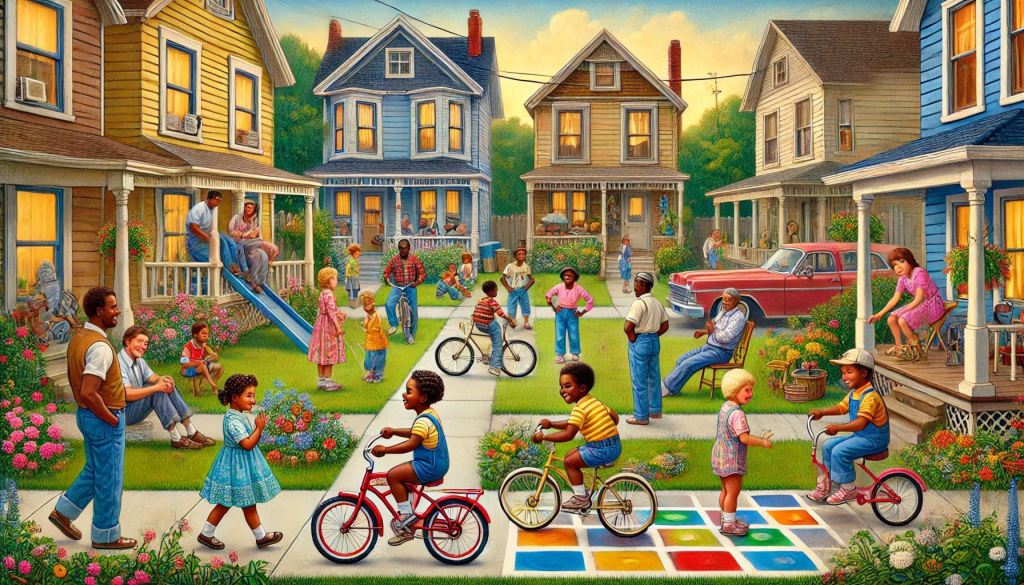
The 1980s were a decade of distinct simplicity, both in terms of society’s structure and the technology that influenced daily life. At the time, the world appeared to be at the peak of convenience in many ways, despite the emerging challenges that would shape the future. The resources we relied on were plentiful, the extraction methods less complicated, and the technological landscape relatively straightforward compared to today. For many, it felt like an era where life was manageable and relatively easy. Yet, as we look at the current world of 2025, it’s evident that things have become far more complex. This transformation has occurred as a result of several key factors, including population growth, resource scarcity, global climate changes, and the rapid advancement of technology.
The Simplicity of Resources in the 1980s
In the 1980s, the world had access to abundant natural resources. Fossil fuels such as oil, coal, and natural gas were still the primary energy sources, and extraction methods, while growing more advanced, were not as environmentally taxing as those used today. Oil reserves seemed endless, and new reserves were continually discovered. Mining operations for precious metals, minerals, and other materials were conducted with less emphasis on sustainability and environmental protection, but they had not yet reached the critical levels of depletion we now see.
The simplicity of resource extraction in the 1980s was also tied to the relatively limited global population. With fewer people consuming resources, the pressure on ecosystems and the environment was not as intense. This period marked the tail end of the post-World War II economic boom, where growth seemed to come without significant negative consequences. Industries had not yet fully explored the consequences of over-extraction, and there was a prevailing sense of optimism about humanity’s ability to manage resources without overexploiting them.
The 1980s Technological Landscape
The technology of the 1980s was both groundbreaking and, in many ways, simpler than what we have today. Personal computers were becoming commonplace, but they were much less powerful and complex than the machines we use today. The internet, which would later transform the world, was in its infancy, and most people had not yet encountered the virtual world in the way we do now. Mobile phones existed but were bulky and expensive, and they were not yet the omnipresent devices they are today.
Communication in the 1980s was straightforward. People relied on landline telephones, and long-distance calls were often costly. The advent of personal computers allowed for more accessible ways to work and connect, but the idea of being constantly connected was still a distant future. The speed of life, in many ways, was slower, and technology was not yet pushing society to move at an ever-increasing pace.

In the workplace, computers were starting to be integrated into daily operations, but most tasks were still carried out manually. There was a sense that technology was an enhancement, not yet an overwhelming force that dictated every aspect of daily life. Information was stored in physical files, and businesses were not as reliant on data analysis and digital infrastructure as they are today.
The Shift: Growing Population and Scarcity of Resources
Fast forward to 2025, and the world is a vastly different place. One of the most striking changes is the global population. In 1980, the world’s population was approximately 4.4 billion people. By 2025, it is expected to reach around 8 billion. This explosion in population has put unprecedented pressure on resources. The abundance of resources that once seemed almost infinite has now become a limited commodity, and the world faces significant challenges in ensuring that everyone has access to what they need.
Scarcity is now a reality. Natural resources, once plentiful and easily extracted, are becoming harder to find and more expensive to extract. Fossil fuels are still widely used, but they are increasingly seen as unsustainable. Oil reserves are declining, and extraction methods, such as deep-water drilling and fracking, have become more complex and environmentally damaging. The search for alternative energy sources like wind, solar, and nuclear power has intensified, but these technologies are still in a race to catch up with demand.
Water scarcity is another growing concern. While water was once an abundant resource, it is becoming more difficult to access clean water in many parts of the world. The global population has strained natural freshwater systems, and many regions are facing droughts and declining water tables. This issue is compounded by pollution, which has contaminated rivers, lakes, and groundwater sources, further complicating the availability of clean drinking water.
The scarcity of resources is also linked to the changing climate. In the 1980s, climate change was a concept that had not yet fully entered the mainstream consciousness. While there were early signs of environmental degradation, the global impact of climate change had not yet reached the levels we see today. Now, in 2025, we are grappling with the full consequences of a warming planet. Extreme weather events, rising sea levels, and shifting ecosystems have created an urgency for sustainable resource management.
The Complexity of Global Climate Change
Global climate change is one of the most significant challenges facing humanity today. The world is experiencing more frequent and severe weather events, including heatwaves, hurricanes, and floods. These events not only disrupt local economies but also strain the resources needed for recovery. The impacts of climate change are felt globally, but they are often more severe in developing countries, where infrastructure and resources are less robust.
In the 1980s, the effects of climate change were still a distant concern for most people. While environmentalists were sounding the alarm about pollution and deforestation, the full scope of climate change was not yet understood. Today, however, the effects of human activity on the environment are clear. Deforestation, industrial pollution, and the burning of fossil fuels have contributed to the acceleration of climate change, leading to more severe consequences for ecosystems, agriculture, and human populations.
The complexity of climate change today lies in the interconnectedness of global systems. The environmental, social, and economic aspects of climate change are not isolated—they are deeply intertwined. For example, deforestation not only contributes to carbon emissions but also affects local weather patterns, agriculture, and biodiversity. The complexity of these interconnected issues requires multifaceted solutions that involve international cooperation, technological innovation, and systemic changes in the way we live.
The Role of Technology in 2025
In 2025, technology has become an integral part of nearly every aspect of life. While the technological landscape of the 1980s was simple by today’s standards, today’s technology is both ubiquitous and overwhelmingly complex. The internet has revolutionized the way we work, communicate, and live, and the rise of artificial intelligence, automation, and data-driven decision-making has transformed industries across the board.
However, the rapid pace of technological advancement has also led to challenges. In the 1980s, technology was still a tool for personal and professional enhancement, but in 2025, it is a force that drives societal change at an unprecedented rate. Automation and AI are transforming industries, but they also present challenges related to job displacement and inequality. The gig economy, once a small sector, is now a dominant force in the global workforce, creating new opportunities but also contributing to economic instability for many workers.
Technology has also made life more interconnected, but this interconnectedness has led to new vulnerabilities. Cybersecurity threats, data privacy concerns, and the spread of misinformation are all byproducts of a hyper-connected world. The very technologies that have made life more convenient and efficient have also introduced new complexities and risks that were not present in the simpler technological world of the 1980s.
The Way Forward
As we move forward into the future, the challenges of the 2020s and beyond are clear. The world has become more complex due to the interplay of a growing population, resource scarcity, global climate change, and rapidly advancing technology. These factors are not isolated; they are deeply interconnected, and their impacts are felt across the globe.
In many ways, the simplicity of the 1980s is a distant memory. Today, we are tasked with finding solutions to problems that were not as pressing in the past. However, there is hope. The challenges of today also present opportunities for innovation, cooperation, and change. By embracing sustainable practices, investing in clean energy, and using technology to address societal issues, we can work toward a future that is both livable and sustainable.
In conclusion, while the 1980s may have felt like a simpler time, the world of 2025 is marked by complexity. The factors driving this complexity—population growth, resource scarcity, climate change, and technological advancement—are shaping our world in profound ways. The challenge for the future is to navigate this complexity, finding solutions that ensure a better, more sustainable world for future generations.
 Totally Retro: 80s Edition
Leave a comment