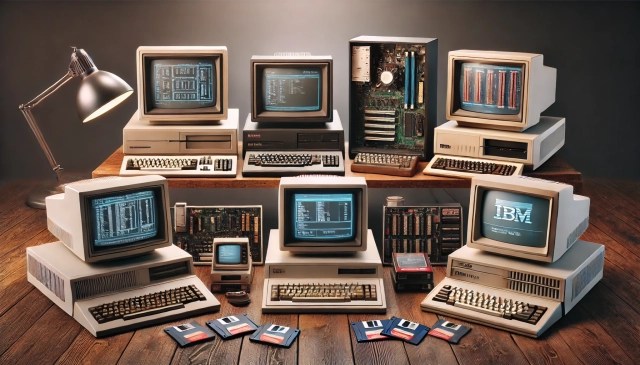
The 1980s were a pivotal decade for personal computing, marked by rapid innovation, fierce competition, and the explosive growth of technology that would lay the foundation for the modern digital age. While much has been written about the successes of industry giants like IBM, Apple, and Microsoft, a fascinating and often overlooked chapter of this era involves the rise and fall of home computer clones. These unofficial, often reverse-engineered versions of popular computers played a significant role in democratizing access to technology while simultaneously challenging legal and ethical norms. The story of the “clone wars” is one of ingenuity, controversy, and a relentless pursuit of technological progress.
The Birth of the Clone Phenomenon
In 1981, IBM introduced the IBM Personal Computer (PC), a groundbreaking device that set the standard for the personal computing industry. Its modular architecture, based on off-the-shelf components, allowed for easy assembly and scalability. IBM’s decision to use an open architecture meant that its design could be replicated, and this openness became both a blessing and a curse. While it accelerated innovation, it also invited competitors to produce “clones” — computers that mimicked the IBM PC’s design and functionality but were sold at a lower cost.
One of the earliest and most successful clone manufacturers was Compaq, a Texas-based company founded in 1982. Compaq’s first product, the Compaq Portable, was a near-perfect replica of the IBM PC, but with a twist — it was portable, a feature that IBM had not yet explored. Compaq achieved this by reverse-engineering IBM’s BIOS (Basic Input/Output System), the core software that allowed the hardware to communicate with the operating system. Using a process known as “clean room design,” engineers legally replicated the BIOS without directly copying IBM’s code. This method involved one team studying the original BIOS to document its functionality, while another team, with no exposure to IBM’s proprietary code, recreated it from scratch.
The Global Expansion of Cloning
As Compaq’s success demonstrated the viability of cloning, a wave of manufacturers worldwide began producing their own IBM-compatible machines. Taiwan became a hotspot for clone production, with companies like Acer and Mitac entering the fray. These clones, often referred to as “white box” PCs, were sold at significantly lower prices than IBM’s offerings, making personal computers more accessible to consumers and small businesses.
In the United States, companies like AST Research and Leading Edge followed suit, producing affordable IBM-compatible computers that appealed to budget-conscious buyers. In Europe, firms like Amstrad and Olivetti carved out their niches, further fragmenting the market. By the mid-1980s, clones accounted for a significant portion of the personal computer market, challenging IBM’s dominance and driving down prices across the board.
The Role of Reverse Engineering
Reverse engineering was the backbone of the clone industry. While IBM’s hardware was relatively easy to replicate due to its use of off-the-shelf components, the BIOS posed a more significant challenge. Companies that wished to produce IBM-compatible machines had to develop their own BIOS, as directly copying IBM’s code would constitute copyright infringement.
The clean room design process became the industry standard for legally reverse-engineering the BIOS. This method required strict adherence to ethical and legal guidelines to ensure that no proprietary code was copied. While it was a time-consuming and expensive process, it allowed companies like Compaq to compete with IBM without violating intellectual property laws.
The Legal and Ethical Battleground
The rise of clones sparked a series of legal battles that would shape the future of intellectual property law in the tech industry. IBM, determined to protect its market share, filed lawsuits against several clone manufacturers, alleging copyright infringement and unfair competition. However, the courts often ruled in favor of the clone makers, as long as they could prove that their BIOS was independently developed.
One of the most notable cases involved Compaq and Phoenix Technologies, a company that specialized in creating BIOS software. Phoenix developed a clean room BIOS that became the standard for many clone manufacturers, effectively neutralizing IBM’s attempts to control the market. This case highlighted the fine line between innovation and imitation, forcing the tech industry to grapple with complex questions about intellectual property and competition.
The Impact on the Personal Computer Industry
The proliferation of clones had a profound impact on the personal computer industry. By driving down prices, clones made personal computers more affordable and accessible, accelerating their adoption in homes, schools, and businesses. The competition also spurred innovation, as companies sought to differentiate their products with unique features and designs.
For IBM, however, the clone wars were a double-edged sword. While the open architecture of the IBM PC helped establish it as the industry standard, it also allowed competitors to erode its market share. By the late 1980s, IBM was no longer the dominant force in personal computing, as a new generation of companies, including Dell and Gateway, rose to prominence.
The Decline of the Clone Era
The clone wars began to subside in the late 1980s and early 1990s as the personal computer industry matured. Microsoft, which had supplied the operating system for the IBM PC and its clones, emerged as the dominant player in the software market. The rise of Windows as the de facto standard for PC operating systems shifted the focus from hardware to software, reducing the significance of hardware compatibility.
At the same time, advances in manufacturing and supply chain management allowed major brands to produce computers at lower costs, narrowing the price gap between clones and branded PCs. As a result, many clone manufacturers either pivoted to other markets or were acquired by larger companies.
Legacy of the Clone Wars
Although the era of home computer clones has largely faded into history, its legacy endures. The clone wars democratized access to technology, laying the groundwork for the widespread adoption of personal computers. They also highlighted the importance of open standards and compatibility, principles that continue to shape the tech industry today.
The legal battles and ethical debates of the clone era set important precedents for intellectual property law, influencing how companies approach innovation and competition. The clean room design process, pioneered by clone manufacturers, remains a vital tool for ensuring compatibility in today’s interconnected world.
Ultimately, the story of the home computer clones is a testament to the ingenuity and resilience of the tech industry. It serves as a reminder that progress often comes from unexpected places, driven by the relentless pursuit of innovation and the belief that technology should be accessible to all.
 Totally Retro: 80s Edition
Leave a comment