
The 1980s were a transformative decade for the video game industry, and few titles defined the era as vividly as Super Mario Bros. Released by Nintendo in 1985 for the Nintendo Entertainment System (NES), this game became a cultural phenomenon that not only redefined platform gaming but also cemented Mario and Luigi as enduring icons of popular culture. For those who grew up during this time, Super Mario Bros. was more than just a game—it was a portal to a magical world of adventure, discovery, and boundless imagination.
The Birth of an Icon
Mario, Nintendo’s mustachioed plumber, first appeared in the 1981 arcade game Donkey Kong. Known simply as “Jumpman” at the time, his role was to rescue a damsel in distress from a giant ape. Though the game was revolutionary, it was the 1983 arcade game Mario Bros. that first introduced Mario’s brother, Luigi, and established the concept of them as plumbers battling enemies in underground sewers. These early games laid the groundwork for the creation of Super Mario Bros., which would elevate the characters to superstar status.
When Super Mario Bros. hit store shelves in 1985, it was bundled with the NES in North America. The timing was impeccable. The video game industry was recovering from the crash of 1983, and Nintendo’s innovative game design helped breathe new life into the medium. Super Mario Bros. offered something unique: a side-scrolling platformer with vibrant visuals, tight controls, and a sense of exploration that had never been seen before.
The Gameplay That Changed Everything
At its core, Super Mario Bros. was deceptively simple. Players guided Mario (or Luigi in two-player mode) through the Mushroom Kingdom to rescue Princess Toadstool from the clutches of the villainous Bowser. The game consisted of eight worlds, each divided into four levels that ranged from grassy plains to underwater caverns, fiery castles, and perilous bridges.
What made the gameplay so revolutionary was its perfect balance of challenge and accessibility. Each level introduced new mechanics or obstacles, such as Goombas, Koopa Troopas, and Piranha Plants, while power-ups like the Super Mushroom, Fire Flower, and Starman added depth and variety. The tight, responsive controls allowed players to feel fully in command of Mario’s jumps, runs, and fireball attacks, creating an experience that felt both fair and rewarding.
The level design was another masterpiece. The very first screen of World 1-1 is often cited as a masterclass in game design, teaching players the mechanics without a single line of text. The game’s secrets, such as hidden blocks, warp zones, and the iconic 1-Up mushrooms, encouraged exploration and replayability. For kids in the 1980s, discovering these secrets was a rite of passage, often shared in hushed tones on playgrounds or through gaming magazines like Nintendo Power.
The Music and Soundtrack
One cannot discuss Super Mario Bros. without mentioning its unforgettable music. Composed by Koji Kondo, the game’s soundtrack is a masterpiece of chiptune composition. The jaunty, upbeat theme of the Overworld, the tense and suspenseful tones of the Underwater and Castle levels, and the triumphant fanfare of a cleared level are etched into the memories of millions.
Kondo’s work was groundbreaking not only for its catchy melodies but also for its dynamic use of music to enhance gameplay. The faster tempo as the timer ticked down added urgency, while the subtle shifts in tone between levels created a sense of progression and atmosphere. For many players, just hearing the opening notes of the Overworld theme is enough to transport them back to the living rooms and basements of the 1980s.
The Cultural Impact
The success of Super Mario Bros. was unprecedented. It sold over 40 million copies worldwide, becoming the best-selling video game of all time until it was eventually surpassed by Wii Sports. Its popularity turned Mario into the face of Nintendo and one of the most recognizable characters in gaming history.
The game also spawned a massive franchise that extended far beyond the NES. Sequels like Super Mario Bros. 2 (1988) and Super Mario Bros. 3 (1988 in Japan, 1990 in North America) built upon the foundation of the original, introducing new power-ups, characters, and gameplay mechanics. Super Mario Bros. 3 in particular was a cultural event, heavily promoted through the 1989 film The Wizard and widely regarded as one of the greatest video games of all time.
Beyond the games, Mario and Luigi became household names, appearing in cartoons, comic books, and a vast array of merchandise. The Super Mario Bros. Super Show, which aired in 1989, brought the characters to television screens, blending live-action segments with animated adventures. While the show’s quality was mixed, it remains a nostalgic favorite for fans of the era.
The Legacy of Super Mario Bros.
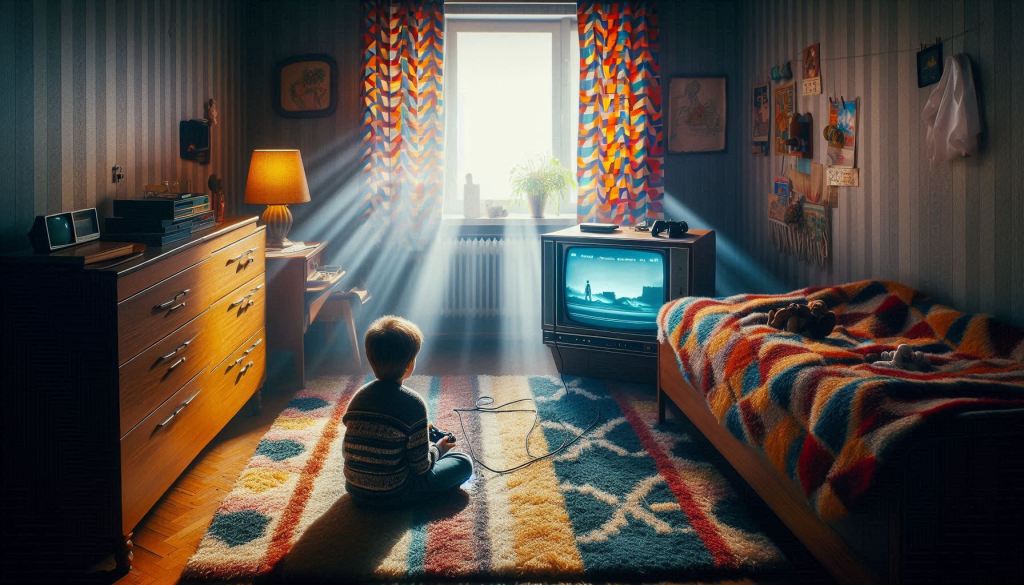
For those who grew up in the 1980s, Super Mario Bros. represents more than just a video game. It was a shared cultural experience that defined childhood for a generation. The act of blowing into NES cartridges, navigating pixel-perfect jumps, and celebrating the discovery of warp zones are memories that remain vivid decades later.
The game’s influence can still be felt today. Its mechanics, level design, and approach to storytelling laid the groundwork for countless platformers that followed. Even as technology has advanced and games have become more complex, the simple joy of playing Super Mario Bros. remains timeless.
As the decades pass, the 1980s nostalgia surrounding Super Mario Bros. only grows stronger. It is a testament to the enduring appeal of Mario and Luigi that they continue to capture the hearts of new generations while holding a special place in the memories of those who first encountered them during the golden age of gaming.
For anyone who experienced the magic of Super Mario Bros. in its heyday, it is not just a game—it is a cherished piece of history, a reminder of a simpler time when saving a princess from a pixelated villain felt like the most important mission in the world.
 Totally Retro: 80s Edition
Leave a comment