
Before the era of smartphones, texting, and social media, the telephone was the heart of communication. In the 1980s, a landline wasn’t just a utility—it was a social tool, a lifeline to friends, and, for many, a means of entertainment. With no internet, no instant messaging, and no video calls, people relied heavily on phone conversations to stay connected. This era gave rise to unique phone culture trends, such as party lines and prank calls, which became an integral part of social life. The landline was the hub of family life, often placed in a central location, leading to shared experiences of communication. Conversations were public within a household, and the constant ringing of the phone was a familiar background sound.
Long before chat rooms and social media, party lines were the original virtual gathering places. Party lines allowed multiple people to share a single phone line, often leading to spontaneous group conversations. In rural areas, party lines were a necessity due to limited infrastructure, but in cities, they became a form of entertainment. People would dial into a shared line and chat with strangers, making friends (or enemies) along the way. Some users would develop entire networks of contacts through party lines, cultivating friendships that sometimes lasted for years. For many teenagers, sneaking onto a party line late at night was an adventure, offering a window into the world of adult conversations and secret rendezvous.
Party lines were essentially multi-user telephone connections where anyone with access to the line could pick up their receiver and join the conversation. Unlike today’s private calls, these lines were communal, meaning that anyone in the network could listen in or interrupt. Users would often agree upon a schedule to avoid conflicts, but in many cases, eavesdropping and accidental interruptions were part of the fun. Some households developed their own signals or codes to indicate when the line was in use, but these were not foolproof, leading to frequent disputes and unintended comedy.
Party lines were popular for several reasons. Many people enjoyed the thrill of meeting new people without ever seeing their faces. Some used party lines to flirt and even find dates, making it an early precursor to online dating. Late-night chats with a group of strangers could be surprisingly entertaining, sometimes even leading to long-term friendships. Some mischievous users would quietly listen in on conversations, gaining gossip or insights into their neighbors’ lives. These elements made party lines a thrilling, albeit unpredictable, form of communication. However, the lack of privacy also led to tensions, as users sometimes discovered their conversations had been overheard by nosy neighbors or judgmental acquaintances.
Despite their popularity, party lines had their downsides. Privacy was nearly impossible, and conversations were often interrupted. Parents worried about their children talking to strangers, and billing disputes arose when users hogged the line for hours. Some party lines even developed cliques, where certain users dominated discussions, leaving newcomers feeling unwelcome. In some cases, the chaotic nature of the system led to misunderstandings and conflicts, as people misinterpreted voices or assumed false identities. By the late 1980s and early 1990s, party lines started to fade as private phone lines and early internet chat rooms took their place. The demand for personal communication without interference led many to opt for their own lines, marking the beginning of a more isolated, yet private, telephone culture.
If party lines were the social media of the 1980s, prank calls were the memes. The 1980s were the golden age of prank calls, with mischievous teenagers and even adults finding amusement in calling unsuspecting victims and delivering ridiculous scenarios. The widespread availability of telephones in households made prank calling an easy and often irresistible pastime, especially among young people looking for harmless thrills. The anonymity provided by the lack of caller ID made prank calls a nearly risk-free form of entertainment, allowing for creativity and mischief without immediate consequences.
Some of the most legendary prank call techniques included the classic “Is Your Refrigerator Running?” call. Callers would ask if the victim’s refrigerator was running. When the answer was “yes,” the punchline followed: “Well, you better go catch it!” Another common prank involved fake business calls, where pranksters would pretend to be a business representative and ask ridiculous questions, such as offering “invisible wallpaper” or a “free sky cleaning service.” Some pranksters took it a step further by impersonating famous voices, tricking victims into believing they were speaking to a celebrity. A particularly amusing tactic was the pizza order trick, where pranksters would call a pizzeria, place an order, then immediately call another pizzeria and attempt to get them to deliver to each other, resulting in mass confusion.
Prank calls were so prevalent in the 1980s that they became a cultural staple. Comedy groups like The Jerky Boys turned prank calls into an art form, releasing entire albums of their best work. Even television and movies referenced the practice, with characters in shows like The Simpsons making hilarious prank calls to Moe’s Tavern. The humor in prank calls often lay in the victim’s reactions—ranging from confusion to outright anger—and the ability of the caller to maintain composure throughout the ruse. Some pranksters developed elaborate personas and scripts to make their calls more convincing, turning what began as a simple joke into a sophisticated comedic performance.
Another key element of 1980s phone culture was the answering machine. These devices became widespread in homes, allowing people to screen calls and leave personalized messages. Many took pride in crafting the perfect outgoing message, often including music, jokes, or celebrity impersonations. The right answering machine message could set the tone for how callers perceived you. Some individuals recorded messages with entire skits, using background music and sound effects to create a theatrical experience for their callers. Others opted for humor, leaving absurd or cryptic messages that confused anyone who called. Answering machines also introduced a new level of patience and frustration, as callers had to wait through lengthy, sometimes overly dramatic messages just to leave a simple note.
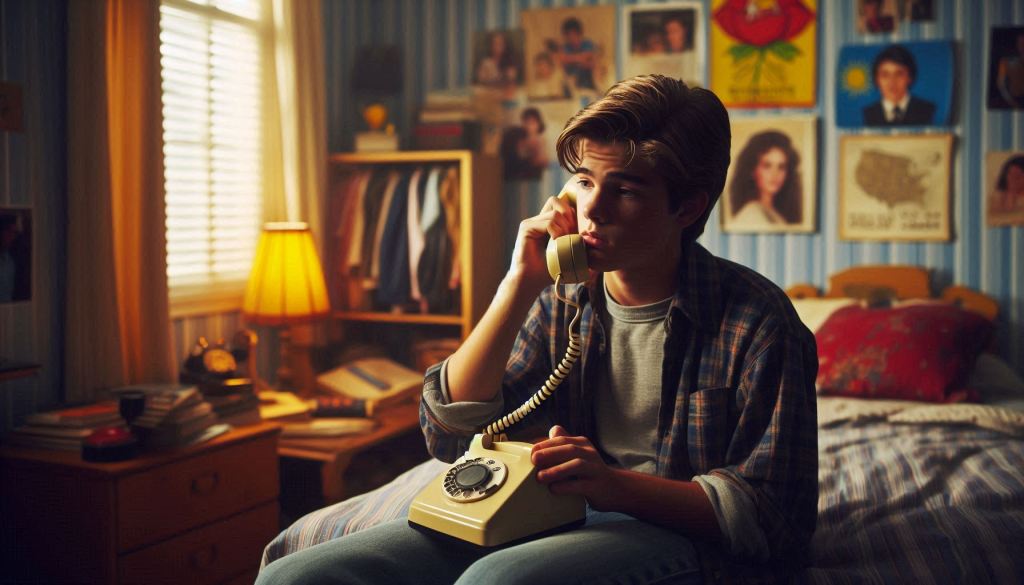
For teenagers, the phone was everything. Unlike today, where texting and social media dominate, teenagers in the 1980s spent hours talking on the phone. It was common for a teen to monopolize the household phone line, much to the frustration of parents and siblings. Many friendships and romances developed over late-night calls, with people falling asleep while still on the line. A call from a crush could make or break a teenager’s entire day, and waiting by the phone for an anticipated call was an agonizing yet thrilling experience. The phenomenon of waiting for a call or suffering through a busy signal was a defining aspect of teenage social life, fostering patience and anticipation that are nearly nonexistent in today’s era of instant messaging.
With landlines being the primary communication method, phone etiquette was a big deal. Some unwritten rules of phone culture included never calling after 9 PM unless it was an emergency. Late-night calls were reserved for close friends or emergencies. Always identifying yourself was another rule, as there was no caller ID, making it rude to start talking without first saying who you were. The “Three Rings” Rule was another standard—calling and hanging up after three rings was sometimes used as a secret code between friends. Not hogging the phone line was crucial since there was only one line; families had to share, and long calls could lead to arguments.
By the 1990s, phone culture began to shift dramatically. Caller ID reduced the effectiveness of prank calls. The rise of the internet, instant messaging, and eventually mobile phones, changed how people communicated. Party lines disappeared as personal phone lines became more affordable. Prank calls, once a rite of passage, became riskier as law enforcement took them more seriously. Answering machines gave way to voicemail, and long phone conversations were gradually replaced by text-based communication.
The 1980s phone culture was a unique, vibrant time when the telephone was more than just a tool—it was an experience. Party lines and prank calls brought people together in unexpected ways, creating memories and stories that are still shared today. Though technology has advanced, there’s something nostalgic about an era when socializing meant dialing a number, not tapping a screen.

 Totally Retro: 80s Edition
Leave a comment