
The Wild Story of How a Doll Led to Nationwide Fights and Shortages
In the weeks leading up to Christmas 1983, a bizarre and unexpected frenzy swept across the United States. Parents, desperate to fulfill their children’s holiday wish lists, stormed toy stores in scenes that more closely resembled Black Friday melees than simple shopping trips. The cause? A chubby-cheeked, yarn-haired doll called the Cabbage Patch Kid. What followed was one of the most chaotic toy shortages in retail history, now infamously known as the Cabbage Patch Riots.
The Birth of the Cabbage Patch Craze
Xavier Roberts, a Georgia-based artist, created the first iteration of these dolls, originally called Little People, in the late 1970s. He handcrafted them with soft, hand-stitched faces and adopted them out rather than selling them, complete with their own birth certificates. The dolls were unique, with each having its own distinct name, birth certificate, and adoption papers.

When toy giant Coleco took the concept mainstream in 1983, the dolls were rebranded as Cabbage Patch Kids and mass-produced with vinyl heads and fabric bodies. They were marketed with an irresistible blend of charm and exclusivity. Priced at around $25, they became an instant sensation, fueled by a brilliant marketing campaign that played up the idea that every child needed to “adopt” their very own doll. The dolls appealed to both kids, who saw them as lifelike and personal, and parents, who were enchanted by the wholesome messaging.
The demand was immediate and overwhelming. By the fall of 1983, parents had begun scrambling to find the dolls, but with only a limited number of shipments available, shortages became widespread. Little did retailers know, the mad rush would soon escalate into outright chaos.

Retail Madness: Riots in the Aisles
As the Christmas shopping season heated up, supply simply couldn’t meet demand. Toy store shelves were emptied within minutes of restocking, and desperate parents resorted to extreme measures to secure a doll for their child. Fistfights broke out in store aisles, customers shoved and trampled one another, and even store employees were injured trying to control the mobs.
One of the most notorious incidents occurred at a Kmart in Pennsylvania, where a stampede broke out as soon as doors opened. Shoppers tackled one another, tore dolls out of each other’s hands, and some were even left bloodied in the chaos. In another store, a father reportedly grabbed a doll from the hands of an elderly woman, sparking a shouting match that nearly turned violent.

At a Zayre department store in Wilkes-Barre, Pennsylvania, police had to be called when more than 100 customers began physically fighting over a shipment of dolls. In a dramatic scene at a Sears store in Charleston, West Virginia, a store manager was forced to use a baseball bat to restore order after customers began pushing and shoving employees. The situation became so intense that some stores began implementing ticket systems to prevent in-store riots, though this often led to new controversies and accusations of favoritism.
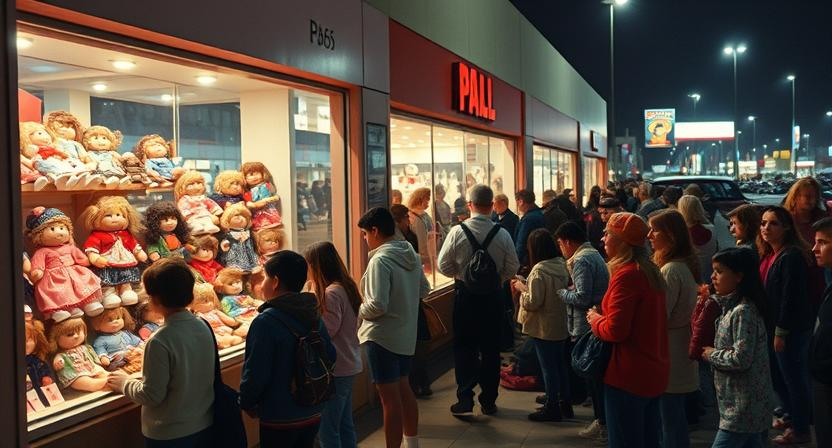
Shoppers camped outside stores overnight in hopes of getting their hands on the coveted dolls, only to be turned away when supplies ran out. In some cases, parents paid triple or quadruple the retail price to scalpers who quickly capitalized on the hysteria. The secondary market for Cabbage Patch Kids exploded, with some dolls selling for over $200, an astronomical sum for a toy in the early 1980s.
The International Impact of the Craze
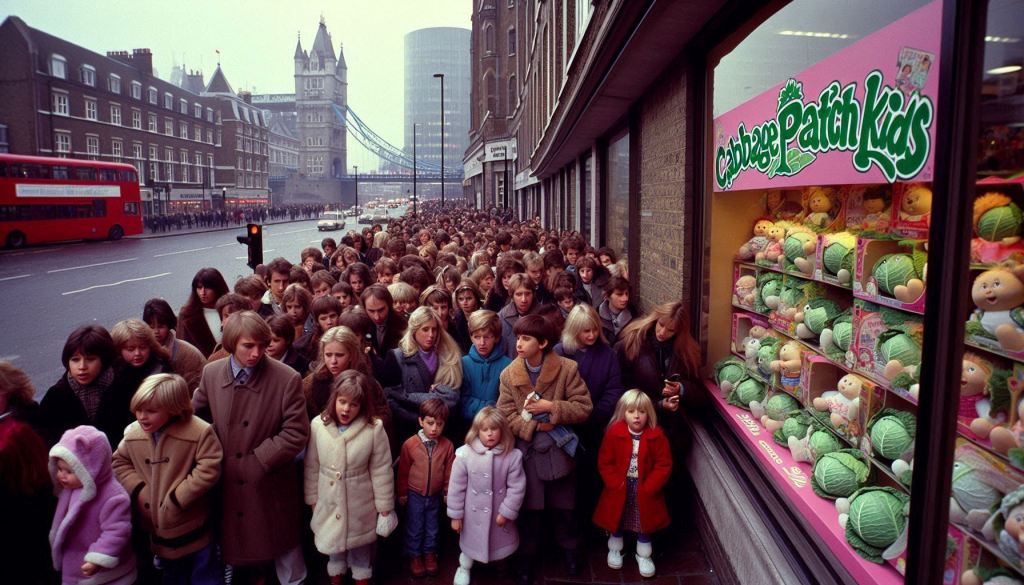
While the United States bore the brunt of the hysteria, the Cabbage Patch craze quickly spread worldwide. In Canada, the U.K., and Australia, retailers reported similar shortages and frenzied shoppers. Toy stores in London saw massive lines forming hours before opening, while Sydney saw near-riots in major department stores as desperate parents fought for the last available dolls. In Canada, major chains like Eaton’s and Zellers experienced overwhelming demand, with many locations completely selling out weeks before Christmas.
Retailers in some countries attempted to implement a strict one-doll-per-person policy, but this only increased the intensity of the fights. Scalpers ran black-market operations, smuggling Cabbage Patch Kids across borders and selling them at exorbitant markups. Toy collectors today still recall how the Cabbage Patch craze was one of the first global toy shortages of its kind, setting the stage for future international toy frenzies.
How the Media Fueled the Frenzy
The Cabbage Patch Kid craze wasn’t just fueled by word of mouth—it was magnified by relentless media coverage. Local and national news networks ran sensational stories about the violent fights in toy stores, further driving up demand. The more the public saw footage of parents battling over the dolls, the more the dolls’ value skyrocketed in the eyes of consumers.
Daytime talk shows and newspapers ran segments about the “must-have toy of the year,” often featuring tearful parents who were willing to do anything to secure a doll for their child. Retailers quickly learned that even hinting at an incoming shipment could send hordes of people rushing to their stores, ready to fight for a chance to get one.
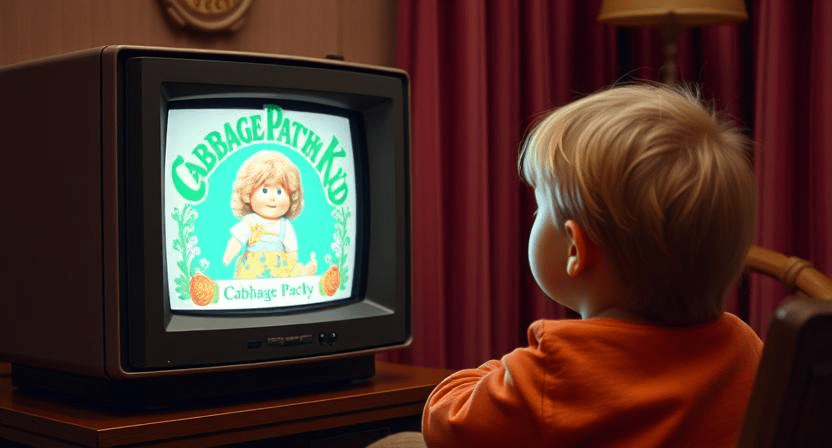
Toy manufacturers also leaned into the craze, producing advertisements that encouraged children to pressure their parents into finding a doll at all costs. The marketing strategy worked better than anyone expected, solidifying Cabbage Patch Kids as one of the most successful toy lines in history.
The media’s relentless coverage not only fueled the frenzy across the U.S. but also helped spread the word globally. As news broadcasts and stories about the chaos in toy stores aired worldwide, they sparked demand in other countries, turning the Cabbage Patch Kid into an international phenomenon.

The Economic Impact and Retail Lessons Learned
By the end of 1983, over 3 million Cabbage Patch Kids had been sold, and demand remained high well into 1984 and beyond. The toy was a massive financial success, turning Coleco into an industry giant practically overnight. However, the riots and negative press forced retailers to rethink how they handled high-demand products.
The Cabbage Patch Kids craze led to the modern retail strategies we see today, including:
1. Pre-orders: Stores began offering reservation systems for high-demand toys.
2. Lottery systems: Some retailers experimented with random draws to determine who could buy certain toys.
3. Strict inventory control: To prevent in-store violence, many stores limited the number of items each customer could purchase.
4. Black Friday crowd control measures: The intensity of the Cabbage Patch riots helped shape how retailers plan for major sales events today.

A Cultural Phenomenon and Its Lasting Legacy
The Cabbage Patch Kids craze of 1983 wasn’t just about a popular toy—it marked a shift in consumer culture, proving just how powerful marketing and mass hysteria could be. The riots shocked retailers, forcing companies to rethink how they handled high-demand products. This was one of the earliest instances of the kind of shopping frenzy that would later be seen with Tickle Me Elmo (1996), PlayStation 5 (2020), and Black Friday stampedes in general.
Today, Cabbage Patch Kids are still in production, though their popularity has long since waned. However, the hysteria surrounding them in the 1980s remains one of the most infamous moments in toy history. It also served as an early lesson in scarcity marketing, proving that making a product seem unattainable only drives demand further.
The next time you see a viral product sending people into a buying frenzy, just remember—the original retail riot started with a humble, chubby-faced doll.

 Totally Retro: 80s Edition
Leave a comment