
The 1980s was a decade of great change for the retail industry, and Sears, once the undisputed titan of American retail, experienced both highs and lows during this transformative period. The company, which had dominated the marketplace for much of the 20th century, found itself navigating a rapidly shifting retail landscape, filled with new competitors, changing consumer preferences, and technological innovations. As we look back at Sears in the 1980s, we see a company that was grappling with both its legacy and the future of retail.
Sears in the Early 1980s: A Retail Powerhouse
Sears, Roebuck and Co., founded in 1886, had firmly established itself as a pillar of American retail by the 1980s. The company had built its empire on the back of its legendary mail-order catalog, a groundbreaking concept that had allowed customers across the United States—particularly those in rural areas—to shop for everything from clothing to home goods, all from the comfort of their own homes. The Sears catalog, which had been in operation since 1888, transformed the way Americans thought about shopping, making an enormous variety of products accessible to a broader audience.

By the 1980s, Sears had evolved from a catalog powerhouse into a dominant retail chain with a nationwide presence. The company’s department stores were ubiquitous across the American landscape, with over 800 locations in operation by the early part of the decade. These stores were known for their wide range of offerings, from clothing and footwear to electronics, home appliances, and even automotive products. Sears was the go-to destination for many consumers, offering everything they could need under one roof.
In addition to the traditional department stores, Sears had built a reputation as a reliable brand, particularly for its house brands like Kenmore (for home appliances) and Craftsman (for tools). These private-label products, known for their durability and quality, were an essential part of Sears’ identity in the early 1980s and attracted a loyal customer base. For many families, Sears was synonymous with reliability and value, offering everything from refrigerators to washing machines, and even tools that were considered some of the best in the industry.

In the early part of the decade, Sears’ catalog business, though facing increasing competition from other retailers, remained an essential part of its operations. The catalog was a lifeline for many customers who still preferred to shop by mail or who lived in areas with limited access to physical stores. Despite the growing presence of discount chains like Wal-Mart and Target, the catalog continued to be a significant revenue driver for Sears. The company even took steps to modernize its catalog operations, making it easier for customers to place orders by phone, and later by the then-emerging technology of fax machines.
Beyond the traditional store format, Sears had begun experimenting with new retail strategies in the early 1980s to stay ahead of the competition. One of the most notable innovations was the launch of the “Sears Grand” stores. These large-format, full-service stores were designed to offer a broader selection of goods than the typical department store. They carried not only the traditional categories like clothing and appliances but also groceries, electronics, toys, and more, essentially transforming the stores into one-stop-shopping destinations. This approach was in response to the growing success of mass merchandisers like Wal-Mart, which had a similar model of offering everything in one location, often at lower prices.
The 1980s also saw Sears making a significant push into specialized retail. The company launched smaller-format stores like Sears Hardware and Sears Appliances, which were designed to cater to customers seeking more targeted products in categories like home improvement and consumer electronics. These stores allowed Sears to capitalize on the rapid growth of specialized retailers like Home Depot, which was revolutionizing the home improvement sector, and Best Buy, which was quickly becoming the go-to destination for consumer electronics. While these smaller-format stores were a strategic response to competition, they also allowed Sears to capture more niche markets without requiring the larger overhead costs associated with its traditional department stores.
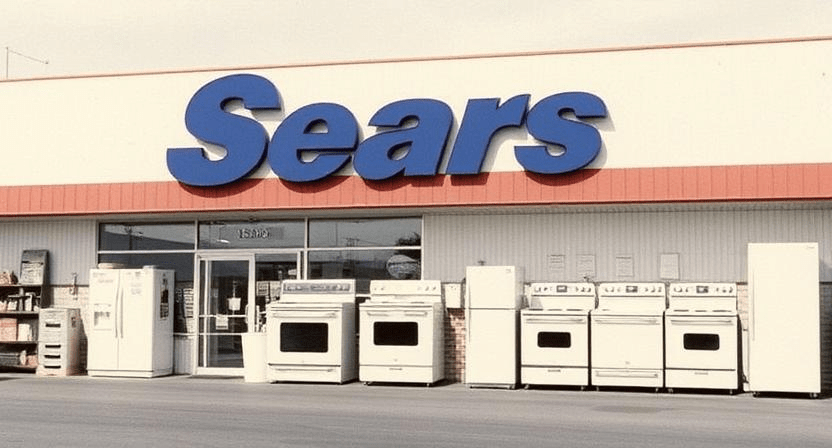
Sears’ automotive division also became a major contributor to the company’s success during the early 1980s. Sears Auto Centers, which had been around for decades, were an integral part of the brand’s portfolio. These auto centers not only provided basic car maintenance services, such as oil changes and tire rotations, but also sold tires, batteries, and other automotive products. The company’s well-known DieHard brand of car batteries became particularly popular during this period, and the automotive division helped reinforce Sears’ position as a trusted, one-stop destination for American families.
The early 1980s was also a period of expansion for Sears. The company looked to strengthen its presence across various product categories while keeping an eye on innovations in retail. Sears’ efforts were not limited to physical stores but also included an investment in technology. The retailer began experimenting with new ways to interact with customers, such as offering interactive shopping experiences and embracing the possibilities that would later be offered by the internet, even though e-commerce was still a distant reality at the time.
Sears’ early 1980s strategy was a combination of leveraging its already established reputation for quality with efforts to innovate and expand into new markets. The company’s ability to combine reliability with diversification allowed it to maintain its position as the largest retailer in the U.S. well into the decade. However, despite these efforts, it was becoming increasingly apparent that the retail landscape was beginning to change—changes that would challenge Sears’ dominance in the years to come.
As the 1980s progressed, competition from discount retailers and specialized chains started to have a more pronounced effect on Sears’ performance. Yet, in these early years of the decade, the company’s ability to diversify and experiment with new store formats, while still relying on its core strengths in department store retailing, allowed Sears to remain a retail powerhouse and a familiar name for American shoppers.
The Rise of Competition: Wal-Mart and Target
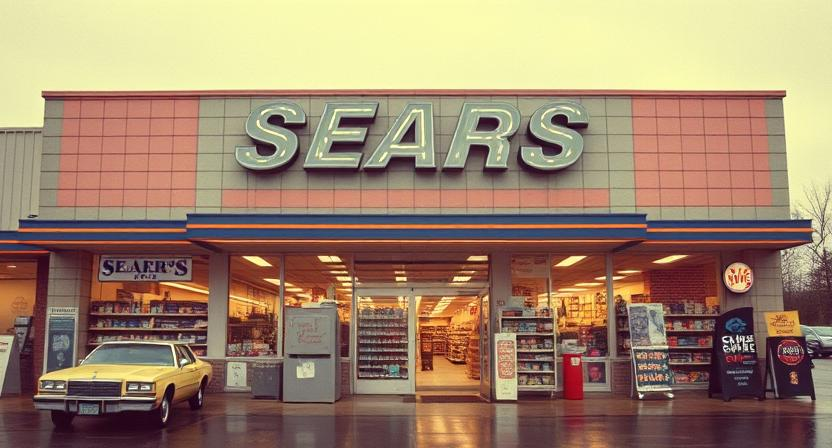
By the mid-1980s, Sears, once a dominant force in American retail, was beginning to face significant challenges as new competitors emerged on the scene. Discount retailers like Wal-Mart and Target, with their focus on offering a wide variety of goods at lower prices, quickly gained traction with cost-conscious shoppers. These new stores were streamlined, efficient, and tailored to meet the needs of a rapidly changing consumer base—one that was increasingly looking for convenience and affordability over the extensive variety and customer service that traditional department stores like Sears offered.
Wal-Mart, in particular, was expanding at an astonishing rate during this time. Founded in 1962, Wal-Mart had grown from a regional chain into a national powerhouse by the mid-1980s, with its ultra-low-price model resonating deeply with working-class families looking to stretch their budgets. The company’s focus on cost-saving measures, such as bulk buying and a no-frills store layout, allowed it to sell products at prices that traditional department stores like Sears simply could not match. Wal-Mart’s rise was fueled by its early embrace of economies of scale and its aggressive expansion strategy, which led it to open hundreds of stores across the country by the end of the 1980s.
Target, a division of the Dayton Hudson Corporation (which would eventually become Target Corporation), was also experiencing rapid growth during the same period. While Target’s model was similar to Wal-Mart’s in that it emphasized low prices, Target differentiated itself by positioning itself as a more upscale discount store, focusing on offering better-designed products and creating a more stylish shopping environment. This strategy allowed Target to appeal to a different customer demographic—those looking for affordable fashion and home goods with a slightly higher-end aesthetic. As a result, Target became a formidable competitor to Sears, particularly in the home goods and apparel categories.

The emergence of these discount chains significantly changed the retail landscape and forced Sears to confront a new era of competition that it hadn’t fully anticipated. Sears, for years the go-to destination for middle-class shoppers, was now struggling to maintain its relevance as shoppers flocked to the more affordable, no-frills environments offered by Wal-Mart and Target. These new retailers made it easier for consumers to find everyday items at prices that were often much lower than what Sears could offer.
In response to this growing threat, Sears tried to reassert its position by shifting its focus to younger, more affluent demographics. The company launched an aggressive advertising campaign in 1984 with the slogan “Sears is the Best Place to Buy,” aiming to promote its products as a blend of quality and value. Sears hoped that by emphasizing the reliability and brand strength of its key private-label offerings—such as the Craftsman line of tools and Kenmore home appliances—it could convince shoppers that they could still find good deals, even if the prices were higher than those at discount stores.
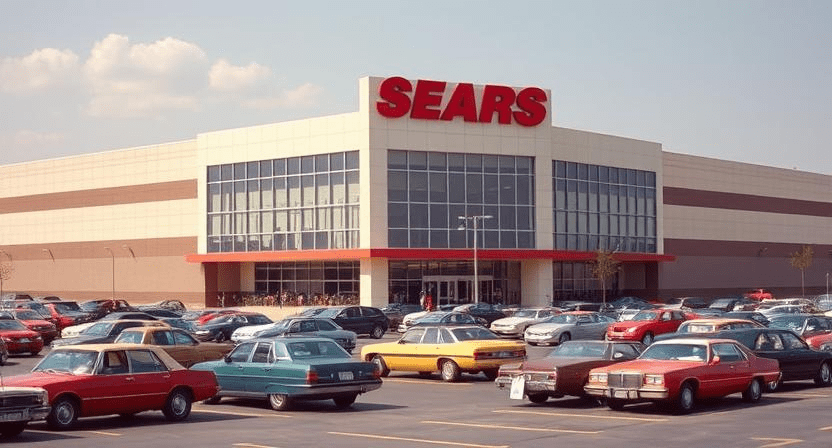
Sears also worked to modernize its image and appeal to a younger audience by investing in more contemporary store designs and rolling out new product lines. The company began pushing its proprietary brands more aggressively, highlighting the quality of products like Craftsman tools, Kenmore appliances, and the DieHard automotive batteries, which had developed loyal followings. Sears hoped that these brand names, known for their durability and reliability, would help the company maintain its appeal in an increasingly competitive market.
However, despite these efforts, Sears was unable to reverse its declining market share in the face of the growing dominance of Wal-Mart and Target. One of the major obstacles Sears faced was its traditional retail format, which relied on large, sprawling department stores with higher operational costs. This made it difficult for the company to compete with the low-price models of Wal-Mart and Target, which were able to keep prices down due to their streamlined operations and efficient supply chains.
Another key issue for Sears was its inability to keep pace with the rapidly changing shopping habits of consumers. As Wal-Mart and Target grew, they capitalized on the rising trend of consumers looking for one-stop shopping experiences—places where they could get everything they needed in a single trip, from groceries to electronics to home furnishings. Sears, on the other hand, remained largely a traditional department store, and while it did attempt to expand its offerings into areas like home improvement and electronics, it was often outpaced by more specialized retailers like Home Depot and Best Buy. Moreover, the rise of warehouse clubs like Costco, which offered bulk discounts, further eroded Sears’ ability to compete on price.
The growing strength of Wal-Mart and Target forced Sears to rethink its place in the retail world, but by the time the late 1980s rolled around, the company’s attempts to modernize had not been enough to stem the tide of competition. Wal-Mart, in particular, was experiencing explosive growth, and by the end of the decade, it was beginning to dominate the retail landscape, not just in the discount sector, but in the broader marketplace as well. The smaller, more nimble stores had not only perfected the art of low pricing, but they also excelled in creating more efficient shopping environments that appealed to modern shoppers.
Sears, with its legacy of large, expensive department stores and its somewhat outdated business model, found it increasingly difficult to compete. The company’s substantial overhead costs, combined with the shifting preferences of consumers, made it harder for Sears to match the pricing power of Wal-Mart or Target, both of which had far lower operational expenses and more targeted marketing approaches.

By the late 1980s, Sears was increasingly viewed as a retailer struggling to keep up with the changing times. Despite its efforts to innovate and diversify, the company was losing ground to its competitors, particularly in the crucial areas of pricing, product offerings, and shopping convenience. The rise of Wal-Mart and Target in the 1980s marked a fundamental shift in the retail industry—one that would continue to reshape the landscape well into the 1990s and beyond.
As Wal-Mart and Target solidified their positions as dominant players in the retail industry, Sears was left to grapple with its own identity and how it could maintain relevance in an era of aggressive discounting and rapidly changing consumer behavior. The 1980s marked a pivotal time in Sears’ history, as the company’s once-ironclad position in the retail world began to erode, a trend that would only accelerate in the decades that followed.
Sears’ Attempt to Adapt: Innovations and Expansion Efforts
As the 1980s unfolded and the retail landscape evolved, Sears found itself facing increasing pressure from fast-growing discount chains and changing consumer habits. In response, the company began to experiment with new innovations and expand its business model in an attempt to adapt and stay relevant. The efforts to modernize were varied, but they represented a shift in strategy as Sears sought to evolve beyond its traditional retail roots.
One of the early and most ambitious moves Sears made during this time was to invest heavily in technology, particularly in the realm of home shopping. In 1985, the company launched the Sears Shopping Network, one of its first forays into the emerging world of television-based shopping. This initiative allowed customers to purchase items directly through a 24-hour TV shopping channel, offering a convenient way to shop from home. While the idea was revolutionary at the time, Sears’ Shopping Network ultimately did not become a long-term success. It was, however, an early attempt by Sears to tap into the home shopping trend that would later be dominated by channels like QVC and HSN. The development of the Shopping Network was indicative of Sears’ recognition that the retail environment was shifting, and it needed to find ways to engage customers beyond traditional brick-and-mortar stores.

While the television shopping channel failed to establish a lasting presence, it showcased the company’s forward-thinking approach to embracing new technologies. In addition to the shopping network, Sears began experimenting with other forms of direct sales, including the nascent technology of telemarketing and order-by-phone services, which allowed customers to place orders without ever leaving their homes. These early initiatives paved the way for future developments in e-commerce and the direct-to-consumer business model.
However, it wasn’t just technological innovations that Sears pursued in the 1980s. The company also sought to diversify its revenue streams by branching into new areas of business. One of the most significant steps was its entry into the financial services market. In 1984, Sears launched the Sears Charge Card, which allowed customers to purchase products on credit at Sears stores and earn rewards for using the card. This move into the world of consumer credit was a strategic response to the growing demand for store-branded credit cards, which were becoming increasingly popular during the decade.
The Sears Charge Card quickly gained traction, becoming one of the most widely used store-branded credit cards in the U.S. at the time. It allowed Sears to tap into the lucrative and fast-growing consumer finance market, offering customers more flexibility in their purchasing power while simultaneously generating new streams of revenue for the company. For Sears, the card became more than just a way to sell products—it became a way to build deeper relationships with customers, offering them rewards and discounts while simultaneously ensuring repeat visits to Sears stores.
Despite the success of the Sears Charge Card, the company’s financial services division would face its own challenges in later years, particularly as competitors like Visa and MasterCard began to dominate the broader credit card market. Still, the launch of the Sears Charge Card marked a turning point in the company’s broader business strategy, demonstrating its willingness to diversify and move beyond its traditional retail model.
In addition to its push into financial services, Sears also made significant efforts to revitalize its catalog business, which had been one of the company’s cornerstones since the late 19th century. In the face of mounting competition from discount stores and changing consumer preferences, Sears sought to modernize its catalog operations. While the catalog had once been the primary means of shopping for millions of Americans, the increasing prevalence of department stores, shopping malls, and eventually, online shopping, made it clear that the catalog’s era was coming to an end.
Despite this, Sears invested considerable resources into updating and expanding its catalog operations. The company made attempts to update its catalog’s design, streamline its distribution methods, and improve the shopping experience. By the late 1980s, the company had also introduced new ways for customers to interact with the catalog, including through computerized ordering systems and automated customer service centers. These improvements were aimed at making the catalog more accessible and efficient, but they still failed to reverse the overall decline in catalog sales as the internet and other retail formats gained prominence.
The transition away from the catalog era was a particularly difficult challenge for Sears, as the catalog had been synonymous with the brand for much of the 20th century. The company’s struggle to modernize its catalog operations was emblematic of the broader difficulties it faced in adapting to a rapidly changing retail environment. As consumers increasingly flocked to department stores or opted for the convenience of in-person shopping, Sears found it difficult to shift its once-revolutionary catalog business into a more modern, viable format.
In addition to these efforts, Sears continued to experiment with new store formats, seeking to expand beyond its traditional department store approach. As part of its attempt to become more competitive in the face of discount retailers, the company launched several new store concepts. One of the more notable examples was the Sears Grand format, which attempted to replicate the success of other mass merchandisers like Wal-Mart by offering a wide variety of products, from groceries and home goods to clothing and electronics, all in a single location. These large, sprawling stores were intended to offer consumers a more convenient, one-stop shopping experience, something that Sears hoped would attract both traditional customers and newer, younger shoppers. However, despite the initial promise, the Sears Grand stores struggled to compete with established discounters, which offered lower prices and more streamlined operations.

The company also made some bold attempts to enter markets that had traditionally been outside its scope. For example, it began offering health insurance and real estate services to customers in the 1980s, further diversifying its business beyond retail. While these ventures were notable for their ambition, they also stretched the company’s resources thin and diluted its brand identity.
Despite these efforts to adapt and innovate, Sears was ultimately fighting an uphill battle. The company’s attempts to embrace new technology, diversify its offerings, and refresh its catalog operations were commendable, but they couldn’t completely offset the seismic shifts occurring in the retail world. By the end of the 1980s, Sears had undergone significant changes, but it was clear that the company was facing a series of challenges that would only continue to mount in the years to come.
The 1980s were a transformative period for Sears, marked by both ambitious expansions and the recognition that the company’s traditional business model was no longer sufficient to maintain its former dominance. Despite its best efforts, Sears’ attempts to adapt to the rapidly changing retail environment were often slow, cumbersome, and reactive rather than proactive. The company’s challenges in adapting to new market forces—combined with the meteoric rise of discount retailers—marked the beginning of a long period of decline, as Sears struggled to keep up with the fast-paced evolution of the retail industry.

Crisis in the Late 1980s: Declining Sales and Management Changes
As the 1980s drew to a close, Sears found itself in the midst of a severe crisis. The company’s once-dominant position in the retail world was rapidly eroding. For decades, Sears had been the go-to retailer for everything from clothing and appliances to tools and automotive products. However, as the decade wore on, it became increasingly clear that the company had failed to keep pace with the changing retail environment. The rise of discount retailers, changing consumer preferences, and the shift toward more convenient shopping experiences all conspired to undermine Sears’ relevance in the market.
By the late 1980s, Sears was experiencing stagnating sales, particularly in its core department store business. While the company still operated hundreds of stores across the country, these stores were increasingly seen as outdated and inefficient compared to the sleek, low-cost alternatives offered by Wal-Mart, Target, and other discount chains. Sears’ struggle to modernize its offerings, coupled with its inability to match the low prices and customer service of its competitors, led to a gradual decline in foot traffic. Consumers, who once flocked to Sears for everything from clothing to home goods, were now flocking to newer, more affordable retail experiences that better met their needs for convenience and value.
The company’s sales stagnation was also fueled by its inability to attract younger, more affluent customers. The marketing campaigns aimed at revitalizing the brand, such as the “Sears is the Best Place to Buy” initiative, failed to resonate with a generation that was increasingly drawn to the streamlined and lower-cost options provided by competitors. As a result, Sears found itself in a position where it was losing market share to both high-end retailers and discount chains.
In response to the crisis, Sears made a major leadership change in 1988, hiring Edward A. Brennan as CEO. Brennan, a former executive at Mobil Oil, was brought in to turn the company around. Under his leadership, Sears sought to reorganize and refocus its efforts. Brennan’s strategy included a more aggressive push into areas like retail banking and financial services, leveraging the company’s existing credit card program and expanding its offerings in personal loans and insurance. Brennan also pushed for more cost-cutting measures in an attempt to streamline operations and reduce overhead.
Despite these bold moves, however, Sears continued to face a host of insurmountable challenges. Brennan’s leadership was a welcome change, and his efforts to reposition the company were commendable, but they weren’t enough to reverse the larger trend of decline. Sears’ traditional department store business remained stagnant, and the company was still struggling to develop a strategy that could successfully compete with the more agile discount retailers that had captured the bulk of consumer spending.
Sears’ difficulties were further compounded in 1989 when it was bought out by Kmart, one of its major competitors. The buyout marked a critical turning point for the company. Kmart, a discount retailer that had grown rapidly in the 1970s and 1980s, had itself begun to face significant financial pressures as it struggled with the same challenges that were affecting Sears. The merger of the two companies—both of which were battling with declining sales and market share—was seen as a desperate attempt to stay afloat in an increasingly competitive market.
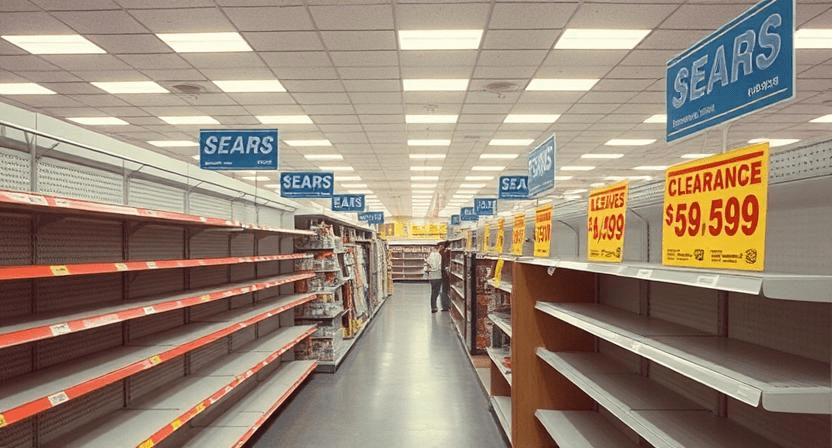
Under the terms of the buyout, Sears became a subsidiary of Kmart, with the hope that the combined forces of both companies could offer the necessary scale to compete with the likes of Wal-Mart. However, the merger only exacerbated the problems facing both brands. Instead of revitalizing Sears, the merger highlighted the company’s growing inability to compete in the new retail landscape. Kmart, like Sears, was struggling with its own issues, including its reliance on large, traditional stores and its inability to keep up with the customer-focused strategies of newer, more nimble retailers.
The combination of declining sales, a leadership transition, and the Kmart buyout led to a series of financial struggles that would haunt Sears in the years to come. The company’s identity became muddled, as it was now part of a larger corporation that was itself struggling to find a way forward. The merger also led to organizational confusion, as Sears and Kmart worked to integrate their operations, which resulted in a lack of cohesive strategy and vision.
During this period, Sears also faced increasing internal challenges. Employees became increasingly disillusioned with the company’s direction, and there was a general sense of confusion within the organization about its future. The company’s once-strong culture of innovation and customer service had been replaced by a more reactive, cost-cutting mentality. Moreover, management’s repeated failure to address the core issues—such as outdated store formats, poor customer service, and an inability to compete on price—further contributed to the company’s decline.
By the end of the 1980s, Sears was no longer the retail juggernaut it had been just a decade earlier. The crisis in the late 1980s, marked by stagnating sales, leadership changes, and the Kmart buyout, signaled the beginning of a long period of decline for the company. Despite efforts to diversify and modernize, Sears was increasingly seen as a relic of an earlier era, unable to keep up with the changing demands of the retail industry.
While the 1980s were a time of rapid change and significant turmoil for Sears, they also marked the beginning of the company’s struggle to redefine itself in a retail landscape that was shifting dramatically. The difficulties faced by Sears during this period were compounded by its inability to adapt quickly enough to the rise of discount chains, its outdated business model, and the challenges posed by the Kmart merger. In many ways, the late 1980s represented the end of an era for Sears, as the company’s dominance in American retail began to fade, setting the stage for even greater challenges in the years to come.
Sears and the Changing Consumer Landscape
The decline of Sears in the 1980s cannot be understood without considering the broader shifts in the consumer landscape during that decade. As consumer preferences evolved, the traditional department store model, which Sears had long championed, began to lose its appeal. A confluence of factors—including the rise of discount retailers, the growth of warehouse clubs, and the emergence of mall-based shopping—fundamentally changed the way Americans shopped, and Sears found itself struggling to keep up.
In the early years of the 1980s, discount retailers like Wal-Mart and Target began to dominate the retail landscape. These chains capitalized on a growing desire among consumers for affordable, no-frills shopping experiences. Wal-Mart, in particular, became a beacon of low prices, offering a wide range of products—from groceries to clothing—at prices far lower than those found in traditional department stores. Consumers, particularly middle-class families, flocked to these stores for their unbeatable deals and simplified shopping experiences. Wal-Mart’s “Everyday Low Prices” strategy resonated with shoppers, especially as inflation and economic uncertainty made price sensitivity more pronounced.
At the same time, the rise of warehouse clubs like Costco changed the way consumers viewed bulk purchasing. These membership-based stores provided high-quality goods at discount prices, often in large quantities. For many families, shopping at warehouse clubs offered an appealing alternative to traditional retail, especially as the economic climate of the 1980s saw many households becoming more price-conscious. Costco and similar chains also catered to a growing demand for convenience, allowing consumers to purchase a broad variety of products all in one place.
Sears, which had long prided itself on its reputation for quality and reliability, was increasingly seen as outdated in this new retail era. While its traditional department store model had served it well for decades, it was no longer equipped to meet the needs of modern shoppers. The shift from “department store” to “discount store” marked a stark contrast in how the two types of retailers operated: while Sears focused on offering a wide array of products with an emphasis on service, Wal-Mart and other discount chains streamlined their operations, focusing on low prices and efficiency.
The rise of discount retailers wasn’t the only force reshaping the consumer landscape; the shopping mall culture that blossomed in the 1980s also played a major role in Sears’ struggles. The 1980s witnessed a boom in the construction of shopping malls, which became the epicenters of retail activity in suburban America. These malls offered a diverse range of shopping experiences and drew consumers with their variety of stores, entertainment options, and food courts. For many families, a trip to the mall became an entire outing, complete with socializing and dining, rather than just a simple shopping trip.
Sears had been one of the pioneers of the mall-based retail model in the 1950s and 1960s, establishing anchor stores in shopping malls across the country. At the time, it was a strategic advantage, with Sears attracting large crowds to its stores in high-traffic areas. However, by the 1980s, the mall experience itself had evolved, and new, more nimble retailers began to take advantage of this new environment. Stores like The Gap, J.Crew, and Foot Locker began to thrive in malls, attracting younger, fashion-conscious shoppers who were less interested in the broad, traditional product selection offered by Sears. These specialty stores, along with fast-food outlets and entertainment venues, helped create an entirely different shopping experience—one that Sears struggled to replicate.

Furthermore, the 1980s saw the rise of specialty retailers that were more tailored to specific consumer needs. For example, The Home Depot and Lowe’s cornered the home improvement market, offering extensive selections of tools, hardware, and building materials at low prices. Similarly, Best Buy and other electronics retailers began to emerge as specialized players in the burgeoning consumer electronics market. These niche retailers were able to provide a more focused shopping experience, where consumers could find exactly what they were looking for, often with the help of knowledgeable staff. Sears, by contrast, still tried to maintain its “everything under one roof” model, which no longer aligned with consumer expectations in a more specialized and efficient retail world.
While Sears had once been a one-stop shop for middle-class families, its inability to adapt to the evolving shopping landscape—particularly the demand for low prices, convenience, and specialization—became evident in the 1980s. Consumers were now demanding faster, more convenient shopping experiences, and they were willing to trade off the service and broad selection that Sears offered for the lower prices and more efficient operations of discount retailers.
Moreover, consumer tastes also began to change during this period. The 1980s saw a cultural shift toward more casual, fashion-forward clothing and technology-driven products, a departure from the more traditional and conservative styles that Sears had once been known for. While Sears did attempt to modernize its offerings with new brands and products, it could not keep up with the rapid changes in fashion and electronics. The younger demographic, in particular, was drawn to stores like Gap and Nike for their trendy and youth-focused products, and they turned to retailers like Circuit City and Best Buy for their technology needs. These stores not only catered to consumers’ changing tastes but also provided them with the shopping experiences they increasingly expected: fast, efficient, and tailored to their individual needs.
The transformation of the consumer mindset in the 1980s was inextricably linked to the evolving economic environment as well. With the rise of consumer credit, especially in the form of store credit cards like those offered by Sears, and an increasing emphasis on consumerism, shoppers had more power and flexibility than ever before. They were no longer just buying products—they were buying experiences, convenience, and status. The traditional Sears store experience, which emphasized reliability and a broad selection, no longer held the same allure as the newer, more specialized alternatives.
In response to these changes, Sears did attempt to adjust its offerings, but its efforts were often too little, too late. The company made moves to enter the fashion market and expanded its electronics and appliance offerings, but these attempts failed to regain the brand’s luster. The 1980s marked a pivotal moment in Sears’ history, as the company failed to adapt to the growing consumer desire for price-driven, specialized shopping experiences and convenient, location-driven retail.
In sum, the changing consumer landscape of the 1980s, driven by the rise of discount retailers, warehouse clubs, and mall-based stores, significantly contributed to Sears’ decline during this period. The company’s inability to adjust its model to fit these new consumer expectations—combined with its failure to embrace the shift toward specialized retail and a more efficient, price-conscious shopping environment—set the stage for the struggles that would define Sears in the coming decades.

Conclusion: The Legacy of Sears in the 1980s
The 1980s were a decade of transformation for Sears, one of the most iconic American retail brands of the 20th century. While the company still held considerable market share and brand recognition, the changes brought about by new competition, shifting consumer preferences, and technological advancements marked the beginning of a slow decline for the retailer.
Despite its struggles, Sears in the 1980s represented both the strength and vulnerability of traditional retail in an age of rapid change. While it couldn’t fully adapt to the rise of discount retailers and the changing consumer habits of the era, it remains an enduring symbol of the retail golden age that once defined the American shopping experience.
As we reflect on Sears’ time in the 1980s, it serves as a cautionary tale for businesses that fail to adapt to changing market forces and consumer expectations. Although Sears would eventually fall from its perch as the nation’s top retailer, its legacy in shaping American retail and consumer culture cannot be denied. The 1980s were a pivotal chapter in Sears’ storied history, one that laid the foundation for the company’s eventual reinvention (and eventual decline) in the years to come.
Sears may have struggled in the 1980s, but it remains a key player in the story of retail in America, and its influence is still felt today, even if the stores have mostly disappeared from the modern landscape.
 Totally Retro: 80s Edition
Leave a comment