
Introduction: The Strange Allure of 1980s Superstitions and Urban Legends
Before the days of smartphones, social media, and Google fact-checking, urban legends thrived in whispered conversations, sleepover dares, and cautionary tales told by flashlight. The 1980s, in particular, were a breeding ground for these eerie stories—an era when fear could travel from playgrounds to kitchen tables with astonishing speed. It was a time when kids believed wholeheartedly in the possibility that chanting “Bloody Mary” in a dark bathroom mirror could summon something sinister, or that a stranger might be hiding in the backseat of your car, waiting for the right moment to strike.
So why did these legends grip the minds of so many during this decade? Part of it had to do with the cultural moment. The 1980s were a time of transition and uncertainty—politically, socially, and technologically. The Cold War loomed in the background, the rise of latchkey kids changed the way children navigated the world, and the explosion of cable TV and VHS brought horror imagery into living rooms like never before. The result? A perfect storm of paranoia and imagination.
Urban legends and superstitions filled in the blanks for what we didn’t understand or feared to confront. They offered thrilling scares with a grain of “what if?” realism. Whether passed around schoolyards or sensationalized on tabloid TV, these stories helped define a generation’s sense of danger, morality, and mystery.
In this blog, we’re taking a nostalgic dive into the eerie, often bizarre world of 1980s superstitions and urban legends—from mirror-dwelling spirits to candy-coated fears and everything in between. Some of these tales were silly, others terrifying, but all of them reflect the cultural heartbeat of the decade. Buckle up. Things are about to get spooky.
Now let’s step into that dark bathroom and confront one of the most iconic urban legends of the ’80s…
The Legend of Bloody Mary: Mirrors, Dares, and Sleepovers

If you grew up in the 1980s, chances are you either attempted the Bloody Mary ritual or knew someone who swore they did—and saw something. It was the ultimate sleepover dare, whispered between friends with a mix of excitement and dread. All it took was a dark room, a mirror, and the courage (or foolishness) to chant “Bloody Mary” three times. Some versions upped the ante—thirteen repetitions, a single candle, spinning in place—but no matter the variation, the result was always the same: summon a ghostly woman in the mirror, and pray she didn’t pull you in.
What made Bloody Mary so potent in the ’80s was the simplicity of it. No special props, no elaborate setup—just a bathroom, a mirror, and the thrill of possibly encountering the unknown. It spread like wildfire among schoolchildren, fueled by word of mouth, slumber party storytelling, and a universal desire to test boundaries in a “safe” setting. The mirror itself became a portal—both literally and metaphorically—into a space where reality blurred with imagination.
The legend’s origin is murky and predates the 1980s, but it found fertile ground in the decade’s pop culture climate. Horror films were mainstream, ghost stories were everywhere, and kids had more unsupervised time than ever. The idea of an angry spirit trapped behind glass waiting to be summoned resonated perfectly with a generation raised on VHS horror and paranormal TV specials. The legend even tapped into deeper fears—adolescence, identity, mortality—all reflected back through that cold glass surface.
Some said Bloody Mary was a witch. Others claimed she was the ghost of a woman who died tragically, seeking revenge. The lack of a single definitive origin only made her scarier. She could be anyone, from anywhere—and she was always watching, waiting, just beyond the reflection.
Bloody Mary was more than just a game. It was a rite of passage. A test of bravery. A way for kids to flirt with the supernatural in an environment they thought they controlled. And like so many urban legends of the 1980s, it left just enough room for belief to slip in—especially in the flicker of candlelight, when your reflection looked just a little too unfamiliar.
The Killer in the Backseat: Stranger Danger and Urban Anxiety

The story typically begins with a woman driving alone at night, perhaps coming home from work or heading back from a late errand. At some point, she notices a car tailing her. The driver behind her flashes their high beams repeatedly, sometimes even swerving or honking. Terrified, she assumes she’s being followed or harassed. When she finally pulls into a driveway or gas station and runs inside for help, she’s told the truth: the person in the other car wasn’t chasing her—they were trying to warn her. There was a killer hiding in her backseat, slowly rising with a knife every time her car stopped… only to duck down again when the high beams flashed.
This legend hit a particularly sensitive nerve in the 1980s. The decade was marked by a growing awareness of violent crime, especially against women. News broadcasts often featured stories about serial killers, kidnappings, and assaults. The rise of true crime media and sensational tabloid coverage only amplified these fears. The car, once a symbol of freedom and independence, became a space of vulnerability. The message was chilling: danger could be lurking just inches away—and you might not even see it until it’s too late.
“The Killer in the Backseat” story wasn’t just about physical danger—it was also a warning wrapped in a morality tale. It often featured a young woman driving alone, suggesting that her independence or inattentiveness made her a target. It played into societal anxieties about women navigating the world without protection and emphasized the idea that being alert (or even paranoid) could save your life. In a broader sense, it reflected the national obsession with “Stranger Danger,” a term that became a household phrase in the ’80s.
What made this legend so effective was its realism. Unlike Bloody Mary or ghostly hitchhikers, this scenario felt like it could really happen. It could happen to anyone. And the fact that the danger was hidden—literally out of sight—made it all the more terrifying. Kids and teens would check their backseats before getting in the car, just in case. Parents told the story as a warning, and horror movies of the time borrowed from the narrative structure, feeding a loop of fear and familiarity.
It’s no surprise that this legend persisted and evolved well beyond the ’80s. But in that decade, with the combination of rising crime statistics, suburban sprawl, and an expanding highway culture, it struck a particularly raw nerve. The killer in the backseat wasn’t just a story—it was a reminder that sometimes, the scariest things are the ones you don’t see coming.
Let’s keep cruising into the eerie world of ghostly roads with The Vanishing Hitchhiker…
The Vanishing Hitchhiker: A Ghostly Warning on Lonely Roads
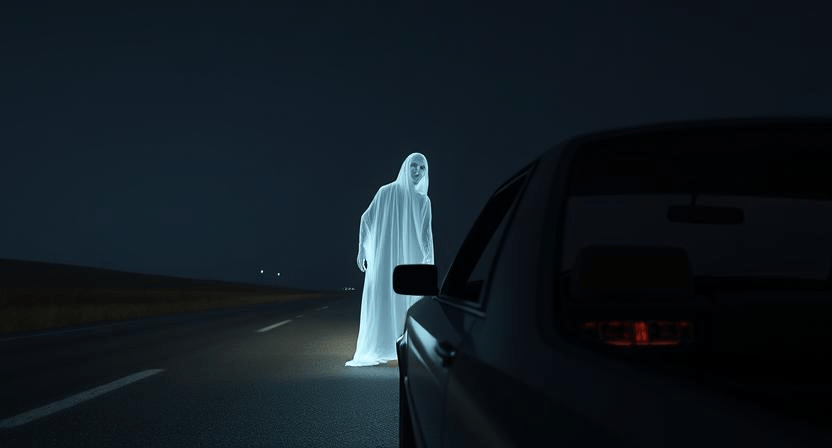
It’s a story that feels both deeply personal and eerily universal: someone driving late at night spots a lone hitchhiker on a quiet road. The figure is often a young woman, sometimes dressed in white, sometimes soaking wet from the rain. The driver offers a ride, and the two exchange a few words—nothing out of the ordinary. But when the car arrives at its destination, the passenger is gone. Vanished. The only trace left behind is something small and chilling: a damp spot on the seat, a borrowed jacket left behind, or a name and address scrawled on a slip of paper that leads to a cemetery.
The tale of the Vanishing Hitchhiker is one of the most enduring urban legends of all time, but it had a major cultural moment in the 1980s. It showed up in books, TV shows, late-night campfire stories, and even classroom storytelling sessions. What made it especially resonant in that decade was the feeling of loneliness and uncertainty that could come from the rise of suburban sprawl and increased car culture. Highways stretched longer, towns felt more isolated, and the idea of picking up a stranger on a desolate road wasn’t as unusual—or as safe—as it might’ve seemed in earlier eras.
There were endless variations of the story, depending on where you heard it. Some said the hitchhiker was a prom queen who died on the way to her dance. Others swore she was the victim of a tragic accident years ago, eternally trying to get home. Some tales had religious undertones—angels in disguise warning of danger or divine messages delivered and then vanishing. Others took a darker turn, suggesting that the ghost reappeared every year on the anniversary of her death.
What all versions had in common was the blend of sadness and fear. Unlike the killer in the backseat, the Vanishing Hitchhiker didn’t want to hurt you—she wanted to be remembered. She was a reminder of tragedy, of lives cut short, of roads that might lead to places we’d rather not go. And for a generation raised on stories of spirits, karma, and cautionary tales, she was the perfect symbol of the unexplained that lingered just beyond the glow of your headlights.
In the ’80s, this legend was bolstered by TV specials like Unsolved Mysteries and Sightings, which often featured reenactments that felt far too real. Even mainstream media picked up on the appeal—films, music videos, and books used variations of the hitchhiker trope to tap into our fascination with ghost stories grounded in the ordinary.
The Vanishing Hitchhiker wasn’t about gore or shock—it was about the slow, creeping realization that something wasn’t quite right. It left you with a chill, a lingering question, and a second look in your rearview mirror (maybe a third…).
Satanic Panic: The Real-World Hysteria Behind the Legends
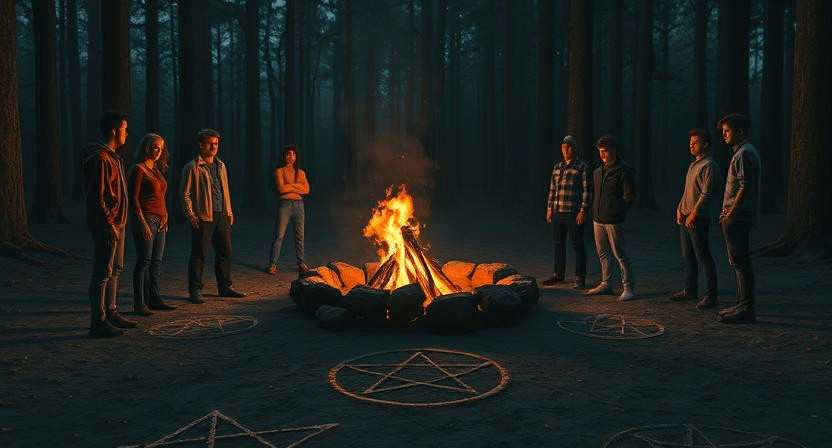
The 1980s weren’t just a time of big hair and neon dreams—they were also the peak of a nationwide nightmare known as the Satanic Panic. This wasn’t a fictional horror story. It was a very real wave of fear that swept across the U.S. and beyond, fueled by terrifying (and completely unproven) claims of satanic cults, ritual abuse, and child sacrifices happening right under our noses—in daycares, small towns, and quiet suburbs.
The panic ignited with the publication of lurid memoirs like Michelle Remembers (1980), a now-debunked account of recovered memories involving satanic rituals. The book became a bestseller and kicked off a cultural wildfire. Suddenly, whispers of hidden cults performing gruesome rituals spread through neighborhoods like ghost stories at a slumber party—except people really believed them.
Sensationalist talk shows, evangelical leaders, and local news programs only poured gasoline on the fire. Allegations emerged of daycare workers engaging in unthinkable acts: ritual abuse, animal sacrifice, even claims of underground tunnels. One of the most infamous cases—the McMartin Preschool trial—became the longest and most expensive criminal trial in American history, based entirely on claims later found to be wildly exaggerated or flat-out false. But by then, the damage had been done. Careers were ruined. Innocent people were jailed. Families were shattered.
This fear bled into pop culture, reinforcing the idea that satanic forces were infiltrating everyday life. Rock music, especially heavy metal, came under attack, with bands like Judas Priest and Ozzy Osbourne accused of backmasking hidden demonic messages in their songs. Dungeons & Dragons was demonized as a gateway to occultism. Even Halloween itself was rebranded in some circles as a satanic celebration.
The thing is, there was never any credible evidence of organized satanic cults committing widespread abuse. But logic didn’t stand a chance against fear. The Satanic Panic tapped into deeper anxieties about parenting, societal change, and the loss of “traditional” values. In many ways, it was a moral ghost story, told and retold until it became indistinguishable from the truth.
And while the frenzy eventually died down in the 1990s, its legacy lingers in modern conspiracy theories and internet-fueled fear cycles. The Satanic Panic wasn’t just a moment of mass paranoia—it was a dark chapter in how myths, fear, and cultural anxiety can twist reality into something truly terrifying.
Pop Rocks and Soda: The Deadly Myth That Shocked Parents
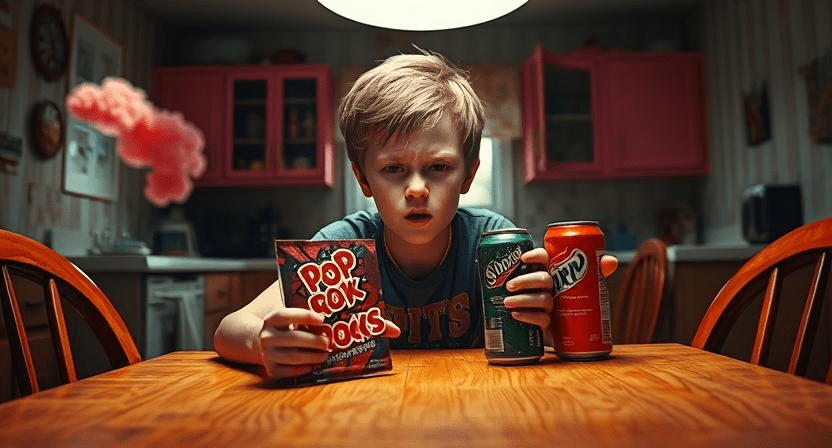
If you were a kid in the 1980s, there’s a good chance you either heard the story or nervously tried it yourself—ripping open a packet of Pop Rocks candy, pouring it into your mouth, and then chasing it with a big gulp of soda… all while secretly wondering: Will I explode?
This urban legend was everywhere. The myth claimed that mixing Pop Rocks with Coca-Cola (or Pepsi, depending on the version you heard) would cause a deadly chemical reaction in your stomach, releasing so much gas that your insides would literally burst open. The most famous version of the story centered around none other than “Little Mikey”—the cute, curly-haired kid from the Life cereal commercials. According to the rumor, Mikey had tried the deadly combo and died instantly when his stomach exploded.
Spoiler alert: Mikey lived. In fact, actor John Gilchrist, who played Mikey, was very much alive and totally baffled by the claim that he had become a cautionary tale of snack-time doom.
So, where did this rumor come from, and why did it catch on so hard?
Pop Rocks had already stirred up some curiosity and mild fear when they hit the shelves in the ’70s and stuck around into the ’80s. The candy’s crackling, fizzing reaction was thanks to carbon dioxide gas trapped inside the sugar crystals during manufacturing. When Pop Rocks hit your tongue, the gas was released, creating the signature snap, pop, and ticklish fizz that made them feel almost… dangerous.
That sensory explosion was part of the appeal—but also part of the concern. To kids, it was exciting. To parents, it was… suspicious. How could candy make that much noise without doing something harmful?
Add soda to the mix—a drink already known for causing belching and bloating—and the fear amplified. The image of a child downing a fizzy candy followed by a carbonated beverage and then spontaneously combusting was just vivid enough to feel plausible, especially to worried moms and dads raised on cautionary tales.
The rumor spread like wildfire through schoolyards, chain letters, and even concerned PTA meetings. By the mid-1980s, the panic got so intense that the FDA had to step in and issue public statements saying Pop Rocks were completely safe. The company that made Pop Rocks (General Foods at the time) launched a full-blown PR campaign to clear the candy’s name—writing letters to school principals, placing ads in newspapers, and even reaching out to media outlets to squash the myth.
But, like many urban legends, the Pop Rocks panic stuck around—because it felt true. It blended childhood curiosity, parental anxiety, and the irresistible drama of a seemingly harmless treat turning deadly. It didn’t help that Pop Rocks were often a target for school bans and parental restrictions, which only made them more desirable. After all, what kid doesn’t want to try something labeled “dangerous”?
In the end, nobody ever exploded from combining Pop Rocks and soda. But the legend lives on, still whispered in Halloween classrooms and retold with a grin at sleepovers. It’s one of those perfect examples of how urban myths aren’t just about fear—they’re about testing limits, sharing stories, and daring each other to try the unthinkable.
Cursed TV Shows and Movies: Poltergeist, The Exorcist, and Beyond

Behind the scenes of some of the most iconic horror films of the 1980s, a different kind of fear lingered—one that had nothing to do with what appeared on the screen. Cast deaths, freak accidents, and eerie on-set happenings fueled a widespread belief that certain movies, especially Poltergeist (1982), were more than just scary stories—they were cursed.
Few films carry the reputation for on-set doom quite like Poltergeist. While the movie terrified audiences with its tale of a suburban family haunted by angry spirits, what happened to several of its cast members in real life seemed just as disturbing. Dominique Dunne, who played the teenage daughter, was murdered by her ex-boyfriend shortly after the film’s release. Heather O’Rourke, the child star known for her chilling line “They’re heeere,” died unexpectedly at age 12 from a misdiagnosed illness during production of the third film in the series. These tragedies, coupled with whispers of real skeletons being used in the film’s now-infamous muddy pool scene, only added to the legend of the “Poltergeist Curse.”
The idea of cursed movies wasn’t born with Poltergeist, though—it was just intensified by the paranoia of the 1980s. Earlier in the decade, The Exorcist (1973), still widely circulated and discussed in the ’80s, carried its own ominous reputation. Multiple deaths of cast and crew, mysterious fires, and reports of audiences fainting or becoming physically ill while watching the movie cemented its legacy as a film touched by something sinister. Some claimed the film’s demonic subject matter “invited” dark forces. Others believed it was simply cursed from the start.
Even less overtly demonic productions weren’t spared. The Twilight Zone: The Movie (1983) became infamous after a helicopter accident during filming killed actor Vic Morrow and two child actors, sparking public outrage and lawsuits. While the tragedy had clear causes—namely poor safety protocols—it still fed into the growing suspicion that horror productions courted real danger.
This fear wasn’t just a matter of morbid curiosity. It was part of a broader ‘80s vibe: a decade already tuned into the occult, urban legends, and moral panic. With the Satanic Panic swirling in the background, and horror dominating the box office and video rental shelves, it didn’t take much for audiences to believe that something darker was lurking behind the makeup and special effects.
Rumors of curses didn’t stop at films, either. Certain TV shows and their actors also found themselves under scrutiny. Any unexpected death, illness, or strange event tied to a production—especially in the horror or supernatural genre—became a breeding ground for speculation. Fans and tabloids wove these coincidences into whispered campfire stories, helping transform accidents and tragedies into something far more eerie.
In reality, many of these so-called “cursed” films were victims of chance, tragedy, or unsafe working conditions. But in a decade obsessed with the supernatural and plagued by fear of unseen evil, it made perfect sense that the horror didn’t end when the cameras stopped rolling. For many, the real scares weren’t found in the movie—they were what happened after the credits.
Chain Letters: Fear in Your Mailbox

Before the rise of email and social media hoaxes, there was the chain letter—a handwritten or typed note that spread through playgrounds, neighborhoods, and even workplaces like a whispering curse. In the 1980s, these letters were everywhere, quietly terrifying kids and adults alike with ominous promises of doom or dazzling fortunes—depending on whether or not you obeyed their creepy instructions.
A typical chain letter started with a vague greeting, followed by a chilling message: “This letter has been sent to you for good luck. It has been around the world X times…” Then came the kicker: “You must copy this letter and send it to 5 (or 10, or 20) other people within 7 days or something bad will happen.” Cue the instant anxiety.
The fear these letters provoked was real. Even if you didn’t believe in curses, there was a lingering, unsettling what if? They preyed on our natural superstitions—especially for kids who were already being fed a steady diet of spooky urban legends, horror movies, and ghost stories. Add in the pressure of potentially causing something bad to happen to yourself or someone you love, and it’s no wonder chain letters took hold of the collective imagination.
And some didn’t stop at vague threats of bad luck. More intense versions would warn of death, illness, or financial ruin. Others played the long game with promises of love, money, or happiness—if you followed the instructions exactly. Some even morphed into pyramid-scheme-adjacent “money chains”, where you were told to send a dollar to the top person on the list and pass it on, promising a payday once your name floated to the top. Spoiler: that rarely worked out.
What made chain letters especially powerful in the ’80s was their physical presence. These weren’t digital blips you could delete. They were tangible—often scrawled in messy handwriting or photocopied to death, folded tightly, and slipped into lockers, mailboxes, or lunchboxes. Some came anonymously, others from friends who were just trying to protect you from the curse. That gave the fear a deeply personal, almost intimate edge.
Parents, teachers, and even postal services took notice. Schools issued warnings. News stories ran on local channels, warning families about the “psychological damage” these letters could inflict on children. And yet, they kept coming. Why? Because fear spreads. And in a pre-digital world, a creepy message on a piece of paper felt more real—like a spell written just for you.
Interestingly, chain letters also planted the seeds for future digital hoaxes. The same structure—spread this message or something bad will happen—eventually evolved into email chain mail, Facebook posts, and TikTok trends built around superstition. But it all started with that innocent-looking envelope in your mailbox or that folded note passed during class.
Chain letters were a uniquely analog form of anxiety: low-tech, but high-impact. And in a decade already buzzing with moral panic and urban legends, they fit right in—one stamped envelope at a time.
Haunted Toys: Talking Dolls, Ouija Boards, and Teddy Ruxpin

Toys are supposed to be comforting, right? Sweet, innocent fun. But in the 1980s, some playroom staples took on a far more sinister vibe—especially in the minds of spooked-out kids and their equally anxious parents. From spirit boards to talking dolls with dead eyes and glitchy voices, a generation grew up side-eyeing their toy chests at night, wondering if something might move… or speak… on its own.
First up: the Ouija board. While it had been around for decades, the 1980s saw the Ouija board transform from parlor game to paranormal portal in the public imagination. With horror movies like The Exorcist and Witchboard suggesting these seemingly innocent boards could summon demons, many parents began to see them as invitations to the occult. Christian groups launched campaigns to ban them. Toy stores kept them stocked—often right next to Monopoly and Scrabble—much to the horror of concerned adults. The fact that it was mass-produced by Parker Brothers didn’t stop the rumors. If anything, it made it more terrifying—evil, now available at a toy store near you.
Then came the dolls. Oh, the dolls.
Talking dolls had existed for a while, but the ’80s pushed the boundaries with toys that spoke, blinked, and even moved their heads. Enter Teddy Ruxpin, a lovable bear that could tell you stories with a cassette tape inside his back. Sounds adorable… until the tape warped, or the batteries ran low, and Teddy started slurring or glitching like he was possessed. Nothing says nightmare fuel like a robotic bear slowly murmuring nonsense with his animatronic eyes half-closed in the middle of the night.
Even creepier were the dolls modeled after real kids—My Buddy, for example, which some claimed inspired the murderous Chucky in Child’s Play. Add to that the already existing unease around vintage porcelain dolls and “realistic” baby dolls, and it’s easy to see why many kids (and adults) swore these toys were watching them. Stories circulated in schoolyards and sleepovers about dolls that moved positions when you weren’t looking, or whispered your name when you were alone. One bad experience with a Furby or a misfiring Speak & Spell, and suddenly everything felt haunted.
Pop culture didn’t help. TV episodes and horror movies frequently played on this fear. The Twilight Zone had “Talky Tina,” the murderous doll that sweetly promised, “I’m Talky Tina, and I’m going to kill you.” That story stuck. It was reborn in kids’ minds every time a toy said something it wasn’t supposed to say. Urban legends piled on—tales of dolls with human hair, toys that blinked without batteries, and Ouija boards that spelled out eerie warnings in the dark.
In the end, these toys reflected a bigger fear: the idea that something meant to be safe and fun could harbor something unnatural. The 1980s were already primed for moral panic and supernatural anxiety, and when technology and imagination collided in toys, it created the perfect storm of childhood terror.
So if you ever found yourself staring at your Cabbage Patch Kid a little too long, or hiding your Ouija board in the back of the closet after it “moved on its own,” you weren’t alone. For a lot of kids growing up in the ‘80s, the scariest monster wasn’t under the bed—it was sitting on top of it, smiling.
Now let’s dive into the creepy world of killer clowns, where myth and reality mixed to form some of the most unsettling urban legends of the ’80s…
Killer Clowns: Urban Legend or Real Threat?
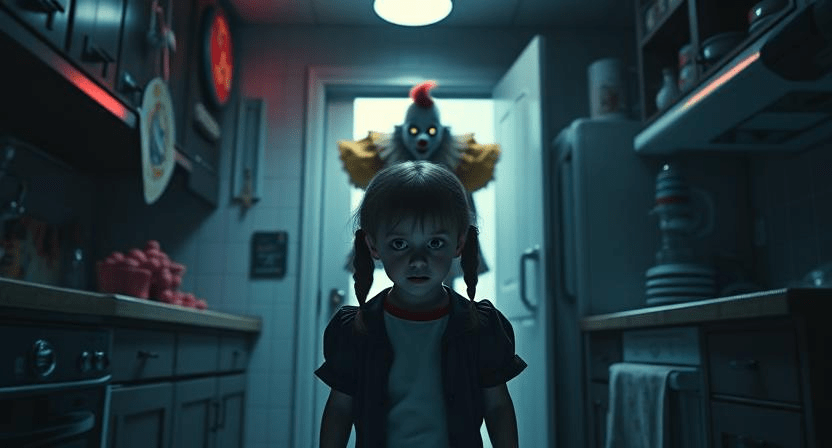
The 1980s were no stranger to disturbing trends, but none captured the collective fear quite like the killer clown craze. The very image of a clown, typically associated with birthday parties and circus acts, took on a horrifying twist. With its painted face, exaggerated features, and jarring, manic behavior, the clown persona became the perfect vessel for nightmares.
It all began with John Wayne Gacy, a real-life serial killer who, in the 1970s, performed as “Pogo the Clown” at children’s parties while secretly committing heinous crimes. The chilling juxtaposition of a seemingly jovial figure with such dark actions was enough to make anyone uneasy. By the time the ’80s rolled around, Gacy’s story was still fresh in the public’s mind, making the connection between clowns and crime particularly disturbing.
But it wasn’t just Gacy that fueled the killer clown mythos. The 1980s saw a series of clown sightings that blurred the line between urban legend and actual events. It wasn’t uncommon for people to hear reports of clowns lurking in neighborhoods, either trying to lure children into vans or simply lurking in the shadows, staring with unnervingly painted faces. The media played a huge role in amplifying these sightings, with local news stations across the U.S. broadcasting sensational stories about strange clown encounters. The clowns were said to appear in rural and urban areas alike—sometimes in the middle of the night, sometimes in broad daylight—always leaving a sense of dread.
One of the most notable and chilling clown sightings took place in 1981 in Boston. Residents reported clowns acting suspiciously, handing out balloons to children and attempting to lure them into vans. Despite numerous reports, authorities could never confirm the legitimacy of these sightings, leaving behind a sense of unease and confusion. Were these clowns simply harmless pranksters, or was there something more sinister at play? This question lingered, further feeding the hysteria.
Of course, in pop culture, the killer clown legend reached new heights. Stephen King’s 1986 novel It brought Pennywise, the terrifying, shape-shifting clown, into the hearts (and nightmares) of readers across the world. Pennywise was more than just an embodiment of fear—he was a manipulative, predatory entity who used his clown persona to attract and ultimately harm children. The release of It (both the novel and the subsequent TV miniseries) cemented the image of the killer clown in the public consciousness and spurred a new wave of clown-related paranoia.
By the late ’80s, the clown panic reached fever pitch. The idea that something as innocent as a clown could be the harbinger of terror was a powerful one. It blurred the lines between reality and urban myth, feeding into the growing fears of child abductions, predators, and the unknown forces lurking just out of sight. Even something as innocuous as a circus performer now became a potential threat. Clowns, once symbols of joy and laughter, were now emblematic of something much darker, seeping into the darker corners of society’s collective imagination.
While many of the 1980s clown sightings can be chalked up to hoaxes, pranks, and exaggerated media reports, the fear they generated is undeniable. Whether born from real-world events like Gacy’s crimes or fueled by fiction like It, the killer clown phenomenon captured a cultural moment—an era when fears of the unknown mingled with a fascination for the eerie, creating a new kind of urban legend. And even now, when you hear a horn honk or see a painted face, that unsettling feeling may just return. The killer clown lives on, in both myth and reality.
The Babysitter and the Man Upstairs
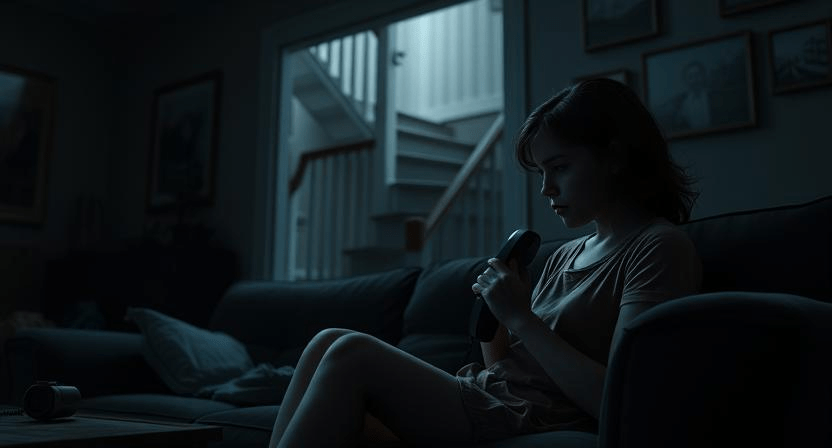
The ’80s weren’t just about VHS tapes and arcade games—oh no. The decade had a very specific brand of fear, one that lurked not in dark forests or haunted houses, but within the most familiar and seemingly safe spaces: home. No story captured this suburban horror quite like the classic urban legend of The Babysitter and the Man Upstairs.
At its heart, the tale is simple, yet terrifying: A young babysitter is alone in a house, watching over the children, when she starts receiving increasingly disturbing phone calls. The calls seem harmless at first, maybe just prank calls, but the tone grows darker as the night wears on. The caller keeps asking, “Have you checked the children?” After a series of calls, the babysitter finally grows uneasy enough to call the police, who instruct her to trace the call. When the police arrive, they inform her that the calls were coming from inside the house—the man upstairs.
This chilling legend plays on multiple elements of fear: isolation, the vulnerability of being alone in a strange house, and the ever-present fear of invasion. The fact that it takes place in a domestic setting—usually an average suburban home, often filled with quiet and comfort—heightens the unease. This is not a remote cabin or an abandoned asylum; it’s where families are supposed to feel safest, where children are meant to be protected, and where a babysitter’s job is just to make sure everything stays calm. But what if it didn’t?
The idea of a stranger in the house was a huge part of the ’80s horror atmosphere. Movies like When a Stranger Calls (1979), which played heavily on the same urban legend, took this fear to a whole new level of paranoia. The storyline of a babysitter receiving strange calls only to learn that the caller is inside the house fit right into the cultural landscape of a society growing increasingly fearful of random acts of violence, kidnapping, and crime.
Suburban homes, which were once viewed as havens of safety, now became breeding grounds for this brand of terror. It was a fear amplified by the media and television shows that echoed the anxiety of a society that was, for the first time, really considering the reality of stranger danger. And what better setting for that fear than a quiet, suburban home—often isolated and far from the watchful eyes of the outside world?
The legend also plays on the fear of helplessness. The babysitter, in this case, is someone meant to be in charge, but she’s vulnerable in a way that makes the threat even more menacing. She’s often a teenager, unfamiliar with handling real-life danger, which contrasts sharply with her responsibility to protect the children. The idea that she’s in danger from inside the house—the very place she’s supposed to be keeping safe—is what makes this legend so horrifying.
Though the story itself was only an urban legend, it was pervasive enough to influence real-life fears and even law enforcement training, with some police departments in the ’80s warning babysitters about the potential risks. The repeated calls, the terrifying realization that the danger is much closer than imagined, and the dramatic twist at the end made it a haunting tale for sleepovers and late-night whispers.
This urban legend, much like other horror staples, had staying power due to its relatability. Anyone could be the babysitter, and any house could harbor a terrifying secret in the form of a stranger. The sense of vulnerability and isolation combined with the sudden realization that safety is a fragile illusion made the Babysitter and the Man Upstairs one of the most unforgettable and fear-inducing tales of the decade.
The Danger in the Treats: Fear of Tampered Halloween Candy
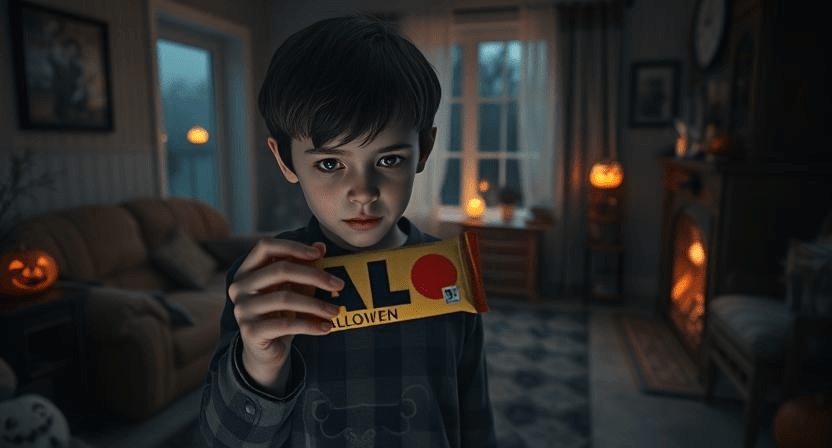
Halloween has always been a time for fun, costumes, and the excitement of collecting candy. However, lurking beneath the excitement of trick-or-treating is a deep-rooted parental fear that has haunted families for decades: the worry that someone might tamper with the treats. This concern reached a fever pitch during the 1980s, when stories of dangerous or poisoned Halloween candy began to spread like wildfire, amplifying the already-present anxiety over child safety.
The fear that sinister figures might hide dangerous objects or chemicals in the candy became one of the most prevalent Halloween urban legends. The stories were everywhere: a sharp object hidden inside a chocolate bar, poison laced into a piece of taffy, or, even more disturbing, the claim that candies could be deliberately tampered with to cause harm. For many parents, the idea that a stranger might use Halloween as a cover for malevolent acts felt almost too close to reality, especially as rumors continued to circulate.
One of the most unsettling elements of these fears was the idea that tampered treats weren’t just a rare occurrence—they could happen anywhere, to anyone. The notion of a “bad apple” lurking in a seemingly innocuous bag of candy made every new bite an act of suspense and concern. Parents were warned to inspect their children’s loot carefully, checking for foreign objects, odd smells, or anything that seemed out of place. This cautionary practice soon became a Halloween ritual, as trick-or-treaters were sent home to have their candy thoroughly checked and sorted before they could indulge.
This paranoia was exacerbated by media reports, some of which, while sensationalizing the dangers, fueled the hysteria. While there were a few isolated incidents of tampering—such as the case of a Texas man in 1974 who poisoned his own son’s candy to collect life insurance—these events were rare. Still, the idea that anyone could be a potential threat, hiding something harmful inside a seemingly innocent treat, struck a deep chord in the collective psyche. The fear of tampered treats seemed to grow with each passing year, especially in communities that faced higher levels of crime or mistrust.
The 1980s, with its growing cultural focus on crime prevention and child safety, saw an amplification of these fears. The era’s heightened awareness of child abductions, violence, and the idea of stranger danger made it easier for these stories to spread. The “tampered candy” myth became part of a broader narrative of mistrust in the safety of public spaces, even in something as routine as trick-or-treating.
By the time Halloween rolled around, it wasn’t uncommon to hear parents on the lookout for “suspicious” houses or “untrustworthy” neighborhoods. Stories of razor blades in apples, poison in candy, or sharp objects hidden in sweets became not just part of the folklore, but a real-world fear. Local communities began to set up candy checks, with volunteers or police officers inspecting treats before they could be consumed. This, in turn, further cemented the idea that Halloween treats were a potential minefield, filled with dangers that could be lurking anywhere.
Though the incidents of tampered candy remained relatively few and far between, the pervasive anxiety around the possibility of harm overshadowed the joy of the holiday for many. The idea of tampering, both real and imagined, created a fear that transcended the usual ghost stories and monsters. It was no longer just about getting scared by creatures of the night—it was about the very real, tangible fear that someone might use the holiday as an opportunity to harm children in a way that was both covert and disturbing.
In the end, while the fear of tampered candy has largely subsided in recent years, it remains a part of Halloween lore, serving as a reminder of how powerful a societal panic can be when it comes to protecting children from unseen threats. The idea that danger could be disguised as something sweet and innocent still lingers in the back of many parents’ minds, ensuring that the legacy of this Halloween myth lives on.
The Role of VHS, TV Specials, and Tabloids in Spreading the Scares

In the 1980s, the media played a pivotal role in shaping the cultural landscape of fear and paranoia, particularly through the spread of urban legends. With the rise of VHS rentals, TV specials, and sensationalist tabloid stories, the decade saw a new era of media-driven hysteria that brought urban legends into living rooms across America. What once were whispered tales passed along by word of mouth became amplified by television broadcasts and videos, creating an environment where fear was cultivated and legends were perpetuated.
The proliferation of VHS rentals in the ’80s was a game-changer in how people consumed horror. For the first time, families could watch movies on their own schedules. Horror films, in particular, became a staple of this new media consumption, with titles like A Nightmare on Elm Street, Friday the 13th, and The Texas Chainsaw Massacre playing on repeat in living rooms nationwide. What set these films apart wasn’t just their grotesque imagery and gory thrills but the way they blurred the line between fiction and reality. The marketing of these films often claimed that they were based on real events, creating an eerie connection between the on-screen violence and the very real fears that people had about the world around them.
As viewers sat in the safety of their homes, watching terrifying tales unfold, it was easy to imagine that these horrific events could somehow spill into reality. The rise of horror through VHS made the monsters, killers, and supernatural entities feel less like fantastical creations and more like potential threats lurking just beyond the door. This cultural shift helped feed the growing anxiety that was emerging alongside urban legends, where stories of killers, ghosts, and bizarre phenomena became interwoven into the collective fear of everyday life.
Meanwhile, television began to play a major role in feeding into these fears, especially with the advent of shows like Unsolved Mysteries. Premiering in 1987, the show became an immediate hit, drawing in viewers who were captivated by the unexplained mysteries it featured. Hosted by Robert Stack, the show didn’t just recount strange occurrences—it immersed its audience in them, leaving unresolved questions that allowed fear and speculation to take root. Each episode discussed everything from paranormal events to unsolved crimes, allowing urban legends to nestle themselves comfortably in the viewers’ minds as “unsolved mysteries” they could not ignore. The very format of the show—complete with chilling music, dramatic reenactments, and a host with a voice that seemed designed to haunt—made even the most improbable stories seem like they could be true.
TV specials weren’t just about eerie crime stories or unsolved disappearances. They also contributed to the popularity of urban legends by taking sensationalized, often outlandish stories, and presenting them as real events. Shows like Hard Copy and Inside Edition were part of a broader wave of tabloid-style reporting that emerged in the 1980s, amplifying stories that were wild, sometimes unbelievable, but always entertaining. These shows became the modern-day equivalent of the sensationalist pamphlets and newsletters that circulated in earlier eras. They would air stories of haunted houses, mysterious creatures, or even incidents that seemed to border on the supernatural. What these shows did so effectively was blur the lines between fact and fiction, offering no definitive answers and instead allowing viewers to wonder if what they were seeing could possibly be true. The effect was unsettling and often left people grappling with uncertainty, wondering whether the dangers presented in these stories could be lurking just beyond their own doors.
At the same time, tabloid newspapers became a major player in spreading the stories that fueled the hysteria of the time. Publications like The National Enquirer, The Star, and The Globe helped disseminate bizarre, often outlandish tales that tapped into the public’s fears. These tabloids would run stories about alien abductions, satanic cults, ghosts, and any number of other bizarre topics. The headlines were eye-catching and intentionally vague, making readers think that these extraordinary events were real—after all, if a story was in print and accompanied by an image, it must have some kernel of truth. Even though many of these stories were fabricated or heavily embellished, the combination of sensational headlines and seemingly credible “sources” helped keep the urban legends alive in the public consciousness.
The convergence of these media platforms created a perfect storm for the propagation of urban legends. As VHS tapes brought horror and real-life-based movies into homes, television shows and tabloid magazines picked up where these films left off. The stories these media outlets told weren’t just fictional—they were presented as part of a broader narrative of societal fear. This mix of real events, sensationalism, and outright fabrication made it difficult for the average person to differentiate between reality and myth, allowing urban legends to flourish. With each new show, documentary, and tabloid story, the line between fact and fiction became increasingly blurred.
Perhaps most troubling of all was the way these media outlets stirred up widespread fear. Stories of murderers hiding in the backseats of cars, satanic cults performing rituals in suburban basements, or the haunting of family homes all played into a pervasive sense that danger was everywhere. What was once just an occasional scary story became a cultural phenomenon, fueled by a media landscape that thrived on the sensational. Families became wary of the dangers lurking in everyday life, wondering whether the stories they heard in the media could somehow be true. The fear that these urban legends might manifest in their own communities—whether it was a killer clown on the loose or poisoned candy at Halloween—seemed ever-present.
This was the role the media played in the 1980s: it took fear and amplified it, turning everyday myths and rumors into national phenomena. What was once a whispered tale between friends or a story passed down from generation to generation was now part of the larger cultural conversation, broadcast through television, printed in tabloids, and rented on VHS. The media didn’t just report on fear; it created it. And in doing so, it ensured that the urban legends of the 1980s became as enduring as they were terrifying.
How These Legends Reflected the Culture and Fears of the 1980s

The urban legends and superstitions that proliferated in the 1980s were more than just spooky stories—they were a reflection of the societal climate of the time. This was a decade marked by significant cultural shifts, social unrest, and fears that, in many ways, mirrored the growing tensions both within the United States and around the world. Cold War anxieties, rising crime rates, and shifting family dynamics all played a role in shaping the kinds of fears that gripped the collective imagination of the American public, fueling urban legends that reflected these very concerns.
The Cold War was perhaps the defining geopolitical reality of the 1980s. With the threat of nuclear war hanging over much of the decade, it’s no surprise that a pervasive sense of impending doom pervaded much of popular culture. Movies and TV shows depicted apocalyptic scenarios, and themes of survival, government conspiracies, and the fear of the unknown became common in media. These fears were not just limited to the realm of fiction but also bled into the everyday anxieties people experienced. Urban legends like the satanic panic, with rumors of underground cults or secret government organizations performing sinister rituals, tapped directly into these Cold War-era fears. The idea that something nefarious was happening just beneath the surface, whether it was hidden in the fabric of society or lurking within the government itself, resonated deeply with a public that lived in constant fear of both the known and the unknown threats of the Cold War.
At the same time, rising crime rates in the United States added another layer of fear to the cultural zeitgeist. The 1980s saw a dramatic rise in crime, particularly in urban areas, with many cities experiencing significant increases in violent crime. Stories about dangerous strangers, home invasions, and the threat of random acts of violence became commonplace in the media. These real-world fears were amplified by urban legends like the “killer in the backseat” and the many stories of terrifying strangers lurking in the shadows. For example, the legend of the “Babysitter and the Man Upstairs” was a perfect manifestation of the fear that domestic spaces, once considered the safest places, could no longer be trusted. The terrifying idea that danger could be hiding within the sanctity of your home reflected a broader societal unease that permeated many aspects of life in the 1980s.
This sense of danger was also heightened by the media, which in many ways mirrored and magnified these fears. Tabloid-style reporting and sensationalist stories about unsolved mysteries or the latest crime wave played into public anxieties, creating a feedback loop of fear. The rise of shows like Unsolved Mysteries and America’s Most Wanted, which highlighted unsolved crimes and the possibility of widespread danger lurking just around the corner, helped stoke the flames of paranoia. These programs were both informative and terrifying, reinforcing the belief that danger was an ever-present threat, no matter how normal or suburban one’s life appeared.
Family dynamics were also undergoing significant changes during the 1980s. The nuclear family ideal, once the centerpiece of American society, began to show signs of fragmentation. Divorce rates were on the rise, single-parent households were becoming more common, and the traditional family structure was evolving. As family structures changed, so did the role of children in society. The ’80s marked a shift in the way children were perceived and portrayed in the media—once seen as innocent and protected, they were now often depicted as vulnerable and at risk. Urban legends about poisoned Halloween candy, dangerous toys, or the fear of child abductions were reflections of this anxiety over children’s safety in a world that seemed increasingly uncertain and unsafe. The widespread belief that trick-or-treaters were at risk of being harmed by malicious strangers reflected the growing concerns about the loss of control over public and private spaces. The idea that children could be targeted by adults in positions of trust, or worse, by strangers, became a focal point for the anxiety parents felt about raising children in a more dangerous world.
The rise of media consumption, particularly through VHS tapes and television specials, also played a significant role in shaping these fears. As discussed earlier, shows like Unsolved Mysteries and tabloid news programs were a conduit for these urban legends, but they also reflected a broader cultural trend. The ’80s marked the beginning of an era where sensationalism was a primary currency in the media landscape. With the rise of cable television, a 24-hour news cycle, and the ability to consume media content at home through VHS tapes, people were more connected to stories of crime, danger, and conspiracy than ever before. This access to a constant stream of sensationalized content led to a heightened sense of vulnerability. Urban legends that once might have been whispered in small groups were now broadcast into homes, feeding an ever-growing sense of paranoia.
The overarching theme that ties these fears together is a sense of instability. The 1980s were a time when both global and personal concerns seemed increasingly out of control. The threat of nuclear war with the Soviet Union, the rise in violent crime, changes in family dynamics, and the breakdown of traditional societal structures all contributed to a general sense of unease. This sense of instability manifested in urban legends that reflected society’s worst fears—fears of the unknown, of being betrayed by trusted figures, and of danger lurking in the most mundane places. The eerie thing about many of these urban legends is that they were rooted in a very real cultural and societal context. The fears they reflected were not just fanciful, made-up stories, but anxieties that were palpable in the everyday lives of people across America.
In many ways, the urban legends of the 1980s were a coping mechanism for the anxieties of the era. They allowed people to give form to the fears that seemed too overwhelming to process directly. Whether it was the fear of a stranger in the backseat of your car or the haunting specter of a government conspiracy, these stories served as a way to understand and manage the fears that were pervasive at the time. And, much like any good myth, they allowed people to share in a collective experience, one that mirrored the anxieties and tensions of the time.
Ultimately, the urban legends and superstitions of the 1980s were more than just stories—they were a reflection of a society grappling with rapid change, increasing anxiety, and a pervasive sense of vulnerability. The decade’s cultural climate provided the perfect breeding ground for these myths, as fears about the unknown, the dangerous, and the unseen were mirrored in the very real and very frightening events taking place across the globe and in the everyday lives of individuals.
Conclusion: Why We Still Remember These Stories Today
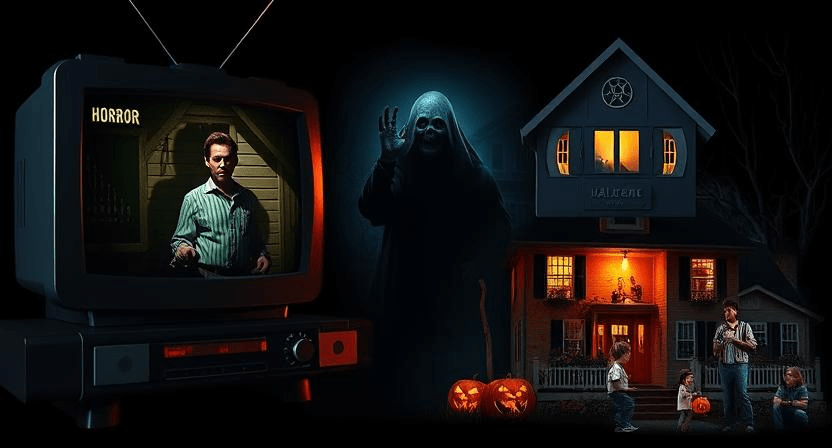
The urban legends and superstitions of the 1980s have endured far beyond the decade that birthed them. They are more than just relics of a bygone era; they’ve continued to captivate and terrify new generations, evolving and adapting as society and technology have changed. The persistence of these legends—whether it’s the mysterious killer clowns, the horror of poisoned Halloween candy, or the terrifying story of the babysitter and the man upstairs—can be attributed to the universal themes of fear, paranoia, and the unknown that they encapsulate. These stories tap into deep-seated anxieties that remain relevant regardless of time or place.
One of the key reasons these stories have remained so prominent in the cultural landscape is their ability to evolve with technological advances. In the 1980s, these urban legends spread primarily through word-of-mouth, local gossip, and the media—through sensationalist television shows, tabloid news reports, and VHS rentals. But as technology advanced and the internet age began to take hold, the way these myths spread changed, too. The internet became the perfect platform for these stories to thrive, allowing them to transcend regional boundaries and reach a global audience. Through emails, social media, forums, and blogs, the same urban legends that once circulated in small communities now appear in viral videos, posts, and memes. Sites like Snopes.com have become the modern-day equivalent of urban legend debunking, but even they can’t fully erase the allure of these dark, mysterious tales.
The digital era has also introduced a new form of myth-making. While many of the original ’80s legends have faded, new urban legends have sprung up, often borrowing from their predecessors. The rise of social media and online platforms has led to the creation of new myths, such as the infamous “Blue Whale Challenge” or “Slender Man,” which continue to capitalize on the same primal fears of violence, danger, and the unknown that defined 1980s urban legends. The way these modern myths spread—rapidly and unchecked—is a testament to how quickly urban legends can evolve to fit the fears of a new generation. They are no longer confined to whispered stories at sleepovers or shared tales around the dinner table; now, they are broadcast in real-time, reaching millions with the click of a button.
Part of the enduring nature of these stories lies in the sense of collective memory and shared experience they create. Whether people lived through the ’80s or learned about these legends secondhand, there is something inherently communal about the fear these stories generate. Urban legends give people something to bond over, whether it’s fear, excitement, or the thrill of sharing something that feels forbidden or taboo. As a result, these stories have transcended their original contexts and become a part of the broader cultural lexicon. Much like folklore, they continue to evolve but retain core elements that make them instantly recognizable and deeply unsettling.
Moreover, the 1980s were a time of transition. The world was on the brink of immense change, both culturally and politically. The end of the Cold War, the rise of consumerism, and the increasing impact of technology on everyday life created a perfect storm of uncertainty. Urban legends offered a way to make sense of that anxiety. They provided a scapegoat for the fear of the unknown—a way to explain what felt out of control. And because these stories were deeply connected to the collective experiences of the ’80s, they remain lodged in the public imagination today. For many, these tales are part of the cultural DNA of their childhoods and are now being passed down to younger generations who find them equally fascinating, if not more so in the digital age.
The staying power of these legends is also fueled by nostalgia. As time passes, the 1980s have become an iconic period in pop culture, marked by a particular aesthetic, music, and film that many now view with fondness. Nostalgia for the decade has revived interest in everything from classic movies to fashion trends, and urban legends have become a part of this retro resurgence. Streaming services and online forums dedicated to 1980s culture have made it easier than ever for people to revisit the eerie stories that once haunted their nightmares. The stories have become a way to tap into that nostalgic feeling, a connection to a time when things felt simpler, but perhaps even more frightening in their own way.
But it’s not just about nostalgia. The urban legends of the 1980s hold up because they speak to timeless fears. Whether it’s the fear of being harmed by strangers, the fear of the unknown, or the belief in a hidden world just beneath the surface of everyday life, these stories continue to echo the anxieties of contemporary society. Even as we move into an age of rapid technological change and unprecedented access to information, the primal fears these legends reflect—danger lurking in unexpected places, the threat of harm to those we love, and the specter of unknown forces—remain as compelling as ever.
As much as these urban legends have evolved over the years, their fundamental appeal has remained largely the same. They are cautionary tales, warnings about the dangers lurking in the dark corners of our world, offering a way to grapple with the inherent chaos of life. The fear they evoke is real, even if the stories themselves are not, and that emotional response is what keeps them alive. Today, urban legends from the ’80s have found new life in internet culture, continuing to spread and mutate with every click, tweet, and share. And even though the original fears that gave birth to these legends may have receded, the myths themselves are still with us, adapting and thriving in the digital age.
In the end, the survival of these legends—whether told around a campfire, seen on a VHS tape, or shared across a viral meme—speaks to the power of storytelling and the need to make sense of a world that can often feel unpredictable and frightening. The 1980s gave us these stories, but they’ve endured because they tap into something universal, something that will continue to echo through future generations.

 Totally Retro: 80s Edition
Leave a comment