
In the tapestry of American childhood, few threads are as uniquely emblematic of a specific era as the latchkey kid. The image of a child letting themselves into a quiet, empty house after school, microwave dinner in hand, TV buzzing in the background, became one of the defining scenes of the 1980s. Latchkey kids were the unsupervised generation, raised by television, fast food, and trial-and-error independence.
While this term had existed before, it was during the 1980s that latchkey kids came to symbolize a cultural and societal shift—one defined by changing family structures, economic necessity, evolving gender roles, and the burgeoning influence of media. This wasn’t merely about a key around a kid’s neck. It was about a generation navigating a new world of self-reliance, often before they were ready.
Let’s take a deep dive into the world of latchkey kids during the 1980s—a fascinating, complex, and at times sobering chapter in modern childhood.
The Origin of the Latchkey Phenomenon
The roots of the “latchkey kid” phenomenon stretch back to the 1940s, during World War II, when the wartime economy necessitated a dramatic shift in the American household. With millions of men serving overseas, women were recruited into the workforce in unprecedented numbers. Government posters and public campaigns urged mothers to take jobs in factories, offices, and defense plants to support the war effort. As a result, children—many of them too old for traditional childcare but too young to be entirely self-sufficient—often found themselves coming home to empty houses. The term “latchkey” referred to the key that children would wear around their necks on a string or chain, symbolizing both their independence and the absence of adult supervision.
While the term faded somewhat in the postwar years, the underlying conditions never fully disappeared. By the time the 1980s arrived, the social and economic landscape had shifted once again, and the term was revived in full force. But this time, it wasn’t just a temporary wartime necessity—it became a defining aspect of a generation’s daily reality.
Several concurrent trends helped resurrect and redefine the latchkey experience. First, the 1980s saw a sharp rise in dual-income households—not out of choice, but necessity. Economic pressures were mounting due to stagflation in the 1970s, the decline of manufacturing jobs, and a growing gap between wages and cost of living. Families that had previously gotten by on one income were now dependent on both parents working just to maintain stability. Even in two-parent homes, the hours demanded by jobs were increasingly long and inflexible.
Second, the divorce revolution of the 1970s had lasting effects. Family courts were flooded with custody arrangements, and a growing number of children lived in single-parent households. In many cases, the custodial parent had little choice but to work full-time, leaving children without adult supervision during critical after-school hours.
The infrastructure to support these families simply wasn’t in place. Public funding for after-school programs was limited, and private options were often cost-prohibitive. Most communities lacked the organized support networks needed to fill the gap. Unlike later decades, there was no widespread emphasis on structured enrichment activities or widespread community-based youth programs. Churches, YMCAs, and schools tried to help, but coverage was inconsistent and often inaccessible to working-class families.
Technological and societal norms also played a role in cementing the latchkey reality. The personal cell phone didn’t exist. Home security systems were rare. Most homes didn’t have answering machines until the mid-to-late ’80s, meaning kids couldn’t easily check in or leave messages. Parents had to trust their children’s memory, judgment, and sense of responsibility—traits still developing in many elementary and middle school-aged kids.
Media and policymakers were slow to recognize the implications. Early on, the growing population of latchkey kids wasn’t seen as a crisis but as a pragmatic response to the changing economy. Only later would the psychological and developmental effects enter public discourse.
By the mid-1980s, the image of the latchkey kid was well-established: a child stepping off a school bus with a key around their neck, making their way into an empty home, and figuring out how to navigate the gap between school and dinner time. It was a quiet transformation in American childhood—one born not of policy or intent, but of millions of individual family decisions made under the pressure of necessity.
The 1980s Context: Why Latchkey Kids Became the Norm

To truly understand why latchkey kids became so prevalent during the 1980s, it’s essential to examine the broader social and economic climate of the time. This was a decade defined by contradictions: explosive economic ambition on the one hand and growing social strain on the other. It was the era of Wall Street excess, personal ambition, and individualism, epitomized by the cultural mantra “Greed is good.” Success was often equated with long hours, fierce career dedication, and material acquisition. These pressures rippled through American households, reshaping the very structure of family life.
One of the most defining shifts was the massive influx of women into the workforce. While this movement had roots in the feminist advances of the 1960s and 1970s, by the 1980s, it was no longer just about empowerment—it became an economic necessity. Stagnant wages and a rising cost of living forced many families to rely on two incomes to stay afloat. Women, who had once been expected to stay home and manage the household, were increasingly working full-time jobs. But while the economy had evolved, the support systems for working families had not. Affordable childcare was scarce, subsidies were minimal, and public policy lagged far behind the changing realities of family life. As a result, parents—especially mothers—were often forced to choose between financial stability and after-school supervision.
This shift was compounded by the changing nature of family itself. The 1980s saw a continuation of the divorce boom that had begun in the previous decade. By 1980, the divorce rate had reached a historic high, with nearly half of all marriages ending. As more children were raised in single-parent households, the economic strain intensified. Single mothers, in particular, often juggled full-time employment with limited resources and minimal support. Hiring a babysitter, enrolling kids in after-school programs (where available), or even relying on extended family wasn’t always feasible. Many kids were simply left to care for themselves until their parent returned from work—sometimes not until well into the evening.
Cultural attitudes toward child-rearing also played a significant role. Parents who had grown up in the 1950s and 1960s—eras marked by more unsupervised outdoor play and a general belief in childhood resilience—were inclined to view independence as a positive trait. Leaving a child home alone for a few hours after school wasn’t necessarily considered dangerous or negligent. In fact, for many, it was seen as an opportunity to instill responsibility, discipline, and maturity. This generational mindset helped normalize the idea that children could, and should, learn to manage on their own.
At the same time, American suburbia was undergoing rapid expansion. Many families moved to new developments on the outskirts of cities, lured by promises of better schools and safer neighborhoods. But these sprawling suburbs often lacked community infrastructure—such as youth centers or easily accessible public transportation—that might have supported working parents. Children could be physically isolated, with limited options for social interaction or supervision once school let out.
Layered onto all of this was the technological landscape of the time. There were no cell phones, no texting, and no GPS tracking. Communication between working parents and their children was limited to landlines—if the child remembered to check in. For some parents, especially those working hourly jobs or long commutes, even a quick phone call wasn’t always possible. Kids were left to rely on instincts, household rules, and whatever social norms they had internalized. The hope was that they’d be safe and make good choices—but there were no guarantees.
What made the 1980s unique wasn’t just the existence of latchkey kids, but how widespread and normalized the experience became. It was no longer just a marginal reality—it was a feature of the middle-class landscape. Children letting themselves in with keys tied to shoelaces became a common and unremarkable sight. It was, in many ways, a quiet social contract: parents trusted their kids to manage, and kids, for better or worse, learned to cope.
The Day-to-Day Life of a Latchkey Kid
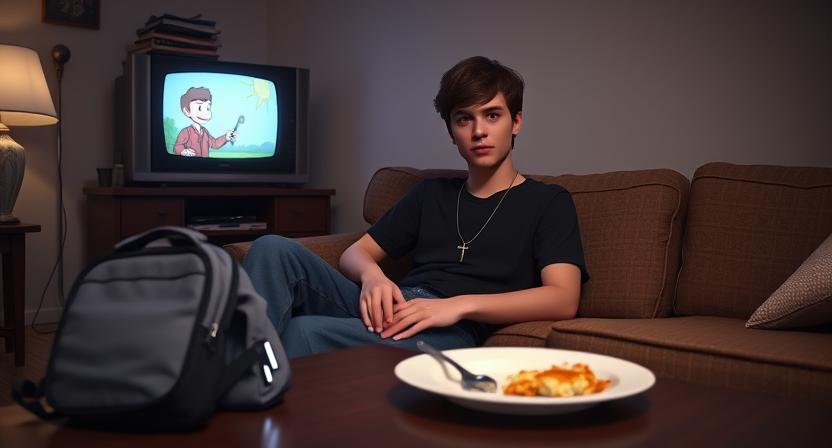
For latchkey kids of the 1980s, daily life operated on a schedule built around absence. The morning started like most children’s—breakfast, school, and perhaps a rushed goodbye from a parent already late for work. But it was the afternoon that defined their unique experience. After the final school bell rang, there were no parents waiting in the carpool lane, no trips to structured after-school programs. Instead, it was a solitary walk, bike ride, or bus ride home, a key tucked safely around their neck—dangling from a shoelace, ribbon, or metal chain—often hidden beneath a sweatshirt to keep from getting lost or drawing attention.
Entering the empty house brought a mix of emotions: relief, boredom, pride, or even unease. Most latchkey kids followed a familiar and often unspoken routine. The backpack hit the floor. Shoes kicked off. Lights flicked on. Curtains drawn. The house, still and quiet, became both refuge and prison. The television, warm and buzzing, became the main source of noise and company. For many, it was the first thing turned on, long before the refrigerator door opened.
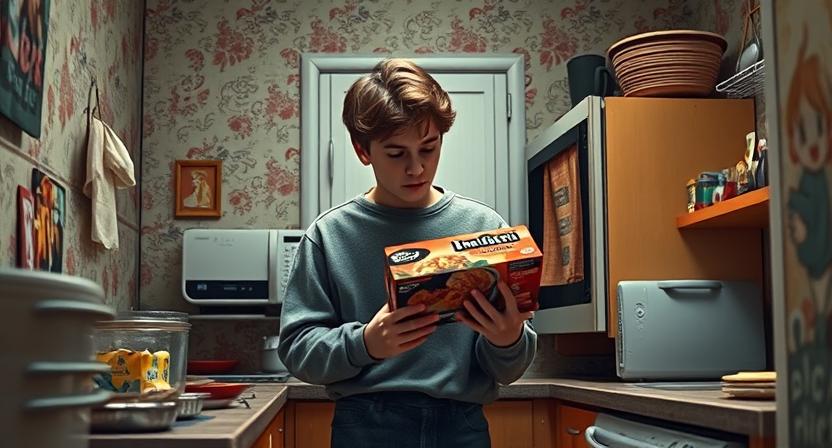
Afternoon snacks were rarely fresh or homemade. Instead, latchkey cuisine was built around the freezer aisle and canned goods. Microwave dinners—Hot Pockets, Kid Cuisine trays with rubbery corn and pudding, or Totino’s Pizza Rolls—were mealtime staples. Chef Boyardee ravioli or SpaghettiOs offered another go-to option, easily heated and eaten in front of the TV. Few kids had the patience or supervision to cook meals from scratch, and safety rules (like no stove use) meant many stuck to whatever could be nuked in minutes. These quick fixes weren’t just about convenience—they were symbols of the autonomy latchkey kids had, and sometimes the limitations of their age.
Television filled the hours that followed, serving as background noise, distraction, and pseudo-parent. Syndicated cartoons and reruns aired in a predictable sequence: G.I. Joe, He-Man, She-Ra, Inspector Gadget, Thundercats, The Smurfs, and after-school specials. Channels like Nickelodeon and local networks ran programming aimed directly at unsupervised youth. These shows weren’t just entertainment—they offered a sense of structure and familiarity in an otherwise loosely governed day.
Homework might get done—if a child was particularly conscientious, or if there was a rule and an expected check-in from a parent. But just as often, it was ignored in favor of TV, playing with toys, or flipping through comic books. Rules at home varied dramatically from family to family. Some kids were given strict instructions—don’t use the phone, don’t open the door, no friends over. Others were trusted with almost no boundaries at all. And within those boundaries, many children explored. Some experimented with forbidden snacks, others with their parents’ liquor cabinets, cigarettes, or even pornography stashed in drawers. This wasn’t every latchkey kid—but the opportunity for mischief was omnipresent, and some couldn’t resist testing their limits.
The absence of adult presence also led to deeper emotions that often went unnoticed. Boredom could tip into loneliness. Fear of the dark or unfamiliar noises made even familiar homes feel eerie. A flickering lightbulb, a creak in the hallway, or the rumble of a distant storm could become the source of real anxiety for kids too young to process fear alone. Some children developed rituals—keeping the TV on at high volume, double-locking doors, talking aloud to themselves—to manage the long, silent hours.
Yet for all the drawbacks, latchkey life wasn’t without its advantages. Many children developed an early sense of capability and maturity. They learned to follow routines, handle emergencies, and become their own disciplinarians. Some helped with household chores, others prepared dinner before their parents came home, and many were responsible for watching younger siblings—a heavy responsibility for a child but a reality in countless homes. This self-sufficiency often produced a quiet confidence that lasted well into adulthood.
Latchkey kids occupied a paradoxical space: both neglected and trusted, vulnerable yet independent, bored yet resourceful. Their after-school hours were filled with the ordinary—snacks, cartoons, homework—and the extraordinary weight of solitude. Every weekday, these children lived in a world where they were the only authority, learning to navigate not only the logistics of being alone but also the emotional terrain of growing up in the gaps between adult presence.
The Emotional Landscape: Freedom or Neglect?

The emotional reality of latchkey kids in the 1980s defies easy categorization. While the image of a child returning home to an empty house evokes a sense of vulnerability, many who lived that experience recall it with surprising fondness. For some, being alone after school was not a burden but a gateway to early maturity. The quiet hours offered a kind of freedom that few children today experience: freedom to explore interests without interruption, to make choices without constant oversight, and to build a sense of self-reliance that felt empowering rather than imposed.
In households where the arrangement was treated with trust and support, latchkey kids often thrived emotionally. These children were praised for being responsible, and the alone time was framed as a privilege rather than a punishment. Many remember the peace of those afternoons—drawing, reading novels well beyond their age level, writing stories, practicing instruments, or simply enjoying the solitude that allowed their inner worlds to flourish. In these cases, the emotional takeaway was positive: independence, confidence, and a deep appreciation for privacy.
But that was not the universal story. For countless other children, the silence that filled the house was deafening. The key around the neck wasn’t a symbol of trust—it was a daily reminder that no one would be home for them for hours. Especially for younger kids or those in emotionally strained households, being alone felt less like a rite of passage and more like abandonment. Feelings of loneliness crept in early and often, sometimes expressed as boredom or acting out, but just as often internalized as anxiety or sadness.
Children too young to fully understand their parents’ absence sometimes blamed themselves. They didn’t always know that the long work hours or multiple jobs were necessary for family survival. What they felt instead was absence—an empty kitchen, a dark hallway, the eerie quiet of a home that was supposed to feel safe. Many feared the responsibility they were given. The weight of having to watch younger siblings, avoid strangers, or know what to do in an emergency was enormous for a child. The ordinary became frightening: a knock at the door, a phone ringing with no caller ID, or a flickering light during a thunderstorm. For some, even walking home alone each day was a source of daily dread.
The emotional coping mechanisms varied. Some kids developed elaborate routines or rituals—turning on every light in the house, keeping the television volume high, talking aloud to imaginary friends, or calling a parent at work just to hear their voice. Others put on a brave face, hiding their unease even from themselves. But over time, chronic emotional suppression could lead to more serious issues. Withdrawal, defiance, and emotional numbing became common responses, especially among those who had no outlet to discuss their feelings.
Educators and school counselors began to notice the signs. Teachers reported that some students appeared tired, distracted, or unusually anxious. Guidance counselors started seeing patterns—children who couldn’t focus, who acted out, or who spoke wistfully of having someone to come home to. By the late 1980s, psychologists were raising concerns about the developmental impact of extended unsupervised time, particularly on children who lacked emotional support at home.
Research began to suggest that some latchkey kids developed what would now be recognized as insecure attachment styles—difficulty trusting others, trouble with authority, or fear of abandonment. These patterns often extended into teenage years and adulthood, shaping relationships, academic performance, and mental health. While not all latchkey children were emotionally harmed by their experience, the risk was real, particularly in homes where emotional communication was limited.
Still, emotional outcomes were often shaped by more than just the absence of a parent. They were influenced by the broader emotional climate of the home. Kids who felt loved, even if left alone, often weathered the solitude better. A parent’s reassurance—a handwritten note on the counter, a daily phone check-in, or praise for being responsible—could go a long way in softening the loneliness. Those small gestures told a child: “You matter. I trust you. I’ll be back soon.”
In the end, the emotional landscape of latchkey life was vast and varied—marked by both resilience and rawness. For every child who felt empowered, there was another who felt forgotten. These emotional echoes didn’t always fade with time. They lingered, shaping how an entire generation understood independence, connection, and the complex boundary between freedom and neglect.
Media Response and Cultural Reflections

As the number of latchkey kids grew dramatically in the 1980s, the media took notice—and often with alarm. News programs, magazines, and talk shows increasingly spotlighted the perceived dangers and psychological impacts of children left to their own devices after school. Terms like “children in crisis” and “the home-alone generation” began cropping up in national headlines, with Time, Newsweek, and 60 Minutes airing segments that questioned the wisdom—and consequences—of this widespread unsupervised upbringing. The media wasn’t just reporting on the trend; it was helping to shape the national conversation around parenting, safety, and childhood independence.
These portrayals often focused on the most dramatic scenarios—accidents, delinquency, emotional damage—raising public anxiety about a generation growing up “alone.” While some coverage leaned toward moral panic, these concerns weren’t entirely baseless. As stories of latchkey kids encountering emergencies, engaging in risky behavior, or suffering emotional neglect came to light, the issue became a frequent topic of debate in school board meetings, parenting circles, and legislative discussions. Daytime talk shows like Donahue and Oprah ran episodes featuring latchkey kids and their parents, exploring the emotional toll and the societal structures that had allowed such a situation to become so widespread.
Pop culture mirrored and amplified these anxieties, often with a touch of nostalgia or subversive humor. Films of the decade, particularly those targeting or featuring youth, leaned into themes of autonomy and absent adults. In E.T. (1982), Elliott’s bond with the alien develops almost entirely without parental interference—a metaphor for both the loneliness and imaginative power of children left alone. The Goonies (1985) and Stand by Me (1986) offered similar narratives of kids forging ahead into adventure without adult supervision, underscoring a bittersweet truth: these children were growing up fast, whether they were ready or not.
John Hughes’ The Breakfast Club (1985) perfectly captured the emotional isolation many teens felt, even when surrounded by peers. Each character’s story reflected a different facet of neglect or misunderstanding at home—a quiet nod to the ways latchkey culture had shaped their emotional lives. Even comedies like Ferris Bueller’s Day Off (1986) reveled in the idea that kids were competent, clever, and capable of navigating the adult world—sometimes better than the adults themselves.
Although Home Alone premiered in 1990, its DNA was unmistakably ‘80s. The movie’s premise—a child left home alone, facing off against burglars with ingenuity and grit—was both a comedic exaggeration and a cultural wink at the realities millions of latchkey kids knew all too well. The film’s massive success hinted at a public both amused and uneasy with the idea of kids being left to their own devices, literally and metaphorically.
Television programming and educational media also responded to the phenomenon in more pragmatic ways. Saturday morning cartoons and after-school specials began weaving in safety lessons for children who were regularly home alone. Public service announcements warned kids never to answer the door or tell a caller that their parents weren’t home. Popular animated series occasionally broke from their usual antics to deliver straight-to-camera messages about stranger danger, emergency numbers, and the importance of locking doors.
Some stations aired segments aimed specifically at latchkey kids, offering practical advice with a tone that was both instructional and comforting. These segments typically emphasized safety and responsibility, gently reinforcing the idea that while being alone wasn’t ideal, it didn’t have to be unsafe. As a result, kids across the country began receiving an informal education on how to manage risk and act independently—lessons typically delivered by media figures rather than parents or teachers.
In response to the growing concern, some schools and community organizations began developing programs specifically tailored to the needs of latchkey kids. “Latchkey training” classes taught children how to use kitchen appliances safely, what to do in an emergency, and how to handle unexpected situations—like a knock at the door or a lost house key. These programs sought to bridge the gap between adult absence and child readiness, acknowledging the reality that unsupervised after-school time was not going away anytime soon.
By the end of the decade, the image of the latchkey kid had become a powerful cultural symbol—both a critique of modern family life and a reflection of broader societal change. Media coverage helped bring attention to the challenges of working families and the inadequacies of the child care system, even if it sometimes sensationalized the issue. And through films, television, and public discourse, latchkey kids were seen not only as vulnerable but also as resourceful, resilient, and emblematic of a generation learning to grow up on its own.
The Legacy of the Latchkey Generation

The legacy of the latchkey generation is a complex, still-evolving story—one that continues to shape parenting norms, cultural attitudes, and even workplace values in the 21st century. As the original latchkey kids of the 1980s moved into adulthood, many began to reflect on how their formative years, spent in empty houses and before glowing television sets, forged a particular kind of individualism that still defines much of Generation X.
For many Gen Xers, growing up as latchkey kids instilled a powerful sense of autonomy. With no adults micromanaging their afternoons, they became proficient in navigating life’s minor challenges: making meals, managing time, solving problems independently, and, in many cases, taking care of younger siblings. These weren’t just survival skills—they were early lessons in responsibility and self-reliance. As adults, many in this cohort take pride in their ability to handle adversity, figure things out on their own, and work independently. They contrast their unstructured, lightly supervised childhoods with what they see as the more curated and monitored upbringings of Millennials and Gen Z.
This contrast has sparked countless essays, memes, and think pieces. Gen X is often painted as skeptical, resourceful, and quietly resilient—traits born out of long afternoons spent alone, with only their thoughts, cartoons, and a snack for company. The trope of the emotionally self-contained, slightly ironic Gen Xer has become part of the generational brand, rooted in the solitude and independence of the latchkey years.
Yet the long-term effects weren’t all positive. While many emerged with strong coping skills, others carried forward more subtle scars—difficulty with emotional expression, ambivalence about authority, and a deep-seated need for control. For some, the early normalization of neglect led to struggles with intimacy or trust. The generation that prided itself on independence also became known for its cynicism and detachment, attitudes often attributed to childhoods spent in relative isolation.
The social response to the latchkey era was significant. By the late 1990s and early 2000s, a noticeable shift had taken place in parenting culture. The term “helicopter parenting” entered the lexicon, describing an approach that emphasized constant oversight and involvement. Ironically, many of the parents hovering over their children in this new era were former latchkey kids themselves—determined to give their children the sense of security and attention they felt was lacking in their own upbringing. The pendulum had swung from benign neglect to hyper-vigilance.
This shift wasn’t just psychological; it was structural. The 1980s had revealed the inadequacies of America’s child care system, particularly for working- and middle-class families. Over time, this helped fuel policy changes, workplace advocacy, and a boom in organized after-school programming. By the 2000s, schools, community centers, and child care providers were far more attuned to the needs of unsupervised kids—though disparities remained.
Indeed, one of the less frequently acknowledged legacies of the latchkey phenomenon is the way it highlighted, and often reinforced, class and racial inequality. Wealthier families could afford private nannies, tutors, or structured extracurricular activities. Suburban children might have had safer neighborhoods and closer community ties, while their urban or rural counterparts navigated more dangerous or isolating environments. Single-parent households, already stretched thin, had few options. Being a latchkey kid could mean very different things depending on a family’s income level, support network, and geographic location.
Despite this, the cohort often referred to as “America’s middle child” left a lasting imprint on society. The do-it-yourself ethos that defined much of Gen X’s latchkey upbringing can be seen in the generation’s adult contributions—especially in tech and creative industries. Many of the entrepreneurs, coders, and creators who reshaped the modern digital landscape were latchkey kids who grew up experimenting with early home computers, video game systems, and cable television. Their hours of unsupervised exploration translated into a culture of innovation and self-teaching.
In many ways, the latchkey generation became a living experiment in what happens when children are given extraordinary freedom at a young age. The results were messy, varied, and deeply human. Some struggled, some thrived, and most did both at different times. But taken as a whole, the latchkey experience helped shape a generation that is both fiercely independent and quietly introspective, a group that learned early how to be alone with their thoughts—and how to turn solitude into strength.
Conclusion: A Time That Changed Childhood

The 1980s marked a pivotal chapter in the evolution of American childhood, and the latchkey kid became one of its most defining—and telling—figures. These children, stepping through empty front doors with keys dangling from shoelaces, symbolized more than just a logistical shift in after-school care. They embodied a cultural crossroads, where changing economic demands, evolving gender roles, and shifting family dynamics collided with the realities of everyday life.
Latchkey kids weren’t created by neglectful parents but by a society in transition—one still catching up to the consequences of its progress. They were the byproduct of an era that celebrated independence and ambition, often without providing the safety nets needed to support the youngest members of the household. These kids were trusted with freedom before many were ready, expected to manage solitude, responsibility, and even fear with quiet resilience.
And yet, the legacy of the latchkey generation isn’t one of failure—it’s one of complexity. These children grew up navigating a world that asked a lot of them and gave them space, for better or worse, to figure it out on their own. Many did so admirably, carrying with them a grit and resourcefulness that would define their adult lives.
Looking back at this unique moment in American life reveals not just how childhood changed, but how society redefined what it meant to grow up. The front doors may have been locked, but the experiences that lay beyond them opened pathways to a very different kind of maturity—one shaped in the quiet hours between school and the return of a parent’s footsteps.
 Totally Retro: 80s Edition
Leave a comment