
Introduction – Job Hunting in a Pre-Internet World
Before job boards refreshed every second and applications disappeared into digital portals, finding work was a slow, tactile, deeply human process. In the 1980s, job hunting meant scanning newspapers with a pen in hand, walking into businesses with a résumé tucked into a folder, and relying on the quiet power of who you knew rather than what an algorithm decided to show you. Information traveled at the speed of print and phone calls, not notifications, and opportunity was shaped by geography, reputation, and timing. Every application took effort. Every follow-up required courage. And every rejection arrived not as an automated email, but as silence—or a brief, uncomfortable conversation. To understand how people actually found jobs in the 1980s is to step into a world where work was pursued face-to-face, patience was required by default, and careers often turned on small, human moments that could never be replicated by a search bar.
Newspapers as the Main Job Board

In the 1980s, newspapers were not just a source of news; they were the primary infrastructure of the job market itself. For millions of people, the daily paper—and especially the thick Sunday edition—functioned as the central marketplace where employers and job seekers met. Before websites, email alerts, or searchable databases existed, job listings were printed in dense blocks of small text, organized by industry or job type, and read with intense focus by anyone in need of work. Households often shared a single newspaper, which meant job seekers would wake early to claim it, scanning the classifieds section before anyone else had a chance to flip through. Pens and highlighters were tools of the trade. People circled promising listings, drew stars next to “immediate hire” postings, and carefully planned which employers to contact first based on deadlines and location.
The ritual of reading job ads was often repetitive and time-consuming, yet it created a rhythm to the job search that shaped people’s daily routines. Many job seekers developed habits around specific publication days, knowing that certain employers posted openings only once a week or favored the larger circulation of Sunday editions. In cities, some people purchased multiple newspapers to widen their reach, comparing listings across competing publications in hopes of uncovering an opportunity others might miss. The search itself demanded patience and endurance. Classified ads were brief, sometimes frustratingly vague, and often filled with coded language. Phrases like “entry-level,” “must have reliable transportation,” or “good appearance required” carried unspoken meanings about wages, hours, and social expectations. Job seekers learned to read between the lines, to infer workplace conditions from just a few lines of print.
Responding to these ads required deliberate effort. There was no one-click apply. Each listing asked for action: a phone call during business hours, a mailed résumé, or an in-person visit at a specific time. Phone lines were often busy, especially for desirable roles, and many people spent hours redialing employers, hoping to be among the first to get through. Mailed applications took days to arrive and longer to receive a response, if any came at all. For in-person applications, candidates planned their routes carefully, sometimes lining up several addresses in a single day to make the most of bus fares or borrowed cars. The newspaper ad was not just information; it was a starting gun, and speed mattered. The earlier you responded, the better your chances of being seen before the position quietly filled.
For employers, newspapers served as both filter and funnel. Placing an ad cost money, which meant listings were often limited in length and frequency. Small businesses might run a single short ad and rely on walk-in traffic after that. Larger companies could afford repeated postings, but even then, hiring was constrained by the physical limits of print circulation. Employers expected to receive fewer applicants than modern digital postings generate, but they also expected those applicants to be more intentional. The effort required to find the listing, prepare a résumé, and make contact acted as a natural barrier that filtered out many casual inquiries. This shaped the tone of hiring itself: managers often assumed that anyone who applied had already invested meaningful effort and was therefore more serious about the job.
The newspaper job market also reinforced the local nature of employment. Classified sections were geographically bound. If you lived in a particular city or region, you saw only the opportunities within reach of that publication’s distribution area. Relocating for work was rarer and riskier because discovering jobs in other cities required purchasing out-of-town papers, making long-distance phone calls, or physically traveling to search. As a result, many careers unfolded within a narrow geographic radius, shaped as much by where someone happened to live as by their ambitions or abilities. The newspaper became, in a very literal sense, the map of opportunity available to you.
There was also a social and emotional dimension to newspaper-based job hunting that is easy to forget today. Sitting at a kitchen table or café counter, flipping through classifieds, made the search feel personal and public at the same time. Family members sometimes hovered nearby, offering suggestions or quietly judging which jobs seemed “good enough” to apply for. Some people felt a sense of hope each morning the paper arrived, while others braced themselves for disappointment when listings dried up or seemed mismatched to their experience. The newspaper did not adapt to you; you adapted to it. If no suitable jobs appeared that week, you waited. If the ads were sparse, you recalibrated your expectations. The market was visible in a way that modern digital systems often obscure: when opportunities were few, you could see it printed in black and white.
Over time, this system shaped how people thought about work itself. Job seekers learned to be persistent, to tolerate silence, and to accept that finding work was often a slow process of repetition rather than instant feedback. The newspaper did not promise efficiency or fairness; it simply provided access. Those who knew how to read between the lines, who had reliable transportation, flexible schedules for phone calls, and the confidence to walk into unfamiliar workplaces often had an advantage. In this way, newspapers were more than a tool—they were a gatekeeping mechanism that quietly reflected and reinforced the social realities of the era.
Walking In and Asking for Work

In the 1980s, one of the most direct—and often most effective—ways to find a job was simply to show up in person. “Cold-walking” into a business, folder in hand and résumé tucked neatly inside, was a practice that required both courage and preparation. Unlike today, where applying online can feel anonymous and detached, walking into a workplace meant immediately presenting yourself to someone with the authority to hire. The stakes were tangible: your appearance, demeanor, and confidence were evaluated in real time. Many entry-level positions, retail jobs, or small business roles were never advertised in newspapers; the employer relied on the foot traffic of determined job seekers who were willing to make the effort to introduce themselves face-to-face. A well-timed visit could place you at the front of a hiring queue, while missing the “right day” could mean waiting weeks for another opportunity.
The process typically began with paperwork, often on standardized forms provided by the business itself. Applicants filled out handwritten applications, detailing education, experience, and references. Every detail mattered, because mistakes were costly—if a form was illegible or incomplete, it might be discarded immediately. Beyond the paper, applicants often had to speak directly with managers or store owners, answering questions on the spot and sometimes participating in informal, impromptu interviews right in the office or shop floor. This created a high-pressure environment, but also allowed candidates to convey personality, enthusiasm, and reliability in ways that no printed résumé could. Those who were polite, confident, and attentive often made lasting impressions that could outweigh gaps in experience or education.
Timing and persistence were critical. Many applicants learned to visit during specific hours, avoiding busy times when managers were preoccupied with customers or operations. Others developed strategies for revisiting businesses periodically, checking for new openings, or asking about anticipated hiring needs. Some businesses kept informal waiting lists, noting promising candidates to call later. This created a subtle but important advantage for those who were proactive, observant, and willing to invest the physical effort of multiple visits. Unlike the instant application systems of today, walking in was a game of presence, patience, and timing.
Walking in to ask for work also reflected the social norms and expectations of the era. Dress, manners, and demeanor were scrutinized closely, especially for visible positions like retail or customer service. Candidates who understood what was considered “appropriate” attire, a firm handshake, and clear speech often fared better than those who relied solely on their résumé. In many cases, the very act of showing up communicated motivation and seriousness to a potential employer—qualities that could outweigh formal qualifications.
Finally, cold-walking blurred the lines between job search and networking. Even if a particular location had no openings, a courteous conversation could create connections that led to future opportunities. Employees often remembered eager applicants and shared their names with colleagues at other locations. The physical act of visiting businesses, interacting with people, and demonstrating initiative made job searching a deeply human process, one where effort, visibility, and perseverance could literally open doors. In an era before digital applications, showing up in person was not just a method—it was a statement about your commitment to finding work and your willingness to meet the demands of the marketplace head-on.
Word of Mouth and Personal Networks

In the 1980s, knowing the right people often mattered as much—or sometimes more—than submitting an application or answering a classified ad. Job opportunities frequently traveled through informal channels: a friend mentioned an opening at their workplace over lunch, a neighbor knew someone looking for help in a local shop, or a distant cousin could recommend you for a role at their company. Unlike today’s digital connections, these networks were deeply personal and rooted in trust; an employer who received a referral from someone they knew was far more likely to take a candidate seriously. Word of mouth was not just supplementary—it was central to how many people found work, particularly in industries like retail, manufacturing, and skilled trades where reputation carried significant weight.
Personal networks extended beyond immediate family and friends. Neighbors, church congregations, schoolmates, and community groups all functioned as unofficial recruitment channels. Even casual social interactions could lead to employment opportunities: a conversation at a barbershop, a chance meeting at a laundromat, or a connection through a volunteer activity could result in a job referral. People learned to cultivate these connections carefully, recognizing that reliability, discretion, and a good reputation were as important as experience or education. For employers, hiring someone recommended by a trusted source reduced risk; a referral often came with an implicit endorsement of character, work ethic, and reliability, which were harder to verify through formal applications alone.
Networking also required proactive effort. Unlike modern social media or professional platforms where introductions happen virtually, building and maintaining connections in the 1980s was a matter of showing up, participating in the community, and nurturing relationships over time. People kept mental or physical notes of who might be hiring, who had contacts in certain industries, and who could vouch for their skills. Letters of recommendation, hand-delivered or mailed, were often a key component of this network-based approach, lending credibility that a résumé alone could not provide. The social web of job hunting was tangible, deliberate, and human-centered, relying on interaction, observation, and personal engagement.
For many, word-of-mouth networks were also a hedge against the randomness of print classifieds or cold applications. When newspaper ads failed to yield results, or when a store had no immediate openings, a referral could provide access to positions that were never publicly listed. These “hidden” jobs were often the most desirable, filling quickly through trusted channels before anyone else knew they existed. The reliance on personal networks made job searches simultaneously more opaque and more human: opportunities were scarce, but those who invested in relationships could gain access that might otherwise be entirely invisible.
Ultimately, word of mouth in the 1980s highlights a truth that digital platforms sometimes obscure: employment is as much about social trust as it is about skills. Being recommended by someone respected could open doors that an online application could not, and maintaining a strong personal and professional reputation was a lifelong investment. In an era without LinkedIn, Glassdoor, or algorithmic matching, the most powerful tool for finding work was not a database, but a human voice vouching for you, a network willing to speak your name, and the diligence to nurture those connections patiently over time.
Employment Agencies and Temp Work

In the 1980s, employment agencies and temp staffing firms occupied a unique space in the job market, acting as both gatekeepers and accelerators for many types of work. For office positions, clerical jobs, or industrial roles, agencies offered a centralized way for employers to find candidates and for job seekers to access opportunities that were not advertised publicly. Unlike cold-walking or scanning classifieds, temp agencies provided a structured process: applicants submitted their résumés, underwent interviews or skill tests, and were then matched with openings that suited their experience and availability. For candidates, this often meant quicker access to jobs, but it also required navigation of a system that was sometimes opaque, competitive, and heavily influenced by the agency’s judgment.
Temp work in particular played a pivotal role in career trajectories. Many people entered industries through short-term assignments, with the possibility of transitioning into permanent employment if they proved reliable and capable. For businesses, temporary staffing was a low-risk way to fill immediate needs, test candidates’ skills, and manage fluctuating workloads. For employees, these positions offered both opportunity and uncertainty: the work could provide income, experience, and networking connections, but it often came with limited benefits, unpredictable schedules, and no guarantee of longevity. Applicants quickly learned that persistence and a positive reputation with agency staff could open doors to better assignments, while showing up late or failing to follow directions could lead to exclusion from future opportunities.
Employment agencies were also highly structured in how they filtered candidates. Paper applications, handwritten résumés, and in-person interviews were the norm, and agencies often assessed not only skills but also demeanor, reliability, and even appearance. They functioned as intermediaries who communicated employer expectations and could sometimes provide advice or guidance, but they also wielded significant power over access to jobs. A recommendation from a recruiter could make the difference between landing a coveted position and remaining unemployed for weeks. Candidates who understood the agency system—how to follow up, how to present themselves, and how to remain visible in the recruiter’s mind—gained a clear advantage.
These agencies also reflected the broader social dynamics of employment in the 1980s. Some staffing firms specialized in particular industries or types of roles, and access could vary by gender, race, or experience level. In a sense, agencies amplified existing structures of opportunity and limitation: they offered pathways to employment for some while unintentionally (or sometimes intentionally) reinforcing barriers for others. Navigating this system required awareness, adaptability, and often personal advocacy. Successful candidates learned to balance patience with persistence, to manage expectations, and to treat the agency not just as a service, but as a partner in their job search.
Beyond the mechanics of placement, employment agencies shaped how people thought about careers. Temp work became a recognized step in professional progression rather than merely a stopgap, and relationships with agency staff could translate into longer-term opportunities, mentorship, or valuable advice. The system rewarded those who were proactive, reliable, and attentive to detail, echoing the broader 1980s job market where personal effort and visibility often mattered as much as formal qualifications. For many, the agency represented a bridge between the unpredictable world of classifieds and cold-walking applications and the more structured demands of employers—an essential conduit for both experience and opportunity in a pre-internet labor market.
Community Boards, Schools, and Unions
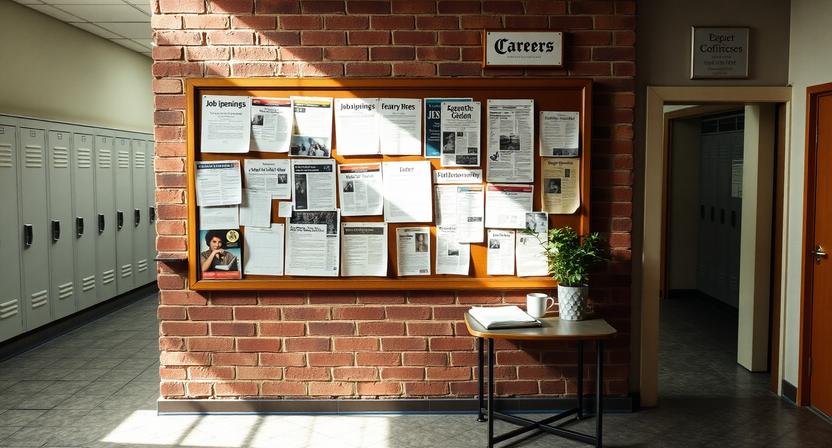
In the 1980s, opportunities often appeared in places you might not immediately think of: community bulletin boards, college career offices, and union halls. These physical spaces acted as localized job hubs, bridging the gap between employers and potential employees in a way that newspapers or agencies could not. Community bulletin boards in grocery stores, libraries, churches, and neighborhood centers were especially common for smaller businesses or local positions that relied on nearby talent. A neatly posted flyer or typed announcement could attract applicants who were already embedded in the community, creating a pool of candidates who were not only qualified but also geographically convenient and socially vetted. For job seekers, this meant checking these boards regularly, developing routines around local postings, and sometimes calling or visiting businesses in response to handwritten notices.
Schools and universities played a similar role, particularly for younger workers and recent graduates. Career offices offered printed lists of opportunities, workshops on résumé writing, and sometimes on-campus recruitment events where employers interviewed students directly. Alumni networks, often maintained through newsletters or handwritten directories, extended the reach of these offices, connecting graduates to openings across the country. Even without the convenience of online portals, these networks functioned as structured pathways into industries that were otherwise difficult to enter. For students, being proactive—visiting offices frequently, submitting applications early, and attending recruitment sessions—could dramatically improve their chances of landing internships or first jobs, often before positions were publicly advertised.
Trade unions also served as critical employment channels, particularly for skilled labor and trades. Union halls maintained lists of available positions, coordinated apprenticeships, and relied on referral systems to place workers in roles across factories, construction sites, and other industries. Being part of a union network often meant access to jobs that were otherwise hidden from public listings. Employers trusted union recommendations because they carried implicit assurances of skill, reliability, and training, reducing the risk of hiring inexperienced or unvetted workers. Job seekers in these networks learned quickly that reputation mattered, punctuality and performance could open doors to future opportunities, and staying engaged with the union community was essential for continued access to work.
What tied these physical spaces together was a reliance on personal initiative. Unlike today’s automated notifications, postings in bulletin boards, schools, or union halls required the job seeker to notice them, act on them, and follow up. Visiting a bulletin board regularly, maintaining contact with a career office, or attending union meetings was part of the job search itself. This created a rhythm and discipline that shaped how people navigated the labor market, and it rewarded those who were observant, persistent, and socially engaged.
These local, tangible networks also reinforced the deeply human aspects of job hunting in the 1980s. Unlike impersonal online forms or algorithmically sorted applications, every interaction—whether asking a school administrator for a listing, speaking with a union clerk, or responding to a flyer—was direct and consequential. The act of showing up, demonstrating interest, and cultivating relationships mattered as much as formal qualifications. For many job seekers, community boards, schools, and unions were not just practical resources—they were spaces where visibility, reputation, and effort converged to create opportunity in an era before the internet made job hunting instantaneous.
What the Application Process Really Looked Like

In the 1980s, submitting a job application was a deliberate, hands-on process that demanded patience, care, and attention to detail. Unlike today, where digital forms auto-fill, spell-check resumes, and send confirmations instantly, every application required physical effort and careful planning. Resumes were handwritten or typed on a typewriter, and mistakes could mean starting over from scratch. Cover letters were often crafted individually for each position, folded neatly into envelopes, and mailed—or hand-delivered—directly to the employer. There were no “submit” buttons, no instant feedback, and no automated tracking systems; every step was visible, tangible, and unforgiving. A single smudge, missing detail, or illegible signature could result in an application being discarded before it was ever read.
The process extended far beyond the paperwork. Applicants often had to follow up with phone calls or personal visits to ensure their materials were received and considered. Unlike today’s digital tracking, the only way to confirm an employer had noticed your résumé was to ask—politely, strategically, and sometimes repeatedly. This created a system in which persistence and professionalism were almost as critical as experience or education. Candidates learned to balance patience with assertiveness, timing their calls or visits carefully to avoid inconveniencing busy managers while staying visible and memorable. The effort itself was a signal to employers: those who invested time and care were demonstrating seriousness, reliability, and initiative.
Interviews, when scheduled, were equally demanding. They were almost always in-person, requiring travel, proper attire, and preparation. Many interviews were short and informal, especially for entry-level positions, yet they carried high stakes. Employers often made immediate judgments based on first impressions, from handshake firmness and eye contact to posture and confidence. For some roles, applicants might encounter multiple rounds of interviews or informal assessments conducted right on the job site. There was no opportunity to rehearse responses via online guides or virtual mock interviews; preparation relied on personal experience, advice from friends or mentors, and instinct.
References played a critical role in this process. Letters of recommendation were sometimes requested, and many employers preferred personal phone calls to contacts who could vouch for the candidate’s reliability and work ethic. Maintaining relationships with former supervisors, mentors, or community contacts was therefore essential—not only to provide evidence of past performance but also to secure an advocate in the hiring decision. The network of people who could speak on your behalf often mattered as much as the résumé itself.
Finally, the application process was defined by waiting. Unlike today’s instant notifications, responses could take days or weeks, and silence was a common part of the experience. Applicants learned to manage uncertainty, to stay motivated despite delays, and to continue seeking other opportunities in parallel. The process was slow, deliberate, and human—every step required time, effort, and personal investment. But for those who mastered it, the reward was more than just a job: it was the validation that careful preparation, persistence, and personal effort could open doors in a world that had no shortcuts, no algorithms, and no instant answers.
Who Had Easier Access to Jobs (and Who Didn’t)

In the 1980s, access to employment was far from equal. Beyond skills, experience, or education, factors such as gender, race, social class, and geography played decisive roles in determining who could easily find work and who faced obstacles at nearly every turn. While the tools of job hunting—newspapers, cold-walking, personal networks, and employment agencies—were technically available to anyone, the social realities of the era meant that opportunity was often mediated by systemic biases, societal expectations, and informal gatekeeping. Understanding this disparity is essential to appreciating how the pre-internet labor market functioned and why some careers flourished while others remained constrained.
Gender was one of the most visible barriers. Many industries were informally segregated, with certain jobs deemed “male” or “female.” Clerical work, secretarial roles, and retail positions were often reserved for women, while construction, manufacturing, and technical fields were dominated by men. Employers sometimes explicitly advertised based on these norms, and unspoken expectations influenced hiring decisions. Even when women applied for positions outside traditional roles, they frequently faced skepticism or had to provide additional assurances of competence. Men, in turn, could encounter barriers entering fields considered “female,” such as nursing or administrative support, although these obstacles were often less codified but socially enforced.
Race and ethnicity also shaped opportunity. Hiring practices in many areas favored white candidates, both overtly and subtly, through networks, personal recommendations, and local community expectations. Minority applicants often relied more heavily on personal connections, community-based organizations, or unions to gain access to roles that were otherwise difficult to reach. Geographic segregation, residential patterns, and social networks reinforced these disparities: opportunities were more accessible to those already embedded in the “right” communities or circles of influence.
Socioeconomic status further affected access. Individuals from wealthier families often had better connections, access to transportation, or the ability to pursue unpaid internships or temporary work that led to permanent positions. Conversely, candidates from lower-income backgrounds faced practical challenges, from affording multiple trips to potential employers to balancing part-time work with job searching. Even small details, such as the cost of printing résumés or obtaining professional references, could create barriers that disproportionately affected certain groups.
Despite these obstacles, many job seekers developed strategies to navigate or overcome them. Networking, persistence, and skill-building were essential tools, as was awareness of which opportunities were realistically attainable and which required additional advocacy or preparation. Those with supportive communities, mentors, or family connections often gained an advantage, while those without such support had to compensate with extra effort, creativity, and resilience.
The 1980s job market, then, was not purely meritocratic. Access to work depended as much on social context as on qualifications. While talent and determination mattered, the landscape was uneven: some doors were open by default, others required careful negotiation, and some remained firmly closed. Recognizing this reality underscores the human complexity behind job hunting before the internet—a world in which opportunity was personal, localized, and deeply intertwined with broader social structures, rather than distributed evenly to anyone with a résumé.
How Employers Hired Without Algorithms

In the 1980s, the hiring process was entirely human-driven, shaped by instinct, personal judgment, and experience rather than data, search algorithms, or automated filtering. Employers relied on a combination of resumes, interviews, references, and informal impressions to make decisions, often evaluating candidates on intangible qualities that today’s digital systems struggle to measure. The process was deliberate and relational: managers assessed not just qualifications but demeanor, communication skills, reliability, and even how well a person would “fit” into the existing workplace culture. In an era before applicant tracking systems, the human eye—and the human intuition—was the ultimate gatekeeper.
The evaluation of candidates extended far beyond what was written on paper. A neatly typed résumé demonstrated attention to detail, while a clean, professional appearance in person could signal reliability and seriousness. Employers often formed instant judgments during interviews or in passing interactions—how an applicant entered a room, shook hands, or carried themselves could tip the scales in their favor or against them. References, whether provided in writing or via a phone call to a trusted contact, reinforced these impressions, giving employers additional insight into a candidate’s character and work habits. Every interaction, however brief, was consequential.
Hiring also depended heavily on personal networks and trust. Recommendations from current employees, community members, or colleagues often carried more weight than formal applications. Employers knew that a trusted referral reduced the risk of hiring someone unqualified or unreliable. In many cases, positions were filled before they were ever advertised, highlighting the importance of being visible within the right networks. This reliance on social proof meant that professional reputation was almost as important as experience; word of mouth could open doors that paper applications alone could not.
The absence of digital tools also meant that employers had to manage logistics differently. Tracking multiple applicants required careful record-keeping, whether on paper files, index cards, or rolodexes. Scheduling interviews involved coordinating phone calls and managing in-person visits, often without the convenience of automated calendars or reminders. Delays were inevitable, and employers often evaluated patience, persistence, and follow-up as part of the candidate’s suitability. How a person handled these interactions became part of the assessment, revealing initiative, professionalism, and resilience.
Finally, employers shaped the market through their choices and informal practices. Decisions were rarely based solely on qualifications; they were influenced by personal biases, local labor dynamics, and the limits of available information. The hiring process rewarded those who understood human dynamics, demonstrated initiative, and could navigate the social and logistical nuances of the pre-internet world. For job seekers, succeeding meant more than sending in applications—it required reading the unspoken rules, making a strong personal impression, and cultivating trust with decision-makers. In short, hiring in the 1980s was less about algorithms and more about judgment, relationship, and human presence—a system both messy and profoundly human.
Conclusion – What We Can Still Learn from 1980s Job Hunting

Looking back at how people found work in the 1980s offers more than just nostalgia—it reveals lessons about patience, persistence, and the human side of employment that are often lost in today’s digital job market. In an era without algorithms, instant notifications, or online applications, success depended on initiative, preparation, and personal engagement. Job seekers had to navigate newspapers, cold-walk into businesses, rely on referrals, and cultivate networks, all while managing uncertainty and waiting for responses that could take weeks. Each step demanded effort, focus, and resilience, reinforcing the idea that access to opportunity was as much about presence and persistence as it was about skills or credentials.
The era also reminds us that hiring has always been shaped by social context. Gender norms, racial barriers, geography, and social networks influenced who could access certain roles and who faced obstacles at nearly every turn. Yet within those constraints, individuals found creative ways to connect, to advocate for themselves, and to demonstrate their worth directly to employers. The pre-internet job market rewarded initiative, personal reputation, and the ability to seize human-scale opportunities—qualities that remain relevant today, even in a world dominated by technology.
Perhaps the most enduring lesson is the value of human connection. While modern platforms make it easier to apply broadly, they cannot replicate the personal engagement of showing up, making an impression, or receiving a trusted recommendation. Opportunities were often hidden, timing was crucial, and success depended on the relationships and reputations that people built over time. Recognizing this reminds us that job hunting is not only a technical exercise but also a deeply social one: persistence, adaptability, and interpersonal skill have always mattered, whether in the 1980s or today.
Ultimately, reflecting on the pre-internet job market encourages a balance between efficiency and effort, technology and human engagement. It shows that while tools may change, the fundamentals of opportunity—visibility, preparation, initiative, and trust—remain constant. By studying the methods and strategies of job seekers from that era, today’s candidates can gain perspective on their own approaches, remembering that the lessons of patience, personal effort, and human connection are timeless guides in any labor market.
 Totally Retro: 80s Edition
Leave a comment