Introduction
The 1980s were a time of bold colors, big personalities, and rapid cultural change—and few places captured that energy quite like McDonald’s. More than just a fast-food restaurant, it was an experience. Whether it was the glow of neon lights, the buzz of a busy dining area, or the excitement of a Happy Meal, McDonald’s became woven into everyday life for millions of people.
During this decade, the brand expanded aggressively, refined its identity, and cemented its place as a global symbol of convenience, consistency, and fun. Families gathered there for quick meals, kids celebrated birthdays under the Golden Arches, and teenagers often got their first jobs behind the counter. It wasn’t just about the food—it was about the atmosphere, the familiarity, and the sense that something special was happening every time you walked through the doors.
This blog takes a closer look at what made McDonald’s in the 1980s so memorable. From its iconic design and evolving menu to its unforgettable advertising and cultural impact, we’ll explore how this era became, for many, the true golden age of McDonald’s.
The Look and Feel: A True 80s Atmosphere
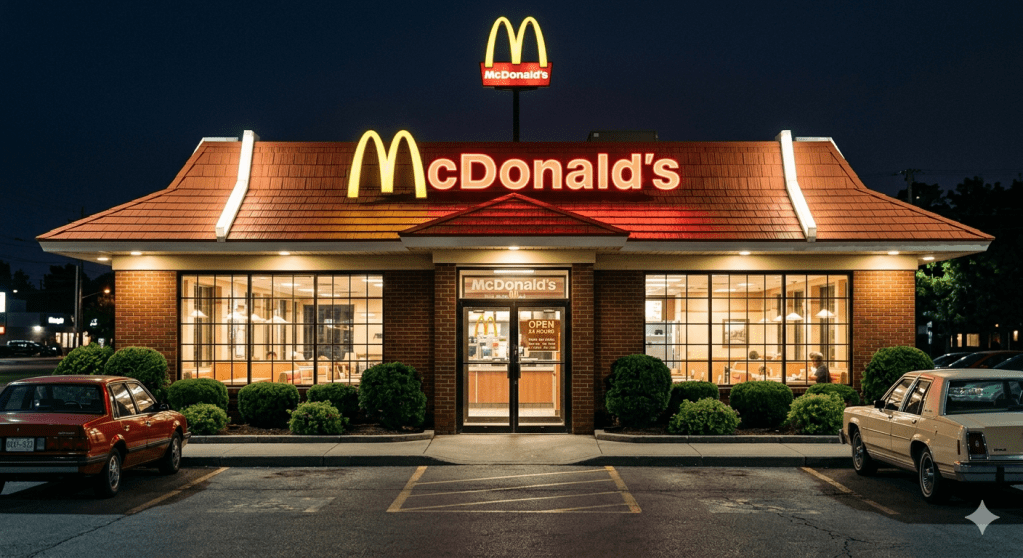
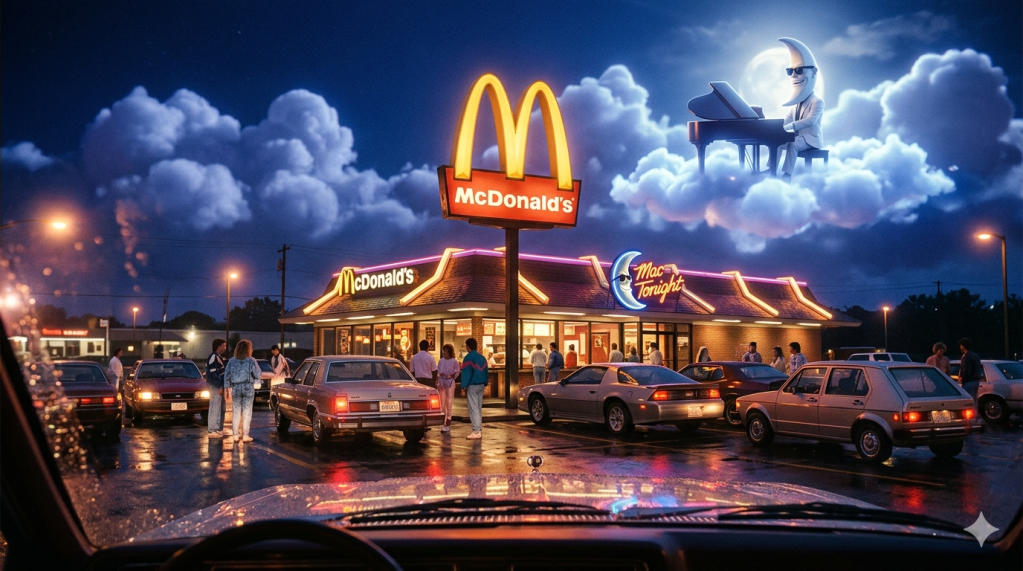
Walking into a McDonald’s in the 1980s was an experience that immediately engaged the senses. The exterior alone made a statement, with red brick walls, mansard-style roofs, and the unmistakable Golden Arches towering above. Large windows invited you to look inside, where bright lighting and bold design choices created an atmosphere that felt both energetic and welcoming. It was a place that stood out, whether along a busy road or in a suburban plaza, signaling familiarity and excitement all at once.
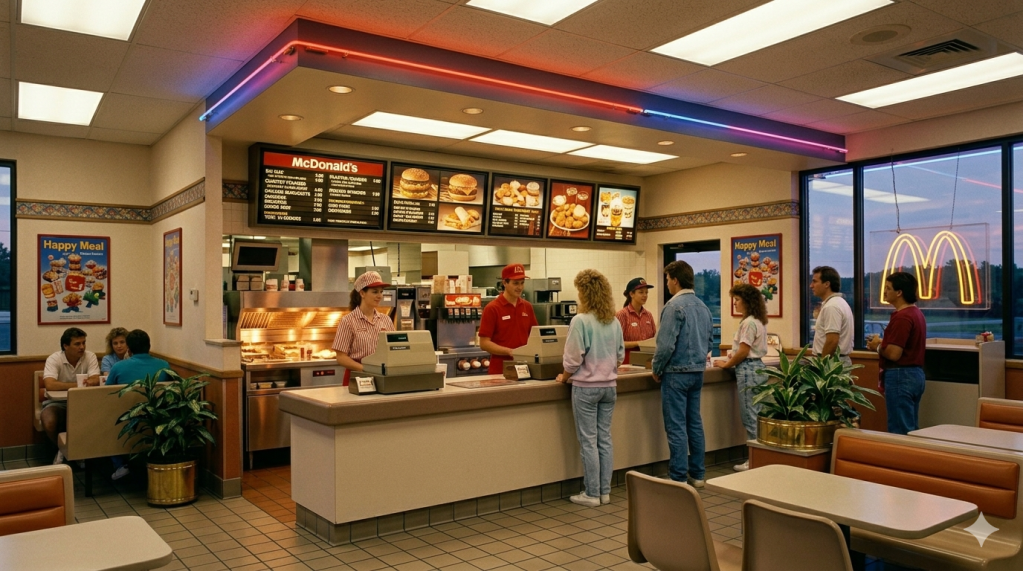
Inside, the design reflected the broader aesthetic of the decade. Colors were vivid and unapologetic—reds, yellows, and oranges dominated the space, often paired with geometric patterns and glossy surfaces. Seating areas featured hard plastic booths and chairs in bright tones, arranged neatly to accommodate families, groups of teenagers, and solo diners alike. The floors were typically tiled, easy to clean but also adding to the distinct visual style that made each visit feel consistent no matter the location.
Lighting played a big role in shaping the mood. Fluorescent fixtures kept everything brightly lit, while in some locations, subtle neon accents added a modern, almost futuristic touch. The ordering counter was a focal point, with large overhead menu boards displaying items in simple, easy-to-read formats. There were no digital screens—just static signage, often with backlit panels, giving the space a straightforward and dependable feel.
Every detail contributed to a sense of identity. From the packaging neatly stacked behind the counter to the sight of trays lined with paper placemats, the environment was designed for efficiency but also for comfort. It was clean, structured, and predictable in the best way. For many, stepping into a McDonald’s during this time felt like entering a small, self-contained world—one that was instantly recognizable and deeply tied to the spirit of the 1980s.
The Menu: Classic Items and New Favorites
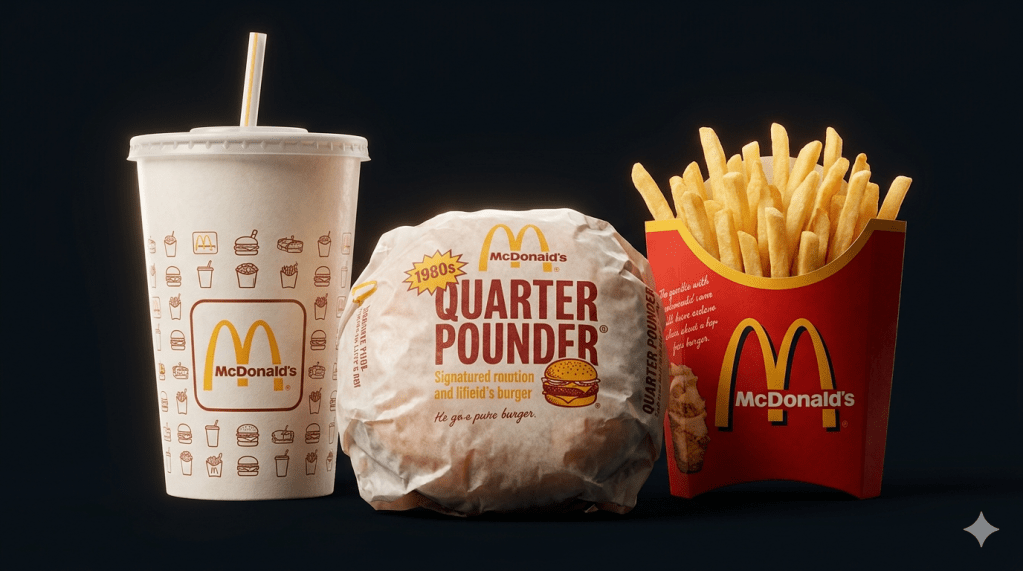
The 1980s marked an important period of evolution for the McDonald’s menu, blending well-established classics with new items that would go on to become staples. Familiar favorites like the Big Mac, Quarter Pounder, and World Famous Fries remained at the heart of the experience, offering the consistency that customers had come to expect. These core items rarely changed, and that reliability was a big part of McDonald’s appeal—no matter where you were, you knew exactly what you were going to get.
At the same time, the decade introduced innovations that helped redefine fast food. Perhaps the most notable addition was Chicken McNuggets, which quickly became a massive hit. Their bite-sized convenience, paired with a variety of dipping sauces, made them especially popular with kids and families, and they helped expand McDonald’s beyond its traditional burger-focused identity. It was a clear sign that the company was adapting to changing tastes while still maintaining its core offerings.
The 1980s also saw the rise of value meals and combo deals, making ordering simpler and more appealing. Instead of choosing items individually, customers could get a full meal—main item, fries, and a drink—in one easy package. This not only streamlined the ordering process but also reinforced the idea of McDonald’s as a convenient, all-in-one dining option. It was fast, predictable, and satisfying, perfectly aligned with the pace of the decade.
Limited-time offerings and regional variations added an extra layer of excitement. New sandwiches and promotional items would appear for a short time, giving customers a reason to come back and try something different. Whether it was a seasonal special or a test item in certain locations, these additions made the menu feel dynamic without straying too far from its core identity.
Overall, the menu in the 1980s struck a careful balance between tradition and innovation. It preserved the iconic items that built the brand while introducing new favorites that broadened its appeal. For many customers, it was this mix—familiar yet evolving—that made every visit feel both comforting and a little bit new.
The PlayPlace Era
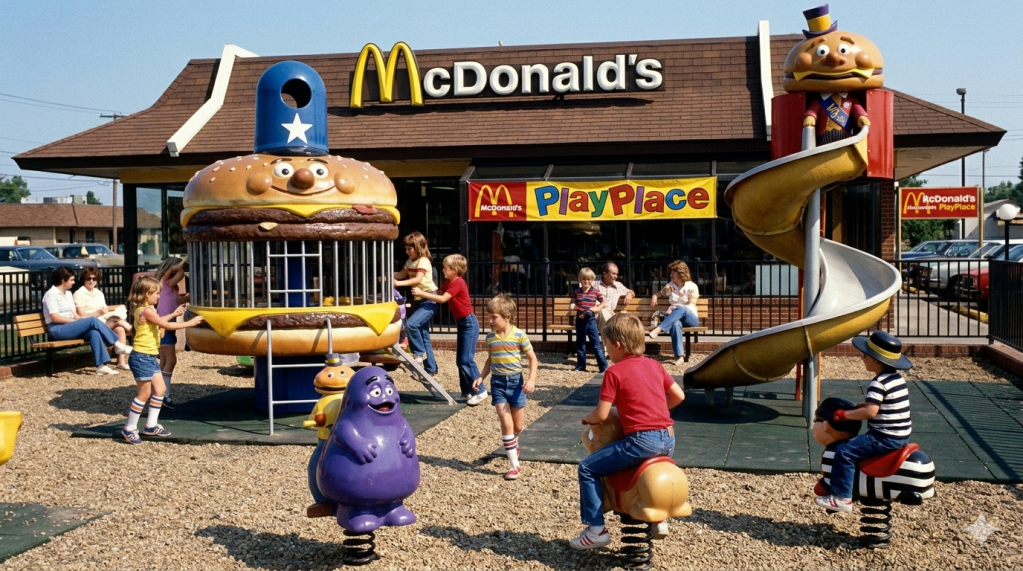
In the 1980s, McDonald’s evolved into something far beyond a typical fast-food stop—it became a full-fledged destination for families, and at the heart of that transformation was the PlayPlace. These playground areas, whether outdoors or enclosed within the restaurant, added an entirely new dimension to the dining experience. For parents, it meant a chance to sit and relax while their children burned off energy. For kids, it turned a simple meal into an outing they could look forward to all week.
The PlayPlace was designed to capture attention instantly. Bright primary colors, smooth molded plastic, and imaginative structures created an environment that felt almost like stepping into a toy. There were twisting slides, enclosed tunnels, climbing frames, and often the iconic ball pits filled with brightly colored plastic balls. Everything was built to be visually exciting and physically engaging, encouraging kids to explore, move, and interact. The layout often felt like a miniature adventure course, where every turn offered something new to discover.
Inside the restaurant, the presence of the PlayPlace could be felt even if you weren’t using it. The sounds of laughter, footsteps echoing through plastic tunnels, and the occasional thud of kids jumping into ball pits became part of the background atmosphere. It gave the space a lively, energetic feel that matched the bold design of the 1980s. Unlike today’s quieter, more streamlined dining environments, McDonald’s during this era embraced that sense of noise and motion as part of its identity.
Birthday parties elevated the PlayPlace experience even further. McDonald’s became one of the most popular venues for children’s celebrations, offering a package that combined food, entertainment, and a festive setting all in one place. Tables would be decorated, groups of kids would gather with party hats, and the excitement of having free access to the PlayPlace made the event feel special. In some locations, the celebrations were enhanced with themed decorations or appearances tied to the brand’s characters, making the experience even more memorable. For many children growing up in the 1980s, a McDonald’s birthday party wasn’t just common—it was a highlight.
The PlayPlace also played a strategic role in shaping how families interacted with the brand. It extended the amount of time customers spent in the restaurant, turning what might have been a quick meal into a longer visit. Parents were more likely to choose McDonald’s because it offered both convenience and built-in entertainment. At the same time, children began to associate the brand with fun, freedom, and social interaction. It wasn’t just about eating—it was about playing, meeting friends, and enjoying a shared experience.
There was also a sense of independence tied to the PlayPlace. Kids could leave the table, run off to play, and navigate the structures on their own or with friends. In an era before smartphones and constant digital entertainment, this kind of physical, social play was especially meaningful. It gave children a space to be active and imaginative, all within a setting that parents trusted and could easily supervise.
Looking back, the PlayPlace represents one of the most distinctive aspects of McDonald’s in the 1980s. It reflected a time when the brand leaned heavily into creating an all-in-one environment—food, fun, and family connection under one roof. While modern restaurants have evolved in design and focus, the memory of those colorful playgrounds, the energy they brought, and the joy they created continues to stand out as a defining feature of the era. For many, the PlayPlace wasn’t just an addition to McDonald’s—it was the reason the experience felt truly special.
Ronald McDonald and the Characters
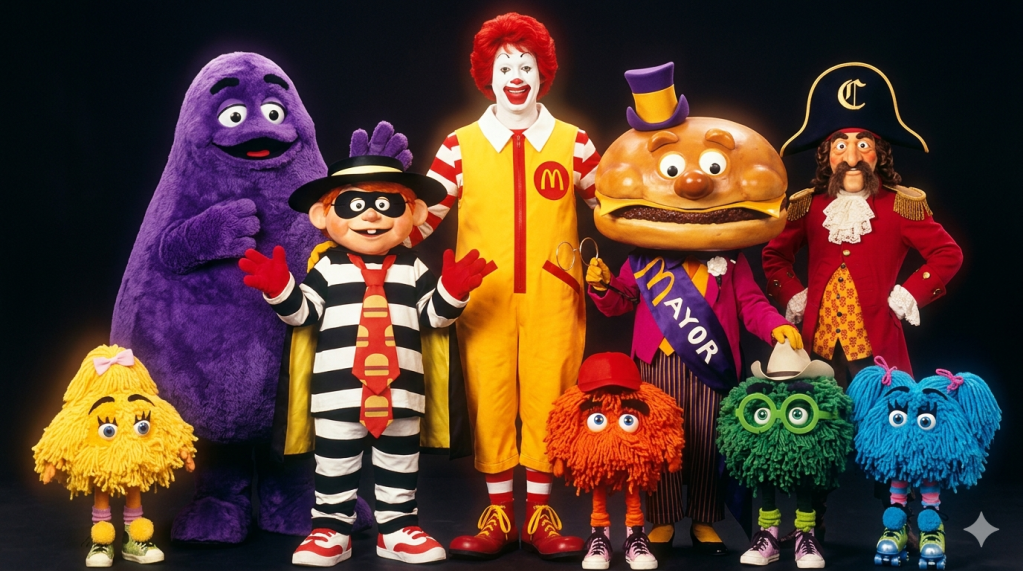
In the 1980s, McDonald’s didn’t just rely on its food or its restaurants to build loyalty—it created an entire world of characters that brought the brand to life. At the center of it all was Ronald McDonald, a cheerful, clown-like figure who became one of the most recognizable mascots in the world. With his bright red hair, yellow jumpsuit, striped socks, and ever-present smile, Ronald wasn’t just a logo or a spokesperson—he was a personality, one that children instantly trusted and connected with.
Ronald McDonald served as the face of the brand in a way that felt personal and engaging. He appeared in television commercials, print ads, in-store displays, and even at live events. His role was that of a friendly host, inviting families into a place where fun and food went hand in hand. He wasn’t selling in a traditional sense; instead, he was creating a feeling—one that associated McDonald’s with happiness, laughter, and a sense of belonging. For many children, Ronald felt less like a corporate figure and more like an entertainer or even a familiar friend.
Surrounding Ronald was an entire cast of characters known collectively as the McDonaldland crew. Each had a distinct personality and role, helping to build a playful narrative universe that extended far beyond the restaurant itself. Grimace, the large purple character, was lovable and gentle, often portrayed as a bit clumsy but always kind-hearted. The Hamburglar, dressed in stripes and a cape, added a mischievous element, constantly attempting to sneak hamburgers with his trademark “robble robble.” Mayor McCheese, with his oversized burger-shaped head, represented a quirky sense of authority, while characters like Captain Crook and the Fry Guys added even more variety and imagination to the mix.
These characters weren’t just background figures—they were central to McDonald’s marketing strategy. Commercials in the 1980s often featured elaborate storylines set in McDonaldland, a colorful, almost surreal world where anything could happen. Bright sets, exaggerated costumes, and playful scenarios created a sense of wonder that captured the attention of young viewers. These ads weren’t simply about promoting menu items; they were about storytelling, building a fantasy world that children wanted to be part of.
Inside the restaurants, the presence of these characters was everywhere. Wall art, posters, tray liners, and packaging often featured Ronald and his friends, reinforcing their importance to the overall experience. In some locations, there were even statues or themed seating areas that allowed children to interact with the characters in a physical way. This seamless integration between advertising and the in-store environment made the brand feel cohesive and immersive.
The characters also played a major role in promotions and merchandise. Toys included in Happy Meals frequently featured the McDonaldland cast, allowing kids to take a piece of that world home with them. These collectibles became highly anticipated, with new releases generating excitement and repeat visits. Over time, this helped establish a strong emotional connection between customers and the brand—especially among younger audiences who grew up associating McDonald’s with both entertainment and reward.
What made this character-driven approach so effective was its ability to appeal directly to children while still engaging families as a whole. Parents saw McDonald’s as a place that understood and catered to their kids, while children viewed it as a fun, almost magical environment. This dual appeal strengthened the brand’s position and helped it stand out in an increasingly competitive fast-food market.
Looking back, the prominence of Ronald McDonald and the McDonaldland characters in the 1980s represents a unique moment in marketing history. It was a time when brands invested heavily in creating imaginative worlds rather than just promoting products. McDonald’s succeeded in building a universe that felt alive, one that extended from television screens to restaurant interiors and into the homes of its customers. For many, these characters are inseparable from the memory of visiting McDonald’s during that era, serving as lasting symbols of a time when fast food came with a side of fantasy and fun.
Advertising and Pop Culture
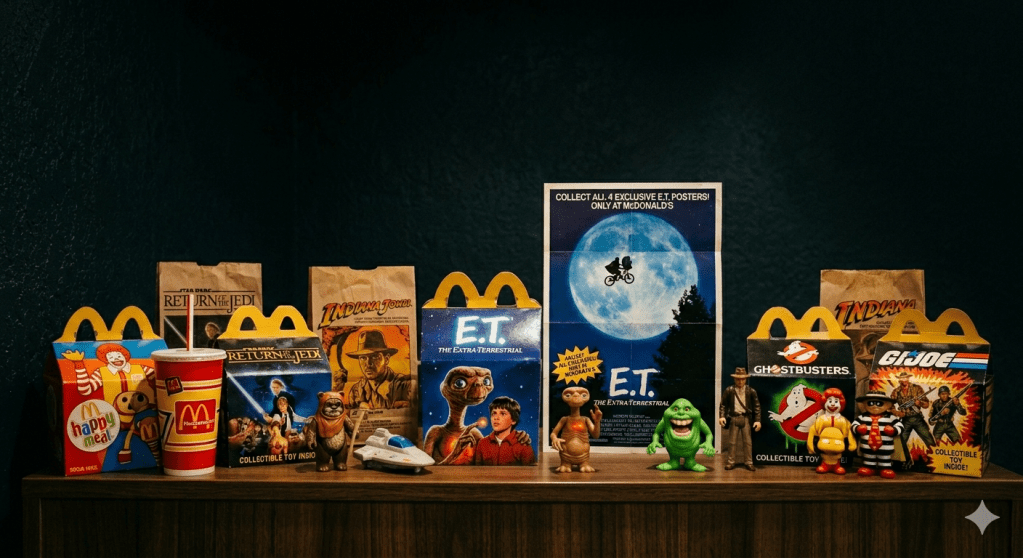
In the 1980s, McDonald’s advertising reached a level of influence that went far beyond simply promoting food—it became a defining part of pop culture itself. At a time when television was the dominant form of media, McDonald’s commercials were everywhere, embedded in the daily routines of millions of households. Whether during Saturday morning cartoons, prime-time shows, or major sporting events, the brand maintained a constant presence, using bright visuals, catchy music, and memorable characters to capture attention and stay top of mind.
One of the most powerful tools McDonald’s used was the jingle. Simple, upbeat, and easy to remember, these tunes became instantly recognizable and often stuck with viewers long after the commercial ended. They weren’t just background elements—they were central to the message, reinforcing brand identity in a way that felt natural and entertaining. Over time, these jingles became part of everyday life, quoted and remembered as fondly as popular songs of the era.
The visual style of McDonald’s advertising perfectly matched the bold, energetic spirit of the 1980s. Commercials were colorful, fast-paced, and often filled with exaggerated expressions and playful scenarios. Whether set in a bustling restaurant, a lively suburban neighborhood, or the imaginative world of McDonaldland, each ad was designed to create a sense of excitement. The goal wasn’t just to show the food, but to present an experience—one that felt fun, inclusive, and full of energy.
McDonald’s also embraced its role in the broader entertainment landscape through strategic partnerships and tie-ins. Movie promotions became a major part of its marketing, with themed packaging and toys connecting the restaurant to popular films of the time. These collaborations helped bridge the gap between dining and entertainment, turning a trip to McDonald’s into part of a larger cultural moment. For families, it added an extra layer of excitement, especially when new promotions aligned with highly anticipated movie releases.
Toys and collectibles played a crucial role in reinforcing this connection to pop culture. Happy Meals in the 1980s often included items that reflected current trends, popular characters, or seasonal themes. These weren’t just small extras—they became a driving force behind repeat visits, with children eager to collect complete sets. In many cases, the toys themselves became cultural artifacts, remembered long after the meals they came with.
Celebrity appearances and cultural references also found their way into McDonald’s advertising during this time. While the brand remained focused on its core identity, it wasn’t afraid to tap into broader trends, aligning itself with the music, fashion, and entertainment that defined the decade. This helped McDonald’s feel current and relevant, rather than static or purely transactional.
What made McDonald’s advertising in the 1980s particularly effective was its ability to balance consistency with creativity. The core message—fun, family, and familiarity—remained the same, but the way it was presented constantly evolved. Each campaign brought something new while still feeling unmistakably “McDonald’s,” reinforcing trust while keeping audiences engaged.
Looking back, it’s clear that McDonald’s didn’t just participate in 1980s pop culture—it helped shape it. Its commercials, promotions, and branding became part of the shared experience of the decade, influencing how people saw not only fast food, but also advertising itself. For many, memories of the 1980s are inseparable from the sights and sounds of McDonald’s ads, making them a lasting symbol of the era’s energy, creativity, and cultural reach.
Mac Tonight: The Moon-Faced Icon
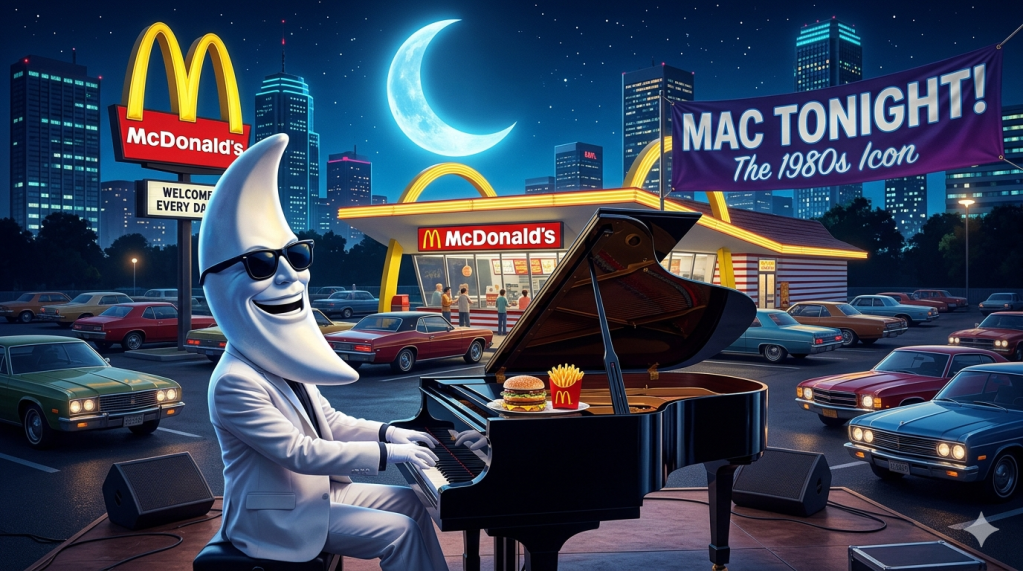
Among the many memorable elements of McDonald’s 1980s advertising, Mac Tonight stands out as one of the most distinctive and culturally iconic characters. Introduced in 1986, Mac Tonight was created primarily to boost evening and dinner-time traffic at McDonald’s locations, which historically saw fewer customers during later hours compared to lunch. The character’s design and marketing were daring, innovative, and immediately recognizable, marking a unique chapter in the brand’s history.
Mac Tonight’s visual design was instantly striking. With a crescent-moon-shaped head, dark sunglasses, and a sleek suit, he exuded a jazzy, sophisticated aura that contrasted sharply with the child-friendly whimsy of Ronald McDonald. The character was often depicted sitting at a piano or performing in a nighttime cityscape, giving commercials a cinematic feel. This moonlit motif not only tied directly to the character’s name but also evoked a sense of cool, nighttime allure that appealed to teens and young adults, a demographic that McDonald’s increasingly wanted to engage.
Music was central to Mac Tonight’s appeal. The commercials famously featured a jazzy, upbeat rendition of “Mack the Knife,” with lyrics tailored to McDonald’s messaging. The tune was catchy, stylish, and instantly associated with the character, creating an audio-visual identity that stood out on television. Unlike the playful jingles associated with Ronald McDonald or McDonaldland, Mac Tonight’s music and persona suggested sophistication, nightlife energy, and a subtle nod to pop culture sensibilities of the 1980s.
The marketing strategy behind Mac Tonight was clever. By introducing a character who resonated with an older audience while still remaining accessible to younger viewers, McDonald’s extended its brand reach into evening dining. The ads often focused on the joy of visiting McDonald’s after school, work, or evening activities, positioning the chain as not just a lunchtime convenience but an all-day destination. This expansion of brand presence helped solidify McDonald’s role in daily routines across generations.
Mac Tonight also left a lasting impression in terms of visual and cultural legacy. The combination of his moon-faced design, jazzy persona, and nighttime motif made him stand out among the broader roster of McDonald’s characters. Even decades later, fans of the 1980s remember Mac Tonight fondly, often citing him as one of the coolest and most unique figures in the brand’s history. Collectibles, advertisements, and retro media continue to celebrate him, showing that a well-designed, targeted marketing character can achieve both immediate impact and long-term nostalgia.
In summary, Mac Tonight was more than just a promotional tool—he was a symbol of innovation within McDonald’s advertising strategy during the 1980s. By combining a visually striking design, memorable music, and a clear marketing objective, the character carved out a niche that complemented the family-friendly focus of the era while adding a layer of sophistication and cultural relevance. Mac Tonight represents a fascinating example of how McDonald’s successfully adapted its branding to reach new audiences, leaving a lasting impression that continues to resonate in pop culture today.
The Dining Experience
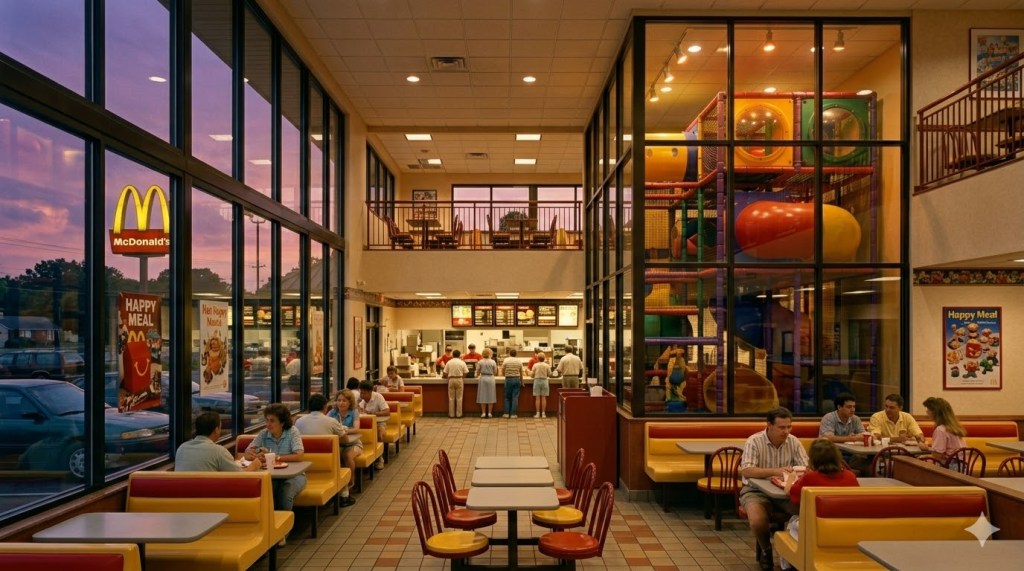
Eating at McDonald’s in the 1980s was a distinctly social and tactile experience, shaped by routines and details that feel very different from today. From the moment you walked in, there was a sense of order and movement. Customers would line up at the counter, scanning the large overhead menu boards while deciding what to order. There were no self-serve kiosks or mobile apps—just face-to-face interaction with a cashier, often delivered with a quick smile and a well-practiced efficiency that kept the line moving.
Once an order was placed, the experience continued at the pickup counter, where trays would quickly be assembled with precision. Each item had its place: burgers wrapped in branded paper, fries in their familiar red cartons, and drinks poured into plastic or wax-coated cups. Everything was then set neatly onto a lightweight plastic tray, usually lined with a paper placemat that often featured games, promotions, or colorful designs. Carrying that tray to a table was part of the ritual, a small but memorable step that made the experience feel complete.
The dining area itself was lively and often bustling. Families gathered around tables, kids chatted excitedly, and the background hum of conversation blended with the sounds of the kitchen and the occasional beeping of timers. Unlike the more subdued atmosphere of many modern locations, there was an accepted level of noise and energy that made the space feel active and communal. It wasn’t just a place to eat quickly and leave—it was a place where people lingered, talked, and shared time together.
The physical elements of the meal also stood out. Packaging in the 1980s often included materials like foam clamshell containers, which kept food warm and intact but also became iconic in their own right. Unwrapping a burger or opening a container added a tactile element to the experience, something that made the meal feel more engaging. Even the simple act of tearing open a ketchup packet or salting fries contributed to the hands-on nature of dining at the time.
Cleanliness and consistency were key parts of the experience. Staff regularly moved through the dining area wiping tables, emptying bins, and keeping everything in order. Despite the constant flow of customers, there was a sense that the environment was being carefully maintained. This attention to detail reinforced trust—customers knew what to expect, and McDonald’s delivered it with reliability.
There was also a rhythm to the visit that many people came to recognize. Ordering, waiting, finding a seat, eating, and clearing your tray all followed a predictable pattern. It was simple, efficient, and oddly satisfying. For families, it became a familiar routine; for teenagers, a casual place to gather; and for individuals, a dependable stop in a busy day.
Looking back, the dining experience at McDonald’s in the 1980s was about more than just convenience. It combined speed with a sense of place, creating an environment that felt both functional and welcoming. The human interaction, the physicality of the food and packaging, and the shared atmosphere all contributed to a style of dining that was uniquely tied to its time—one that many still remember with a strong sense of nostalgia.
The Drive-Thru Revolution
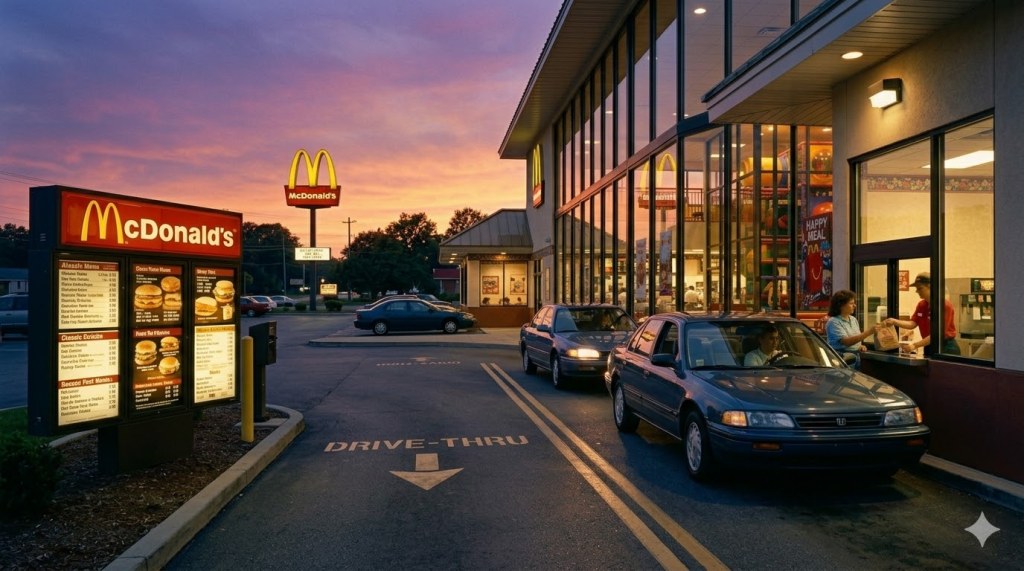
The 1980s marked a turning point in how people experienced fast food, and the expansion of the drive-thru was at the center of that shift. While drive-thrus had existed earlier, it was during this decade that they became a standard feature at McDonald’s locations. As lifestyles grew busier and convenience became increasingly important, the ability to order and receive food without leaving your car felt not just useful, but revolutionary.
Pulling into a McDonald’s drive-thru in the 1980s had its own distinct rhythm and character. Cars would line up along a clearly marked path, often wrapping around the building, especially during peak hours. The menu board stood ahead, typically large, brightly lit, and easy to read, displaying a straightforward list of items and prices. There were no digital screens or dynamic updates—just static panels that customers would quickly scan before placing their order.
The ordering process itself was simple but memorable. Drivers would pull up to a speaker box and place their order through a slightly crackling intercom, often punctuated by a polite but efficient voice on the other end. There was a certain charm to the interaction—brief, to the point, yet human. Misheard items or quick clarifications were part of the experience, adding a small, relatable imperfection that made it feel real rather than automated.
After ordering, the line would move steadily forward toward the pickup window. Anticipation built as each car inched closer, the smell of fries often drifting through open windows. At the window, a uniformed employee would hand over a paper bag filled with neatly packed items, along with drinks in a carrier or tray. The exchange was quick but personal, often accompanied by a short greeting or a simple “thank you,” reinforcing the balance between speed and service.
The design of the drive-thru itself reflected the priorities of the time. Many locations featured extended roof structures or canopies over the pickup area, offering some protection from weather while adding to the recognizable look of the restaurant. The layout was built for efficiency, guiding cars smoothly from entrance to exit while keeping the process as fast as possible.
What made the drive-thru so impactful in the 1980s was how well it aligned with changing habits. Families on the go, commuters heading home, and individuals looking for a quick meal all found it to be an ideal solution. It removed barriers—no need to park, no need to go inside—and fit perfectly into increasingly fast-paced routines. In many ways, it redefined what “fast food” truly meant.
The drive-thru also helped expand McDonald’s reach. It allowed the brand to serve more customers in less time, especially during busy periods, and made it accessible in situations where dining in wasn’t practical. Over time, it became not just an option, but a preferred way of ordering for many people.
Looking back, the drive-thru revolution of the 1980s represents a major shift in convenience culture. It wasn’t just about speed—it was about adapting to the way people lived their lives. The familiar process of pulling up, ordering through a speaker, and driving away with a meal became a defining part of the McDonald’s experience, one that continues to shape the brand to this day.
Behind the Counter
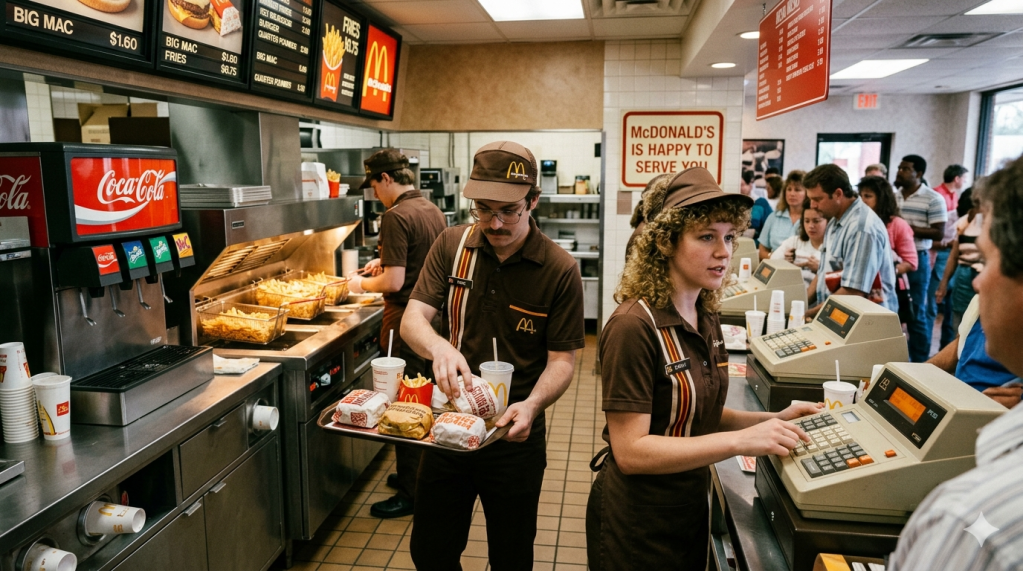
While customers enjoyed the bright colors, PlayPlaces, and convenient drive-thrus, a finely tuned system operated quietly behind the scenes to make the McDonald’s experience possible. In the 1980s, the staff working behind the counter were essential to maintaining the speed, consistency, and reliability that defined the brand. Every action, from taking orders to preparing food, followed precise routines designed to keep the restaurant moving efficiently while maintaining quality.
Employee uniforms were part of the McDonald’s identity, with bright hats, polo shirts or blouses, and name tags that made staff instantly recognizable. The design was practical, helping employees stay clean while reinforcing a sense of professionalism. Many of the employees were teenagers working their first jobs, learning responsibility and teamwork in a fast-paced environment. For these young workers, McDonald’s became an early introduction to the workforce, teaching them the value of punctuality, customer service, and collaboration.
The kitchen itself was a highly organized space, designed for speed and consistency. Stations were carefully divided: one for grilling burgers, another for assembling sandwiches, a third for fries and other sides. Orders were relayed clearly from the front counter or drive-thru speaker to the kitchen staff, often using paper tickets or simple electronic displays. Each employee had a defined role, and timing was crucial. A burger had to be cooked just right, fries had to be hot and crisp, and drinks poured to the correct fill—all in perfect synchronization.
Training was rigorous. Employees learned standardized procedures to ensure that every customer, whether visiting a suburban location or a busy urban outlet, received the same quality and portion size. This focus on consistency was one of McDonald’s hallmarks in the 1980s and a key factor in its worldwide reputation. Even small details, like folding wrappers or arranging items on the tray, were part of the system, ensuring that the dining experience met the brand’s expectations every time.
There was also an unspoken culture of teamwork behind the counter. Staff members had to communicate quickly and efficiently, sometimes calling out orders or coordinating across multiple stations to handle busy periods. The pace could be intense, especially during lunch and dinner rushes, but the shared sense of purpose and the structured workflow helped keep things under control. Many employees fondly remember the camaraderie and rhythm of these shifts as part of the formative experience of working at McDonald’s.
Beyond the operational aspects, behind-the-counter work reflected a human side of the business. Employees interacted with customers directly, managing questions, special requests, and occasional complaints. These small interactions helped personalize the experience, making the restaurant feel approachable even amid the fast pace. The balance between efficiency and friendliness was a key factor in why customers returned again and again.
Looking back, the operations behind the counter in the 1980s reveal the complexity hidden beneath the seemingly simple act of serving fast food. It was a finely orchestrated system of people, processes, and training that made the McDonald’s experience feel effortless for diners. While most visitors only saw the clean floors, trays, and bright décor, it was the work behind the counter that truly made the golden arches shine.
What Made It Special
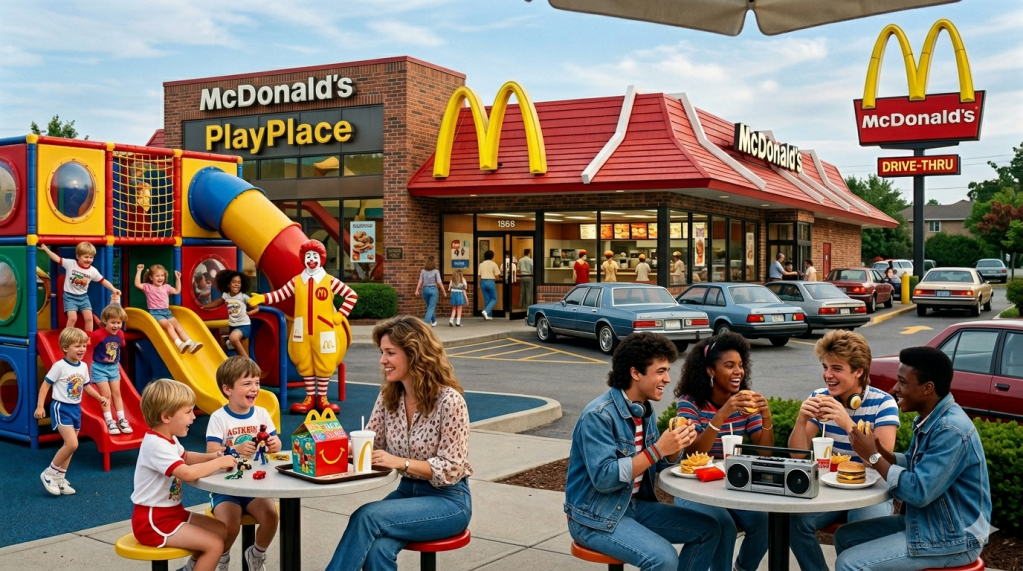
What set McDonald’s apart in the 1980s wasn’t just the food, the PlayPlaces, or the drive-thrus—it was the combination of all these elements into a complete, memorable experience. The brand created a sense of familiarity and comfort that resonated with people of all ages. Walking through the doors meant stepping into a space that was bright, lively, and consistent, no matter the location. That reliability was comforting in a rapidly changing decade, providing a small but meaningful sense of stability in everyday life.
Part of what made McDonald’s special was its ability to appeal to multiple generations at once. Children were drawn to the PlayPlaces, characters, and toys, while parents appreciated the convenience, cleanliness, and predictability of the meals. Teenagers found a social space where they could meet friends, grab a quick bite, and feel independent without any formal supervision. This multi-layered appeal meant that McDonald’s wasn’t just a restaurant—it was a gathering place, a social hub, and, for many, a cultural touchstone.
Another distinguishing feature was the brand’s emphasis on fun and engagement. The 1980s McDonald’s experience felt designed to delight: from the whimsical McDonaldland characters to the colorful interiors, playful tray liners, and upbeat jingles on TV, every detail reinforced a sense of joy. Even small touches, like the satisfaction of unwrapping a freshly made burger or the anticipation of opening a new Happy Meal toy, contributed to a feeling that the visit was special and rewarding.
Consistency and quality also played a crucial role. No matter which McDonald’s you visited, the experience felt familiar. The burgers tasted the same, fries came piping hot, and service followed predictable patterns. This reliability was reassuring, especially in a time before fast-food chains were ubiquitous and highly standardized. People knew what to expect, and that predictability itself became part of the appeal.
Finally, McDonald’s in the 1980s captured the spirit of the era in a way few other brands did. It reflected the decade’s optimism, bold design choices, and growing focus on convenience and entertainment. It wasn’t just a restaurant—it was a cultural symbol, representing a time when fast food became intertwined with everyday life, family routines, and childhood memories.
Looking back, the magic of 1980s McDonald’s lies in its ability to combine food, fun, convenience, and familiarity into one seamless experience. It created lasting memories, shaped social habits, and became an indelible part of the decade’s cultural fabric, leaving an enduring nostalgia that continues to resonate today.
Then vs. Now
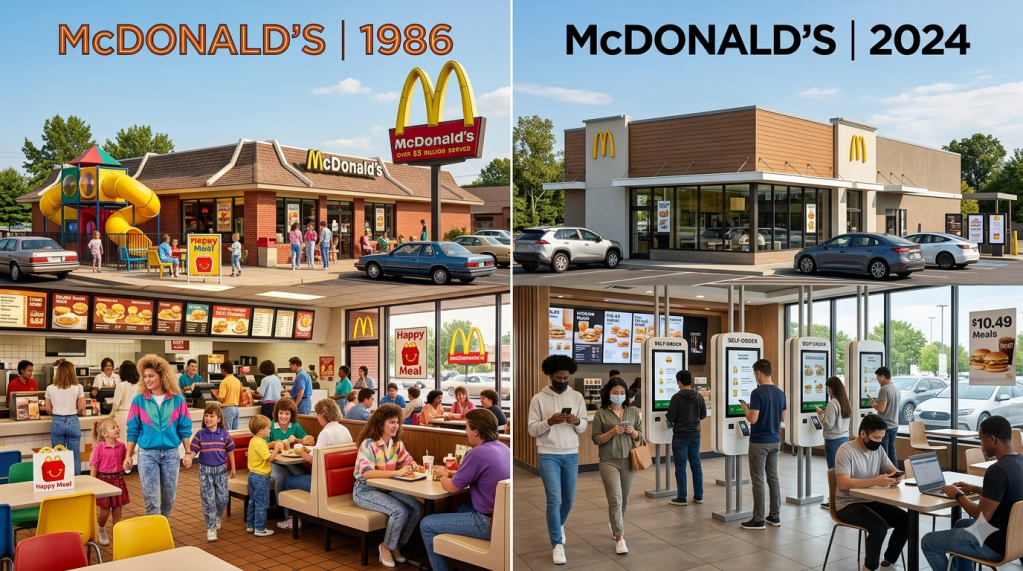
Looking back at McDonald’s in the 1980s compared to today highlights both how much the brand has evolved and how certain elements of its identity have remained remarkably consistent. In the 1980s, McDonald’s was a carefully choreographed experience designed for families, teenagers, and busy individuals alike. Today, the focus has shifted to accommodate modern lifestyles, technology, and health trends, but the echoes of the golden era are still visible for those who remember the past.
One of the most striking differences is the role of technology. In the 1980s, ordering was a hands-on, human-centered process. Customers spoke directly to a cashier, received their food on trays, and navigated the restaurant with a tactile, social experience. Drive-thrus relied on intercoms, printed tickets, and human coordination. Today, digital ordering kiosks, mobile apps, and AI-powered drive-thru systems dominate many locations. While these innovations improve speed, accuracy, and customization, they also reduce the direct human interaction that was so central to the 1980s experience. For some, this makes modern visits feel more efficient but less personal.
Menu offerings have also evolved. The 1980s featured a straightforward menu with iconic staples like the Big Mac, Quarter Pounder, and Chicken McNuggets, alongside seasonal or regional test items. The emphasis was on consistency and familiar flavors. Today, the menu is far more diverse, incorporating salads, wraps, plant-based options, and limited-time international items. Nutritional information is prominently displayed, reflecting increased public awareness of health and wellness. While this expansion broadens appeal and meets contemporary expectations, it also shifts the focus away from the simplicity and predictability that defined the 1980s dining experience.
The interior design of restaurants has changed as well. Bold colors, geometric patterns, and neon accents that were hallmarks of the 1980s have been replaced in many locations with minimalist décor, neutral tones, and modern furniture. The emphasis is on creating flexible spaces for work, casual dining, or takeaway, rather than the playful, energetic atmosphere of the past. PlayPlaces, once a signature feature, have been scaled back or removed in many restaurants, reflecting changes in safety standards, space priorities, and shifts in family entertainment habits. For many who grew up in the 80s, this can feel like a loss of personality and charm.
Advertising and brand messaging have evolved alongside these changes. The 1980s relied heavily on characters, jingles, and narrative-driven commercials to build emotional connections with children and families. Today, campaigns are often more streamlined, focused on digital engagement, social media presence, and global marketing consistency. The playful storytelling of Ronald McDonald and the McDonaldland characters is largely absent, replaced by broader lifestyle branding and celebrity endorsements. Nostalgia marketing occasionally revisits these elements, but the emphasis has shifted to reach a wider, more diverse audience.
Despite these changes, certain constants remain. McDonald’s commitment to speed, convenience, and reliability continues to define the brand. The Golden Arches are still instantly recognizable, and classic items like fries, burgers, and Chicken McNuggets remain iconic staples. The focus on creating an approachable, family-friendly environment—albeit in a modernized form—still ties today’s experience back to its 1980s roots. For those who grew up during that era, these constants provide a bridge between memory and the present, keeping the nostalgia alive even as the brand evolves.
Ultimately, comparing McDonald’s then and now illustrates the delicate balance the company has maintained between innovation and tradition. The 1980s were characterized by bold design, playful characters, and an immersive, human-centered dining experience. Today, McDonald’s embraces technology, modern design, and diverse menus to meet contemporary needs, but the foundational principles of accessibility, consistency, and fun endure. Reflecting on both eras reveals not only how much McDonald’s has changed, but also why the memories of the 1980s continue to hold such a special place in the hearts of those who experienced it firsthand.
Conclusion
The 1980s represent a defining chapter in the history of McDonald’s, a time when the brand transcended the role of a simple fast-food chain to become a cultural icon. From the vivid, energetic design of the restaurants to the innovation of the PlayPlace, the charm of Ronald McDonald and the McDonaldland characters, and the memorable advertising campaigns, every element worked together to create an experience that was greater than the sum of its parts. The decade was a period of expansion, creativity, and nostalgia, one that left an indelible mark on the hearts of children, families, and communities alike.
What made McDonald’s in the 1980s so special was its ability to combine fun, familiarity, and convenience in a way that resonated across generations. It became more than a meal—it was a social space, a playground, a place of first jobs and birthday celebrations, and a touchstone of popular culture. The consistency of the food, the imaginative marketing, and the focus on family experiences created memories that have lasted for decades.
While McDonald’s has evolved to meet modern demands—with digital ordering, updated menus, and contemporary restaurant designs—the essence of the 1980s experience continues to influence the brand. The nostalgia for that golden era is a testament to how carefully crafted experiences, when executed with creativity and consistency, can leave a lasting cultural impact.
Looking back, it is clear that the 1980s were more than just a decade of McDonald’s growth; they were a time when the brand truly captured the spirit of the era. For anyone who remembers walking through those doors, smelling the fries, or playing in the vibrant PlayPlace, the memories are vivid reminders of why McDonald’s during that decade remains an enduring symbol of joy, community, and the golden age of fast food.
 Totally Retro: 80s Edition
Leave a comment