Christmas in the 1980s was bigger, louder, and filled with anticipation in a way that’s hard to replicate today. Long before online shopping and streaming playlists, the season revolved around glowing television screens, toy catalogs spread across the living room floor, and the unmistakable hum of a VHS recorder capturing holiday specials. Malls were packed, Christmas lights were tangled, and the excitement of not knowing exactly what you’d get on Christmas morning was part of the magic. For many, the 80s wasn’t just a decade—it was a feeling, and nowhere was that feeling stronger than at Christmas time.
Why Christmas in the 80s Felt Different
Christmas in the 1980s unfolded at a slower, more deliberate pace, shaped by limitations that now feel almost unimaginable. There was no internet, no online shopping, and no instant access to information. Holiday excitement didn’t arrive all at once—it built gradually, week by week, through television commercials, radio jingles, store displays, and conversations at school or work. The season felt longer, not rushed, because anticipation had time to grow.
Television played a central role, but it operated on a schedule that everyone had to respect. Christmas specials, holiday movies, and seasonal programming aired on specific nights at specific times. Missing a broadcast meant missing it entirely, sometimes for years. Families planned evenings around TV listings, adjusted dinner schedules, and gathered together in the living room when a favorite program was about to begin. Watching television was a shared experience, something done together, not alone on personal screens.
Shopping in the 1980s was physical and immersive, and malls were at the heart of it all. They weren’t just places to buy gifts—they were where Christmas came alive. Malls were filled with decorations, oversized ornaments, artificial snow, and nonstop holiday music. Seeing Santa required standing in line, sometimes for hours, and food courts were packed with families taking breaks between stores. For many people, visiting the mall signaled that the Christmas season had officially begun.
Gift buying was shaped by uncertainty, and that uncertainty made Christmas feel more exciting. Without online reviews, unboxing videos, or detailed previews, many purchases were made based on catalog photos, commercials, or simple guesswork. Parents hoped they had chosen the right toy, and kids could only imagine what might be waiting under the tree. Wish lists were handwritten, often incomplete, and rarely guaranteed.
Because information traveled slowly, surprises felt bigger and more genuine. Children didn’t track shipments or recognize packaging before it was opened. Adults didn’t know every detail about what they were giving or receiving. Christmas morning was filled with discovery—new toys, unfamiliar gadgets, and unexpected gifts that hadn’t been researched or spoiled in advance. That sense of surprise, combined with the slower buildup to the holiday, gave Christmas in the 1980s a feeling that many still remember as uniquely special.
Christmas on TV (80s Style)

In the 1980s, Christmas television was not something you casually stumbled upon — it was something you prepared for. Holiday programming followed strict schedules, and viewers had to meet television on its terms. When a Christmas special aired, it aired once, at a specific time, on a specific night. Missing it meant disappointment, and sometimes waiting an entire year to see it again. This sense of limitation gave Christmas television a weight and importance that is hard to recreate today.
Television guides were checked repeatedly during December, often folded open on coffee tables or kitchen counters. Parents reminded children when a favorite special was coming on, and dinner plans were adjusted around broadcast times. When the moment arrived, families gathered in the living room together. The lights were dimmed, the Christmas tree glowed in the corner, and everyone watched the same screen at the same time. Christmas on TV was a shared experience, not something consumed individually.
Holiday specials were the backbone of this tradition. By the 1980s, many of them had already been airing for years, yet they never felt old. A Charlie Brown Christmas was among the most cherished. Its quiet pace, minimal animation, and gentle message stood in contrast to the louder and more commercial tone of much 80s television. Watching it felt almost ceremonial. Families knew the dialogue, recognized every scene, and still watched closely, as if the special itself marked the true beginning of the season.
Animated Christmas programming flourished during the decade, especially as cartoons became a dominant force on television. Christmas episodes were treated as something special, often longer and more emotional than regular installments. They carried clear moral lessons and placed familiar characters into holiday settings that felt important and meaningful. These episodes weren’t just entertainment — they were events.
One of the most memorable examples was The He-Man & She-Ra Christmas Special, which aired in 1985. It was a crossover event that brought together two hugely popular franchises and placed fantasy heroes into a modern Christmas environment. The special mixed action, sentiment, and unmistakable 80s excess. It was dramatic, strange, and sincere all at once, and for many kids, it became inseparable from their memory of Christmas television.
The Garfield Christmas Special took a very different approach. While still humorous, it slowed down and leaned into emotion, exploring themes of family, tradition, and remembrance. It was unusually thoughtful for an animated special, and its quieter moments often resonated just as strongly with adults as they did with children. It was the kind of program that encouraged everyone in the room to stop talking and actually watch.
Then there was Pee-wee’s Playhouse Christmas Special, which captured the playful chaos of the 1980s better than almost anything else on television. It was loud, colorful, surreal, and packed with unexpected celebrity appearances. Decorations filled every inch of the screen, characters came and went without warning, and the entire program felt like controlled holiday madness. It wasn’t traditional, but it was unforgettable, and it perfectly reflected the creative freedom of the decade.
Commercial breaks were part of the experience, not interruptions. Christmas ads showed toys in motion, promised excitement, and fueled imaginations. Kids watched closely, hoping to catch another glimpse of something they wanted, while parents made mental notes or quietly dismissed ideas they knew were impossible. These commercials became as familiar as the specials themselves.
Some families recorded Christmas programming on VHS, carefully setting timers and hoping the recording started on time. These tapes were reused year after year, labeled in shaky handwriting, and often contained fragments of commercials or the end of another show. Watching a Christmas special on a worn VHS tape, complete with tracking lines and static, became a tradition of its own.
Christmas television in the 1980s created shared memories that lasted far beyond December. Scenes were quoted at school, favorite moments were re-enacted, and missing a special could feel genuinely upsetting. Because these programs weren’t always available, they felt rare and important. Christmas on TV arrived once a year, stayed briefly, and then disappeared — leaving behind anticipation for the next season.
Christmas Movies of the 1980s
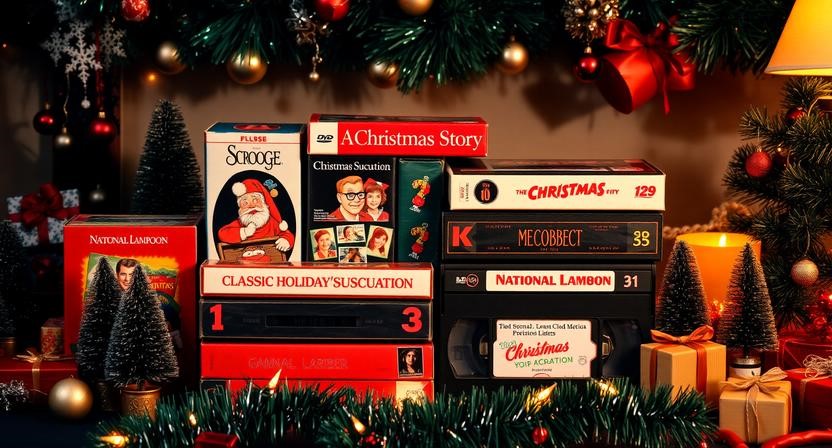
Christmas movies in the 1980s weren’t just seasonal entertainment; they were part of the holiday ritual itself. Watching a Christmas movie meant committing to the moment. There was no instant access, no endless menus, and no guarantee that a favorite film would even be available that year. Movies appeared on television schedules at fixed times or existed on a limited number of VHS tapes that were carefully chosen, rented, or recorded. Because of that, every viewing felt intentional and important.
Many families first encountered Christmas movies through television broadcasts rather than theaters. Networks aired holiday films as special presentations, often promoted heavily in the weeks leading up to December. Seeing a familiar title listed in the TV guide felt exciting, almost reassuring. It meant the season was officially underway. Families planned evenings around these broadcasts, adjusting dinners and routines so everyone could sit down together when the movie began.
A Christmas Story, released in 1983, became one of the most enduring examples of this tradition. Rather than focusing on fantasy or spectacle, it captured the small, relatable moments of childhood during the holidays — the overwhelming desire for a single perfect gift, the frustration of adult authority, and the strange mix of excitement and anxiety that defined Christmas morning. Its tone felt authentic and grounded, and repeated television airings throughout the decade helped cement it as a holiday staple. Over time, scenes became instantly recognizable, and lines were repeated year after year, even by people who hadn’t seen the film recently.
As the decade progressed, Christmas movies began reflecting the louder, more chaotic energy of the late 1980s. National Lampoon’s Christmas Vacation exaggerated the pressures of family gatherings, gift-giving, and holiday expectations into full-scale comedy. Decorations were excessive, relatives were overwhelming, and nothing went according to plan. Beneath the humor, however, was a familiar truth — that Christmas was often stressful, messy, and still deeply meaningful. The film resonated because it mirrored real experiences, only pushed to absurd extremes.
Scrooged, released in 1988, brought a modern, cynical edge to the classic holiday redemption story. Set in a world driven by television ratings, corporate ambition, and relentless scheduling, it reflected the pace and attitude of the late 80s. The film was loud, fast, and visually busy, yet it ultimately delivered a sincere message about compassion and connection. Its setting and tone felt unmistakably contemporary for the time, making it relatable to audiences navigating a rapidly changing media landscape.
Not all 1980s Christmas movies aimed for warmth or nostalgia. Gremlins, released in 1984, transformed the holiday setting into something darker and unpredictable. Christmas lights, snow-covered streets, and small-town traditions became the backdrop for chaos and destruction. The film challenged expectations, blending horror and comedy with holiday imagery in a way that felt bold and unconventional. Watching it during the season added a sense of danger and surprise, proving that Christmas movies didn’t need to be gentle to leave a lasting impression.
The decade also blurred the boundaries of what qualified as a Christmas movie. Die Hard, released in 1988, became the most debated example. Set during an office Christmas party and filled with seasonal references, it technically met many of the criteria while defying traditional sentimentality. For some viewers, it became a holiday tradition precisely because it was different — a high-energy alternative to softer fare. Its association with Christmas grew stronger over time, shaped as much by repeated viewing as by its original release.
What made Christmas movies of the 1980s truly special wasn’t just their stories, but the way they were experienced. Families watched together, often on a single television in the living room. Snacks were shared, lights were dimmed, and the glow of the Christmas tree filled the room. There were no personal screens or distractions, and once the movie started, everyone stayed until the end. If someone missed a scene, it was gone forever unless the movie happened to air again.
VHS played a growing role in shaping these experiences. Some families owned a small collection of holiday tapes, recorded off television or purchased after repeated rentals. These tapes were played year after year, gradually wearing down and becoming part of the ritual themselves. Tracking lines, faded colors, and abrupt endings became familiar, adding a layer of nostalgia to the viewing experience.
Christmas movies in the 1980s helped define the emotional landscape of the season. They reinforced traditions, offered escape, and provided shared moments that lingered long after December ended. Decades later, many of these films are still watched annually, not only for their content, but for the memories attached to them. They remind viewers of a time when watching a Christmas movie meant slowing down, gathering together, and letting the season unfold at its own pace.
The Toys Everyone Wanted

Christmas in the 1980s was defined by toys in a way few other decades can match. Toys weren’t just gifts — they were obsessions, status symbols, and the center of endless conversations at school. What made 80s toys so powerful was not only their design, but the intense sense of desire that surrounded them. Availability was limited, information was scarce, and anticipation built slowly throughout the season, making certain toys feel almost legendary by the time Christmas arrived.
One of the most infamous examples of toy fever was Cabbage Patch Kids. These soft, round-faced dolls became a cultural phenomenon almost overnight. They weren’t just toys; they were “adopted,” each one coming with its own name and paperwork. Demand exploded, and supply simply couldn’t keep up. Stories of parents searching multiple stores, standing in long lines, or leaving empty-handed became common. In some places, crowds grew so intense that stores imposed limits or removed the dolls entirely. Owning a Cabbage Patch Kid at Christmas meant more than having a popular toy — it meant your family had somehow beaten the system.
Action figures ruled the decade, and few lines were more dominant than Transformers and G.I. Joe. Transformers offered something completely new: vehicles that could become robots, often with intricate, frustratingly complex transformations. Kids spent hours learning how to convert them back and forth, sometimes leaving them half-transformed out of fear they’d never manage it again. Each new character brought excitement, and the toy line expanded rapidly, making it nearly impossible to own them all.
G.I. Joe figures, smaller in scale but massive in popularity, brought military-style adventure into bedrooms and living rooms. Their detailed accessories, vehicles, and playsets made them endlessly customizable. Christmas morning often meant opening not just a figure, but a vehicle or base that instantly transformed the floor into a battlefield. These toys encouraged imaginative play on a grand scale, with storylines that stretched on for days or weeks.
For many girls — though far from exclusively — My Little Pony was a defining part of 80s Christmas. The bright colors, distinctive symbols, and fantasy settings offered a softer, more whimsical kind of play. Ponies were collected, traded, and carefully arranged, often becoming cherished companions rather than temporary toys. Their popularity grew steadily throughout the decade, fueled by television specials and expanding product lines that made each new release feel essential.
Teddy Ruxpin represented a different kind of magic. As one of the first widely popular interactive toys, it seemed almost alive. The animatronic bear told stories using cassette tapes, moving its mouth and eyes in sync with the audio. For many children, Teddy Ruxpin felt less like a toy and more like a friend. Parents were both fascinated and slightly unsettled by the technology, while kids were completely captivated. Owning one placed you at the cutting edge of 80s toy innovation.
Then there was Nintendo. When the Nintendo Entertainment System began appearing under Christmas trees in the mid-to-late 1980s, it changed everything. This wasn’t just another toy — it was an event. The NES represented a new kind of entertainment, one that pulled kids in for hours and shifted how free time was spent. Christmas morning discoveries of a Nintendo console were often met with disbelief, excitement, and immediate setup attempts, sometimes interrupted by the realization that it needed to be connected to the TV or required additional accessories. Games became as important as the system itself, and the promise of endless play made Nintendo one of the most sought-after gifts of the decade.
What truly defined 80s toy culture, however, was scarcity. Certain toys were nearly impossible to find, especially as Christmas approached. Stores sold out quickly, shipments were unpredictable, and rumors spread about where a coveted item might still be available. Parents traveled from store to store, often with no guarantee of success. Toy shortages became part of the holiday narrative, turning shopping into a high-stakes mission rather than a casual errand.
This scarcity made must-have gifts feel more powerful. Kids didn’t expect to get everything on their wish list — they hoped for one special item. That hope fueled imagination, speculation, and countless “what if” conversations. Christmas morning wasn’t just about opening presents; it was about discovering whether the impossible had happened.
The emotional impact of these toys lingered long after the wrapping paper was gone. Some became lifelong memories, others faded quickly, but the experience of wanting them, waiting for them, and finally seeing them under the tree is what made 80s Christmas so unforgettable. Toys in the 1980s weren’t disposable or forgettable — they were central to the magic of the season.
Christmas Music in the 1980s
Christmas music in the 1980s occupied a unique space between tradition and modern pop culture. Familiar holiday songs were still everywhere, but the decade added its own sound, attitude, and production style. Synthesizers, drum machines, and polished studio techniques reshaped the way Christmas music felt, making it unmistakably of its time. Whether playing on the radio, drifting through shopping malls, or blasting from cassette decks at home, Christmas music helped define the atmosphere of the season.
Radio played a major role in shaping the Christmas soundtrack of the decade. Stations switched formats in December, blending classic carols with newer pop-infused holiday songs. Hearing the first Christmas track on the radio was often the moment when the season truly began. These songs weren’t background noise — they became signals that time was moving toward Christmas Day. Many people still associate specific songs with car rides, shopping trips, or evenings spent decorating the tree.
One of the most iconic Christmas songs of the decade was Last Christmas by Wham!. Released in 1984, it stood out immediately for its smooth melody, emotional lyrics, and unmistakable 80s production. Built around synthesizers rather than traditional instruments, it felt modern and personal rather than festive in a conventional sense. The song captured a mix of melancholy and hope that resonated strongly, especially with younger listeners. Over time, it became inseparable from the season, proving that a Christmas song didn’t need sleigh bells or choirs to endure.
Another defining moment in 80s Christmas music came with Do They Know It’s Christmas? by Band Aid. Released in 1984 as a charity single, it reflected the decade’s growing awareness of global issues and the power of pop music as a force for change. Featuring an all-star lineup of British and Irish musicians, the song was ambitious, emotional, and unmistakably dramatic. It played constantly during the holiday season, not just as entertainment, but as a reminder that Christmas could be about compassion and responsibility beyond personal celebration. Its presence on the airwaves gave the season a more serious, reflective tone alongside the usual cheer.
Hip-hop also made its mark on Christmas music in the 1980s, most notably with Christmas in Hollis by Run-DMC. Released in 1987, the song brought a street-level, contemporary voice to holiday music. It referenced real experiences, everyday celebrations, and urban life, while still embracing the spirit of the season. Its beat-driven sound and conversational lyrics felt fresh and authentic, expanding what Christmas music could be. For many listeners, it marked the moment when holiday music truly entered modern pop culture territory.
Traditional Christmas songs never disappeared during the 1980s, but they were often reinterpreted through the decade’s signature sound. Familiar carols were recorded with lush synthesizers, prominent bass lines, and glossy production. Choirs sounded bigger, arrangements felt more dramatic, and recordings leaned heavily into the technology of the time. These versions played endlessly in malls, department stores, and elevators, creating an unmistakable sonic backdrop to holiday shopping.
At home, Christmas music lived on physical formats. Cassette tapes were played repeatedly, sometimes until the sound warped or faded. Record players still spun holiday albums, while newer stereo systems showcased the clean, polished sound of modern recordings. Families built their own holiday soundtracks from a mix of old favorites and newer hits, often returning to the same tapes year after year. The act of putting on Christmas music felt deliberate — you chose a tape, pressed play, and let it run.
Music also shaped emotional memory. Certain songs became permanently tied to specific moments — decorating the tree, wrapping gifts late at night, driving through snow-covered streets, or falling asleep on the couch while the radio played softly in the background. Christmas music in the 1980s didn’t just mark the season; it embedded itself into personal experiences, making it powerful long after the decade ended.
What made 80s Christmas music especially memorable was its balance. It honored tradition while embracing change. It allowed space for joy, sadness, generosity, and reflection. Decades later, hearing these songs instantly transports listeners back to a specific time and place. Christmas music in the 1980s wasn’t just seasonal — it became timeless through memory, repetition, and emotional connection.
Christmas Shopping in the 1980s

Christmas shopping in the 1980s was not a single activity but a season-long process that unfolded gradually and deliberately. It began well before December, often quietly, when store displays started changing and the first hints of the holidays appeared in windows and advertisements. Shopping for Christmas required planning, patience, and physical effort. There were no shortcuts. Every gift had to be found, paid for, carried, hidden, and wrapped by hand.
The arrival of the Sears and JCPenney Christmas catalogs was one of the most anticipated moments of the season, especially for children. These catalogs were thick, heavy, and filled with glossy pages that promised endless possibilities. They were examined carefully, page by page, often multiple times a day. Kids memorized toy layouts, noticed which items appeared larger or more exciting, and compared prices without fully understanding them. The catalogs were rarely kept pristine. Pages bent, covers curled, and corners tore as they were dragged from room to room.
Circling toys with a pen or marker was a defining ritual. Some children circled everything in sight, driven by excitement rather than strategy. Others took the process seriously, narrowing choices and prioritizing what they wanted most. Parents often encouraged moderation, knowing that availability and budgets imposed limits. The circled pages became visual evidence of hope — not guarantees, but possibilities. Sometimes notes were added in the margins, sizes were written down, or alternatives were marked just in case.
Once shopping began in earnest, malls became unavoidable. In the 1980s, malls were not just shopping centers; they were social spaces and seasonal destinations. During December, they transformed completely. Christmas music played constantly, decorations hung from ceilings and railings, and store windows competed to be the most festive. The mall felt alive in a way it didn’t during the rest of the year. Families planned entire afternoons or evenings around mall trips, often combining shopping with meals, browsing, and simply walking.
Crowds were constant. Parking lots were packed, entrances were busy, and stores were full of people moving with purpose. Everyone seemed to be carrying bags, scanning shelves, or consulting handwritten lists. The pace was slower than today but more intense, driven by the knowledge that items could disappear without warning. If you saw something popular, you bought it — hesitation often meant losing your chance.
Mall Santas were an unavoidable and iconic part of the experience. Their stations were elaborate, surrounded by decorations, artificial snow, and velvet ropes. Lines stretched long, and children waited patiently or nervously, rehearsing what they planned to say. Parents coached them quietly, reminding them to speak clearly or sit still. Photos were taken with personal cameras, sometimes rushed, sometimes awkward, often imperfect. These moments were both magical and uncomfortable, and the photos that resulted became permanent reminders of childhood Christmases.
Layaway played a crucial role in Christmas shopping during the decade. Large or expensive gifts were reserved weeks or months in advance and paid off in installments. Parents returned to stores regularly to make payments, tracking progress carefully and hoping everything would be completed on time. Layaway created a quiet sense of suspense. The gifts existed, but they weren’t yet real. They were promised, not guaranteed. Completing a layaway payment just before Christmas brought relief and satisfaction, a sense that the holiday had been secured.
Toy stores were where the pressure peaked. As December progressed, these stores became crowded, noisy, and chaotic. Shelves emptied quickly, and restocking was unpredictable. Parents searched for specific toys, often asking employees who could offer little more than guesses. Rumors circulated about shipments arriving early in the morning or stores that still had a few items left in stock. Finding a must-have toy felt like a victory.
Shortages were common, and certain toys became nearly impossible to find. Parents drove from store to store, sometimes across towns, chasing the possibility that one location might still have what everyone else wanted. Disappointment was frequent, frustration unavoidable. Yet these shortages made the eventual success feel monumental. When a sought-after toy was finally found, it was guarded carefully, hidden immediately, and treated like a secret treasure.
Checkout lines were long and unavoidable. People stood shoulder to shoulder, surrounded by boxes and bags, listening to Christmas music on repeat. Tempers sometimes flared, but there was also a shared understanding — everyone was tired, everyone was trying their best, and everyone wanted Christmas to be special. Shopping bags piled up in cars, closets, and basements, carefully hidden until the big day.
Once shopping was finished, the final stage began. Gifts were wrapped late at night, after children were asleep. Wrapping paper crinkled quietly, tape was pulled slowly to avoid noise, and mistakes were hidden as best as possible. Finished presents were stacked out of sight, adding to the growing anticipation. The chaos of shopping gave way to quiet waiting.
Christmas shopping in the 1980s demanded effort, time, and persistence. It was rarely convenient and often stressful, but it made the holiday feel earned. Every gift carried a story — of searching, waiting, hoping, and sometimes improvising. Those stories are part of why Christmas from that era still feels vivid and meaningful today. It wasn’t just about what was bought; it was about everything it took to get there.
Christmas Morning in the 1980s

Christmas morning in the 1980s had a rhythm all its own, shaped by anticipation that had been building for weeks. Waking up felt different that day. Even before opening your eyes, there was a sense that something important was waiting. Kids often woke up earlier than usual, sometimes before sunrise, lying still for a moment to confirm it was finally Christmas. The house felt quieter, colder, and somehow more charged than on any other morning of the year.
Getting out of bed happened quickly, but not always immediately. Some kids waited, listening for signs that parents were awake. Others rushed straight to the living room, stopping short at the doorway to take in the scene. The Christmas tree stood fully lit, often with lights that had been left on overnight. Presents were stacked underneath, wrapped in a mix of paper patterns that had appeared year after year. The smell of pine, plastic, wrapping paper, and the faint remnants of last night’s food lingered in the air.
Parents moved more slowly, often tired from late-night wrapping sessions. Coffee was essential. Cameras or camcorders were brought out, sometimes fumbled with as adults tried to remember how to turn them on. Someone reminded everyone to wait, to sit, to slow down. That pause, brief and frustrating, only added to the tension. Christmas morning wasn’t just about opening gifts — it was about the moment before everything changed.
Presents were opened one at a time in many households, not always by rule but by tradition. Wrapping paper was torn rather than carefully removed, piling up quickly on the floor. Boxes were shaken, examined, and guessed at before being opened. Some gifts were instantly recognizable; others were confusing until the last layer was removed. The sound of ripping paper mixed with excitement, laughter, and the occasional moment of disappointment quickly masked by gratitude.
The absence of prior knowledge made everything feel bigger. There were no leaked hints, no preview videos, and no tracking updates. You didn’t know what was in the box until it was open. When a must-have toy appeared — something that had been circled in a catalog or mentioned repeatedly — the reaction was immediate and unfiltered. Surprise was genuine. Disbelief was common. Sometimes kids stared at the gift for a moment before reacting, as if needing time to process that it was real.
Many toys required setup, assembly, or batteries, and those needs often became apparent only after the wrapping was gone. Parents searched drawers for batteries that might not exist. Instructions were unfolded and studied carefully. Some toys had to wait until later in the day, building anticipation even further. Video game systems needed to be connected to the television, sometimes requiring the rearrangement of furniture or the borrowing of cables from other devices.
Christmas morning also had its frustrations. Batteries were missing. Pieces were misplaced. Toys didn’t work quite as expected. Yet these inconveniences were part of the experience. They slowed things down, extended the morning, and created shared problem-solving moments. Kids hovered nearby while adults worked, offering suggestions or simply watching, unable to wait any longer than necessary.
Breakfast often happened late or was forgotten entirely. When it did happen, it was casual and unstructured — cereal, toast, or something reheated quickly. The focus remained on the living room. New toys were spread out across the floor, replacing wrapping paper with action figures, dolls, game cartridges, and instruction manuals. Older siblings helped younger ones. Parents watched from the couch, coffee in hand, occasionally stepping in to help or document the moment.
Technology played a visible but limited role. Televisions displayed static or blank screens as game systems were connected. VHS tapes waited to be played later. Camcorders recorded shaky footage that would be watched years later, capturing both excitement and boredom in equal measure. These recordings were imperfect, but that imperfection made them real.
As the morning progressed, energy shifted. The initial frenzy gave way to quieter play. Kids became absorbed in what they had received, experimenting, organizing, and imagining. The rest of the world seemed to pause. Outside, streets were quiet. Inside, time felt stretched. Christmas morning in the 1980s didn’t rush forward — it lingered.
What made that morning so memorable wasn’t just the gifts, but the atmosphere. It was the result of weeks of buildup, effort, and uncertainty finally resolving into something tangible. It was a moment when expectations met reality, sometimes perfectly, sometimes imperfectly, but always memorably.
By midday, wrapping paper had been cleaned up, toys had found temporary homes, and plans for the rest of the day began to form. Yet the core of Christmas had already happened. Christmas morning in the 1980s was the emotional center of the season — a moment shaped by surprise, togetherness, and the simple joy of discovery. Long after the toys themselves were forgotten, the feeling of that morning remained.
Closing Thoughts

There’s something timeless about Christmas in the 1980s. It wasn’t just the toys, the TV specials, or the music — it was the way the season felt slower, more deliberate, and shared. The excitement built gradually through catalogs, crowded malls, and carefully planned mornings, and every gift, song, or festive moment carried more weight because it had to be earned, discovered, or waited for. Today, we may have instant access to everything, but the magic of the 80s holiday lies in anticipation, surprise, and togetherness — and that is why it still captures our hearts year after year.
 Totally Retro: 80s Edition