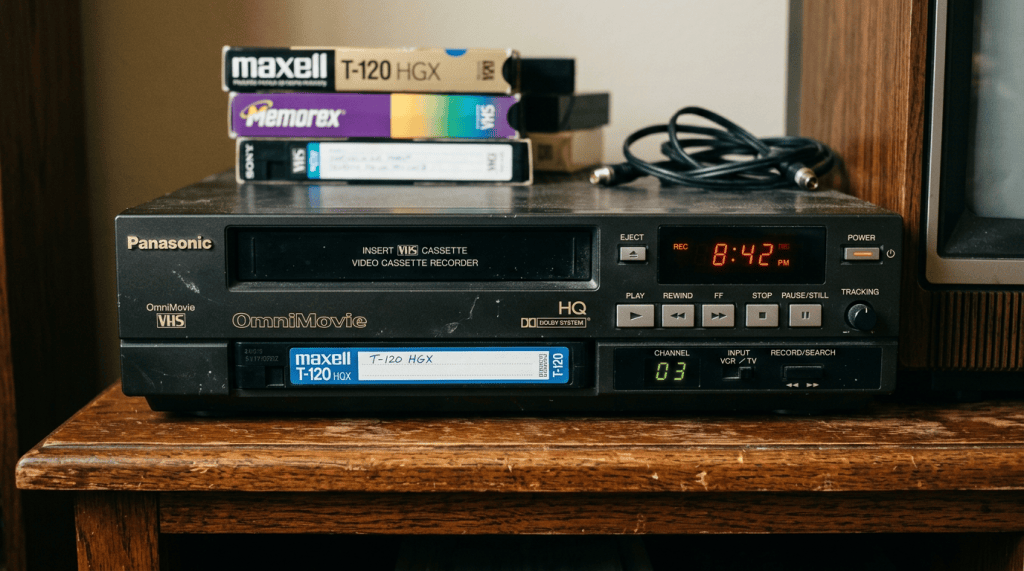
The Feeling of Permanence You Could Hold in Your Hands
In the 1980s, objects didn’t just work. They felt like they were committed to working—almost stubborn about it. You didn’t wonder if a television would “still be supported” in five years. You assumed it would outlive your furniture, possibly your next car, and maybe even the wall it was sitting against.
There was a physical confidence to everyday technology. You could feel it when you picked something up. A remote control had weight not because weight was fashionable, but because plastic was thick, screws were visible, and internal components were not aggressively optimized for anything other than surviving being dropped off a couch.
This was an era where durability wasn’t a premium feature. It was simply the default expectation.
The Weight of Objects Was Not Accidental
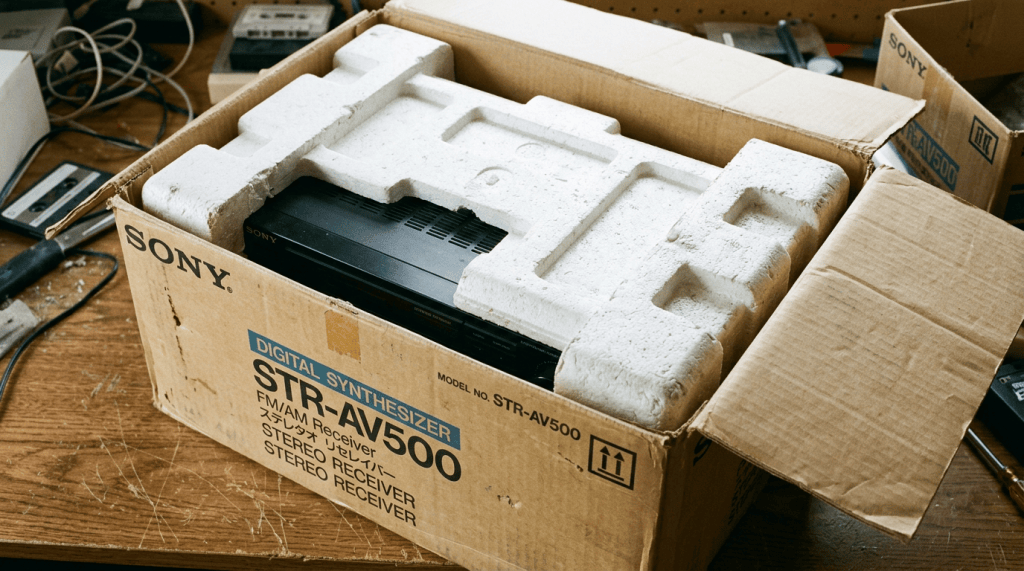
Pick up an old CRT television from the 1980s and the first thing you notice isn’t the screen—it’s the commitment required to move it. That mass was not inefficiency in the way we think of it today. It was engineering tolerance. Space inside the casing meant heat could dissipate, components were not compressed into failure, and repair was at least physically possible.
Even everyday electronics like a Sony Walkman or a VCR from the era were designed with mechanical clarity. You could hear them working. Motors, gears, and tape heads had audible presence, like proof that something real was happening inside.
Contrast that with today’s sealed slabs of glass and silicon. Modern devices are quieter, thinner, and faster—but also less narratively transparent. You don’t hear them working anymore. You just hope they are.
Engineering for Margins, Not Minimums
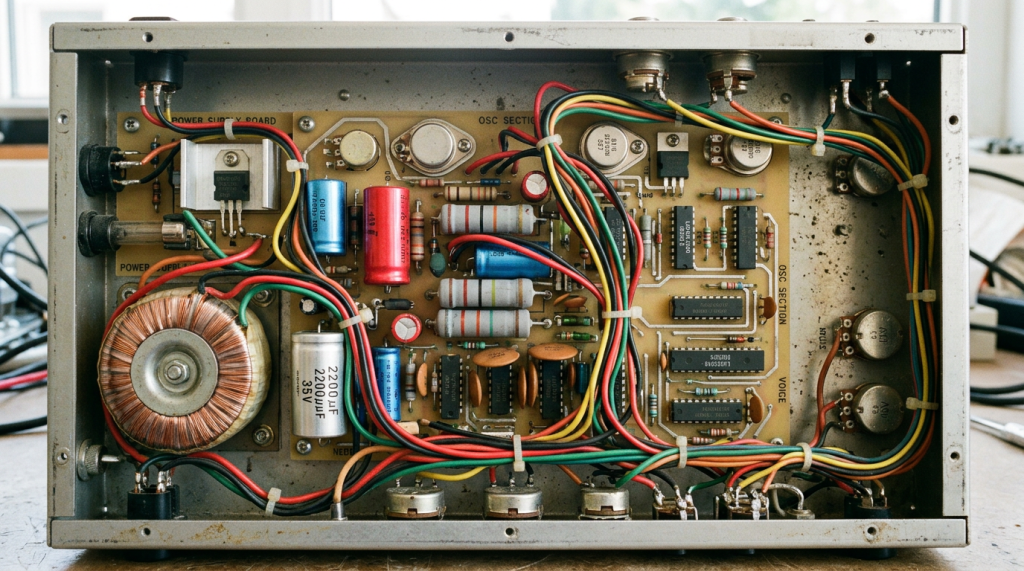
A major reason 1980s objects felt indestructible is that they often were overbuilt. Engineers designed with generous safety margins because manufacturing costs were balanced differently, and competition was less about rapid iteration and more about reputation.
A Toyota Corolla from that era, for example, was not designed to be replaced quickly. It was designed to become familiar—something that would accumulate stories over years rather than cycle out in three.
Inside electronics, capacitors, switches, and casings were often rated beyond what daily consumer use would realistically demand. That meant fewer immediate failures, but also fewer planned pathways to obsolescence. If something broke, it was usually a specific component—not the entire system.
Today, engineering often begins with constraints that didn’t dominate in the same way then: weight reduction targets, cost optimization per unit, rapid refresh cycles, and integration that assumes replacement rather than repair.
Repair Culture Was Built Into the World
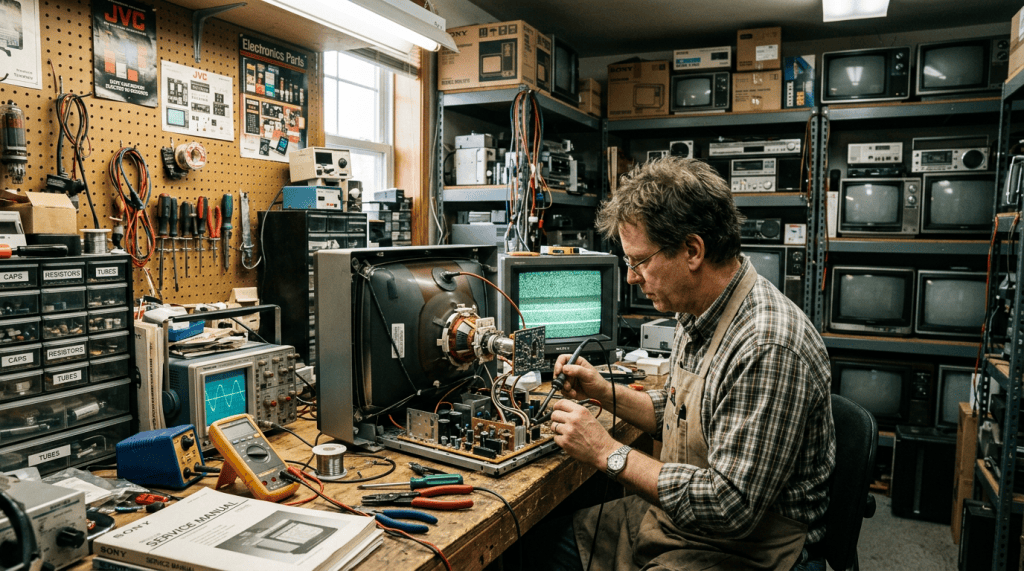
In the 1980s, repair was not a niche behavior. It was a normal part of ownership. Televisions had service manuals. Appliances were designed to be opened. Local repair shops were part of the ecosystem, not a last resort.
A broken part did not automatically imply a broken product. A dial could be replaced. A power supply could be serviced. Even major household devices were expected to have second lives after intervention.
This created a subtle but powerful psychological effect: ownership felt longer. Not because things lasted forever without issue, but because failure was not final.
That expectation shaped behavior. People treated objects with a kind of respectful confidence, not anxiety. You didn’t assume fragility. You assumed serviceability.
The Shift Toward Sealed Systems and Software Dependence

Modern devices are not just physical objects—they are software ecosystems wrapped in hardware. That shift alone changes everything about durability.
A device can be physically intact but functionally obsolete due to software updates, compatibility loss, or manufacturer support ending. The object is no longer just metal and plastic; it is also code, servers, licensing, and remote decision-making.
Where 1980s electronics failed visibly and locally, modern electronics often fail silently and systemically. A phone doesn’t “break” in the traditional sense. It slows down, loses support, or becomes incompatible with services it depends on.
This creates a new kind of fragility: not material weakness, but dependency complexity.
Planned Obsolescence Became Structural, Not Optional

The idea of planned obsolescence did not begin in the modern era, but it became more efficient and more invisible over time. In earlier decades, obsolescence was often physical—new features made older devices less desirable.
Now, obsolescence is frequently infrastructural. Batteries are sealed and difficult to replace. Components are soldered directly to boards. Software updates require newer hardware to function smoothly.
The result is not necessarily that modern products are poorly made. Many are extremely advanced. But they are designed within systems where longevity is no longer the primary optimization goal.
Materials Changed, But So Did Philosophy
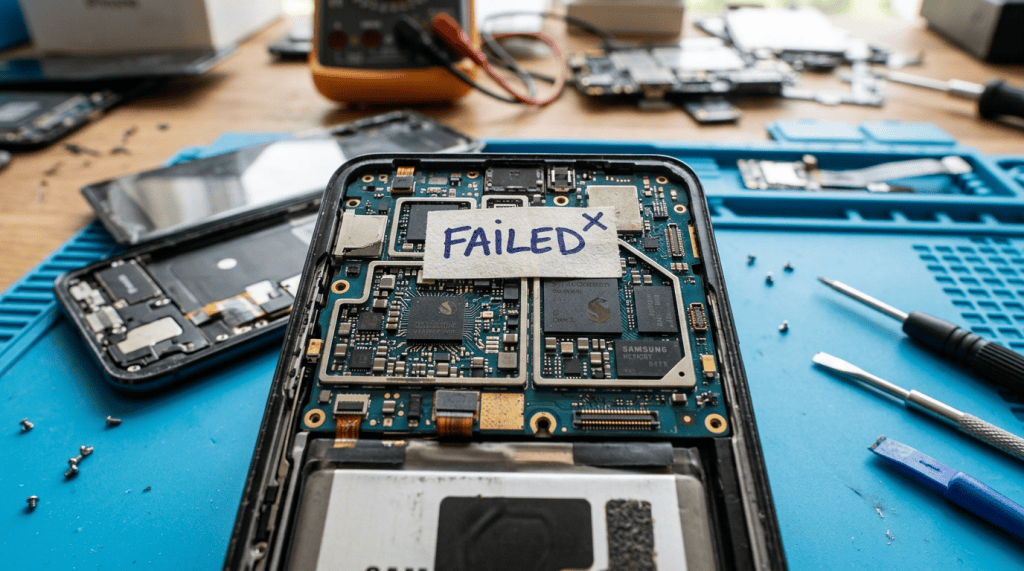
The materials of the 1980s were not inherently superior. Plastics yellowed, metals corroded, and electronics still failed. But the philosophy of assembly prioritized repairability and endurance over compact integration.
Today’s materials are often lighter, more efficient, and more precise. But they are also more integrated. When one part fails, it is more likely to affect the whole system.
There is a difference between strength and replaceability. The 1980s leaned toward replaceability. The present leans toward integration.
The Psychology of Things That Stayed

Part of the perception of durability in the 1980s also comes from time itself. Survivorship bias plays a quiet role. We still see the objects that lasted decades, not the ones that failed quickly and were discarded.
But perception is still reality in lived experience. When enough objects around you persist—televisions, radios, furniture, even cars—you begin to assume persistence is normal.
That assumption changes how you relate to objects. You don’t anticipate loss. You anticipate continuity.
What Changed Most Is Not the Objects, But the Expectation

It would be too simple to say everything used to be better made. The truth is more specific: everything used to be expected to last longer in a visible, tangible way.
Now, many products are designed to evolve quickly, update constantly, and integrate into systems that assume turnover. The lifespan of an object is no longer just a matter of engineering—it is a matter of ecosystem design.
We didn’t just change how things are built. We changed what we expect them to do over time.
The Quiet Trade We Made
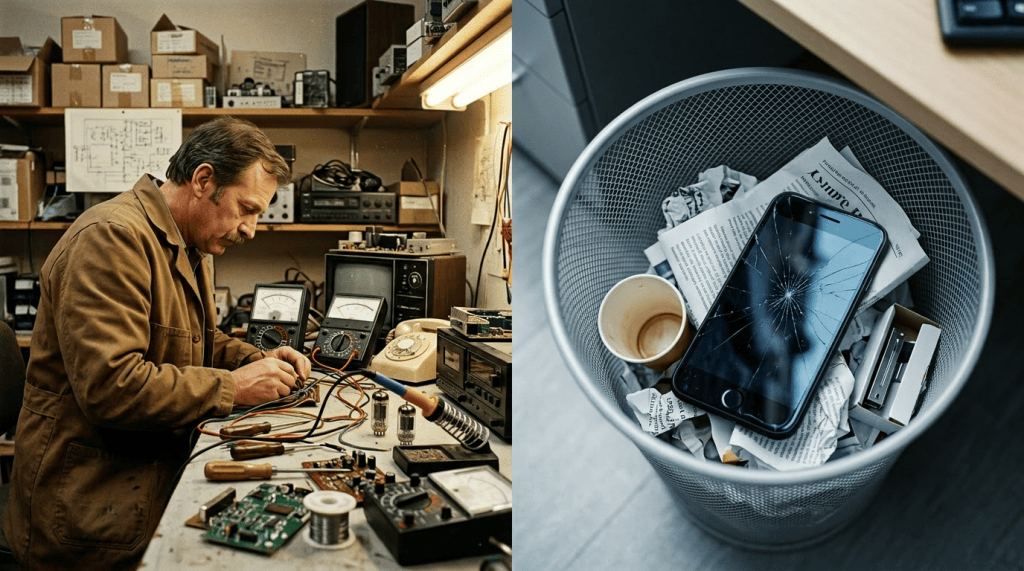
The modern world offers extraordinary convenience, miniaturization, and capability that would have seemed impossible in the 1980s. But in exchange, we accepted a quieter form of impermanence.
Objects are lighter now. Faster. Smarter. But also more temporary in ways that are harder to see and harder to repair.
In the 1980s, things broke loudly and locally. You fixed them or replaced them. Today, things drift out of usefulness gradually, often without a single clear moment of failure.
And that may be the most important difference of all: not that things stopped lasting—but that it became harder to tell when they stopped.
 Totally Retro: 80s Edition
Leave a comment